What Peer Support Specialists Actually Do Day to Day
Lived experience, not credentials, qualifies someone to guide recovery.
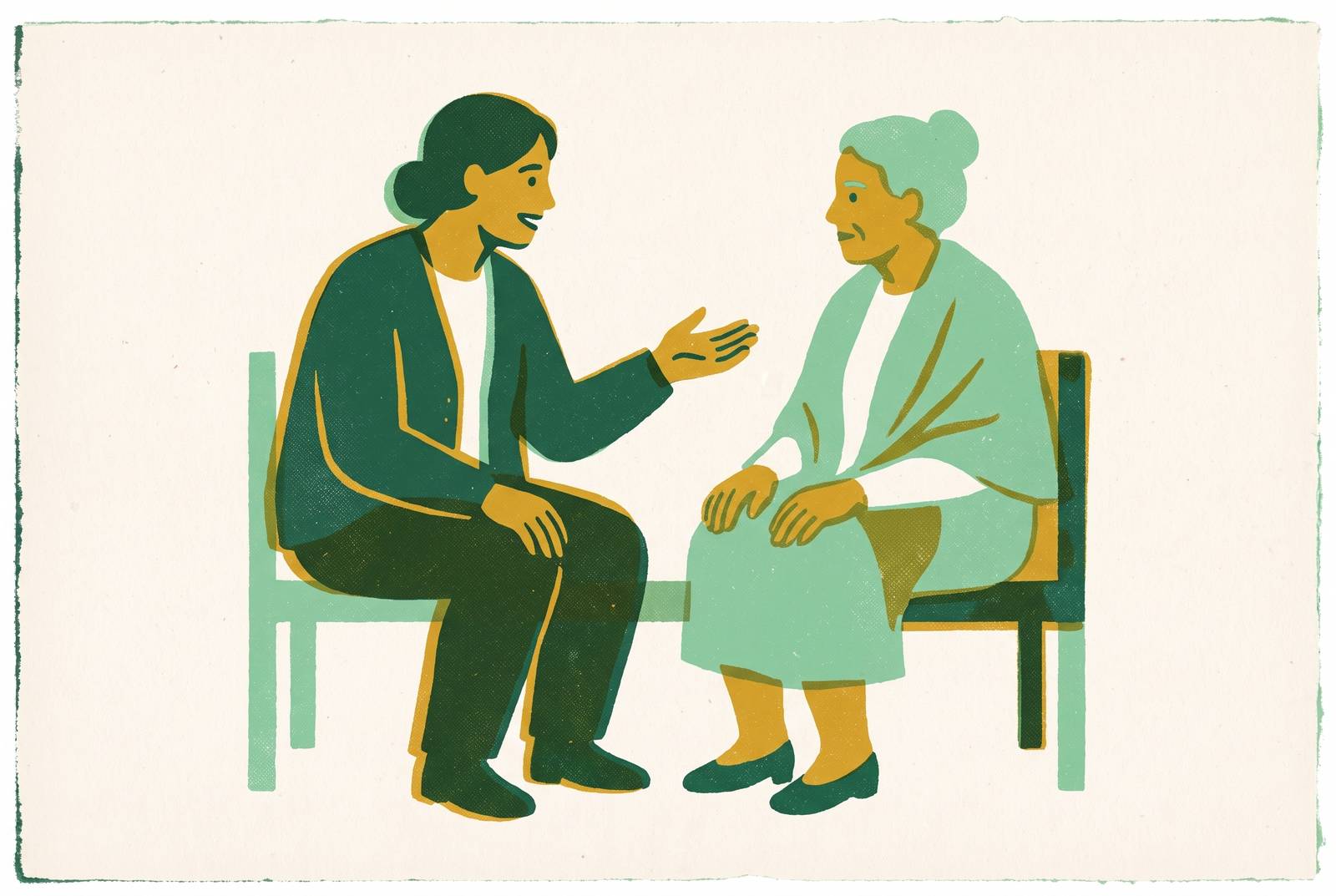
Peer support specialists spend their shifts on tasks that look nothing like therapy: riding along to a grocery store, sitting in a housing office, calling a client awake for a work shift, de-escalating a crisis at 2 a.m. This piece walks through that daily reality, hour by hour and setting by setting, to show why the role exists, what qualifies someone to do it, and why it reaches people that psychiatrists, psychologists, and social workers routinely cannot.
Why peer support specialists exist: the gap they were designed to fill
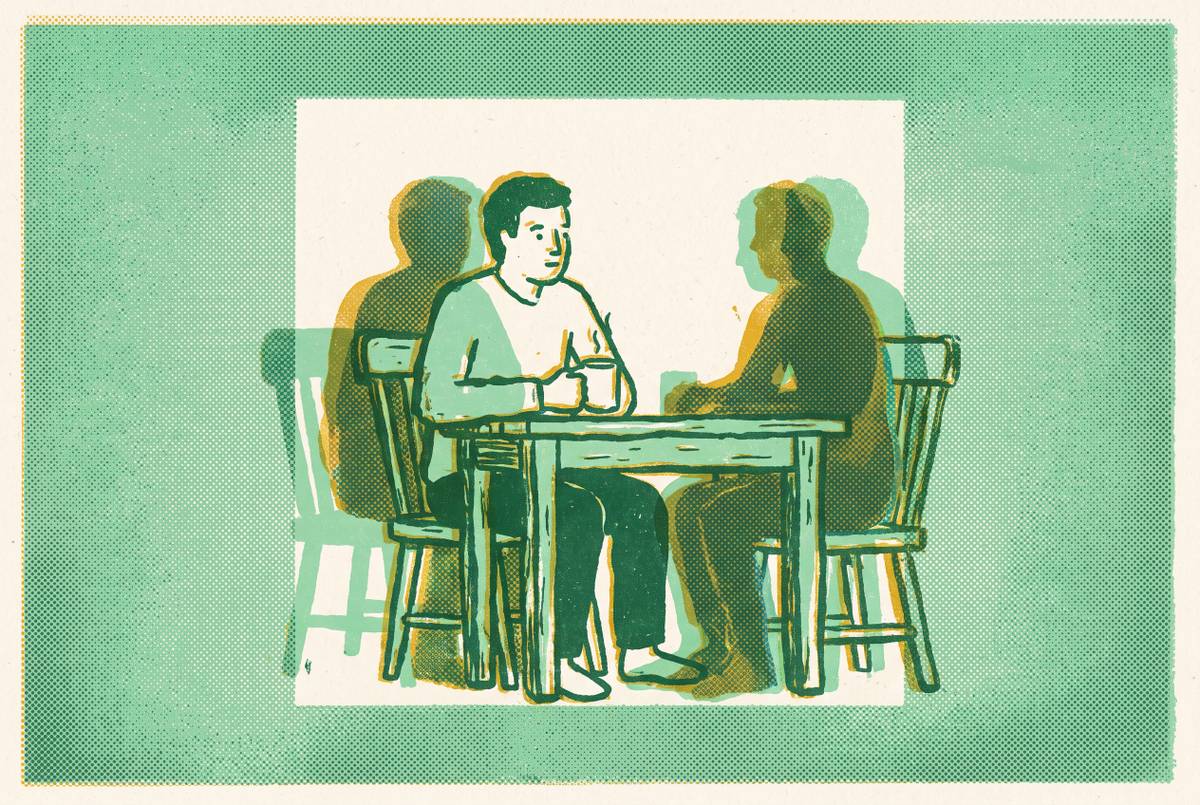
Psychiatrists, psychologists, and social workers were trained and funded to diagnose, treat, and manage caseloads within scheduled appointments. None of that structure was built to handle the unglamorous work of recovery: showing up at someone's apartment when they miss a check-in, riding with them to a housing appointment, sitting beside them through the long wait at a benefits office. That work requires time clinical schedules don't allow and a kind of trust that credentials alone don't build.
The workforce delivering clinical mental health care is also demographically out of step with many of the people it serves. Peer support specialists were built to close both gaps at once. They show up in someone's home, ride along to an appointment, sit with them in a housing office, and earn trust through a shared biography.
What peer support specialists are
The qualification that defines this role has nothing to do with a degree. A peer support specialist has personally navigated mental illness, substance use disorder, or both, and has reached a point in their own recovery where they can walk alongside someone else going through it. That lived experience is the credential. Everything else, training hours, certification exams, supervised practice, is built around it.
The role takes different shapes depending on where it's practiced. The Copeland Center's national environmental scan documents peer specialist positions across more than twenty distinct program types: community-based support, mobile crisis, housing, emergency rooms, inpatient units, supported employment, warmlines, and more. That range signals that "peer support specialist" isn't one standardized job description copied across employers, but a family of roles, shaped by setting, that share a common foundation in lived experience.
Formal credentialing sits on top of that foundation. Some list it as required, others as preferred, but in either case the credential formalizes something that already exists: a person who has lived through what the client is living through now, far enough along in recovery to guide someone else through it.
The core of the job: what a peer support specialist does each day
The daily work is concrete in a way that resists the "sympathetic ear" shorthand often attached to peer support. A single shift can include one-on-one coaching, group facilitation, appointment coordination, documentation, crisis monitoring, and hands-on help with basic daily tasks, sometimes within the same few hours.
Much of the day centers on direct relationship-building. description includes planning leisure activities on evenings, weekends, and holidays, side-by-side socialization support that keeps a client connected to the world.
Group work fills another part of the role. At Hopi Behavioral Health Services in Polacca, Arizona, on the Hopi Reservation, peer specialists help facilitate recovery groups that include AA/NA meetings alongside the Wellbriety Circle, a clear example of how group facilitation bends to fit the community it serves.
Then there's the part of the job that looks least like anything taught in a clinical textbook: direct help with the tasks of daily living. One program's description lists side-by-side assistance with cleaning and laundry, transportation, grocery shopping, and personal hygiene and grooming. description lists side-by-side assistance with cleaning and laundry, transportation, grocery shopping, and personal hygiene and grooming. Budgeting support, menu planning, and building a shopping list round out a kind of life-skills coaching that a 20-minute clinical appointment has no time to cover.
Appointment navigation and care coordination round out the list. L'esprit Inc. describes specialists helping clients get and use a primary care physician, dentist, or medical specialist. HIPAA compliance and confidentiality are non-negotiable requirements that apply across all of it, regardless of program type.
Taken together, this is one job description, not a composite drawn from several roles on a team. Coaching, group facilitation, laundry assistance, appointment scheduling, and clinical team advocacy sit inside the same set of listed duties for a single position.
How the role shifts when someone is in crisis
Crisis response isn't a deviation from the job. For many peer specialists it's a formal, built-in duty, and the credibility that comes from shared experience is what makes their presence useful when someone is in acute distress. A specialist who has lived through a mental health crisis carries a kind of authority in that moment that a stranger with a clinical title does not automatically have.
At one organization, peer support specialists rotate through on-call duties for crisis stabilization during nights and weekends as part of the PACT (Program of Assertive Community Treatment) team model. Round-the-clock availability is written into the job, not treated as an occasional exception. The training that backs this up is substantial: the Copeland Center's national scan catalogues therapeutic de-escalation, Mental Health First Aid (MHFA), Applied Suicide Intervention Skills (ASIST), Question Persuade Refer (QPR), and Counseling on Access to Lethal Means (CALM) across job descriptions in the field.
Specialists are also trained to watch and report. L'esprit Inc.'s description has them flagging changes in a client's mental status or behavior that signal risk and escalating those observations to the clinical team. That function makes a peer specialist an early-warning layer in the broader care system, someone positioned to notice a shift before it becomes an emergency precisely because they spend the kind of unstructured time with a client that a scheduled clinical visit never allows.
Many of the moments peer specialists respond to as crises are an eviction notice, an empty refrigerator, a missed bus to a methadone clinic rather than psychiatric emergencies in the narrow sense. Addressing those moments is still crisis work, and it's also where the job overlaps most directly with the social determinants of health.
Housing, Food, and Transportation as Clinical Work
For someone living with serious mental illness, an unstable housing situation, an empty pantry, or no way to get to an appointment isn't background noise.
The evidence connects this resource work to measurable outcomes. None of that was ever an "extra" duty tacked onto the job. It was the mechanism by which recovery actually holds.
The family context sharpens this further. The Parent Peer Support Specialist role at Mississippi's Specialized Treatment Facility has specialists helping families locate community and natural supports, coordinating transition planning with local MAP teams, and attending intake and discharge to keep continuity of care intact. Social navigation is the service here, not a side function.
How the role changes depending on the setting
The core elements of the job, lived-experience credibility, trust-based relationship, hands-on navigation, stay constant. But the daily rhythm of the work bends hard depending on where a specialist is stationed.
In mobile crisis work, the job is rapid-response and community-facing: the specialist goes to the person in distress. In housing or supported housing programs, the daily task list leans hard into the social determinants work described above.
The Copeland Center's national scan documents this range formally, listing peer specialist job descriptions across more than twenty program types, among them community-based peer support, mobile crisis, housing and supported housing, emergency rooms, inpatient units, warmlines, supported employment, supported education, peer-run respite, partial hospital and day programs, Certified Community Behavioral Health Centers (CCBHCs), prisons and corrections, and school mental health programs.
Cultural context reshapes the role too. Valle del Sol's tiered structure, Specialist I, II, and III, shows a Level I specialist working under routine supervision on moderately complex cases, while a Level III specialist serves as a senior resource, mentors junior staff, and contributes to program development. The role grows in authority and responsibility the way any skilled profession does.
How peer specialists reach people clinical staff cannot
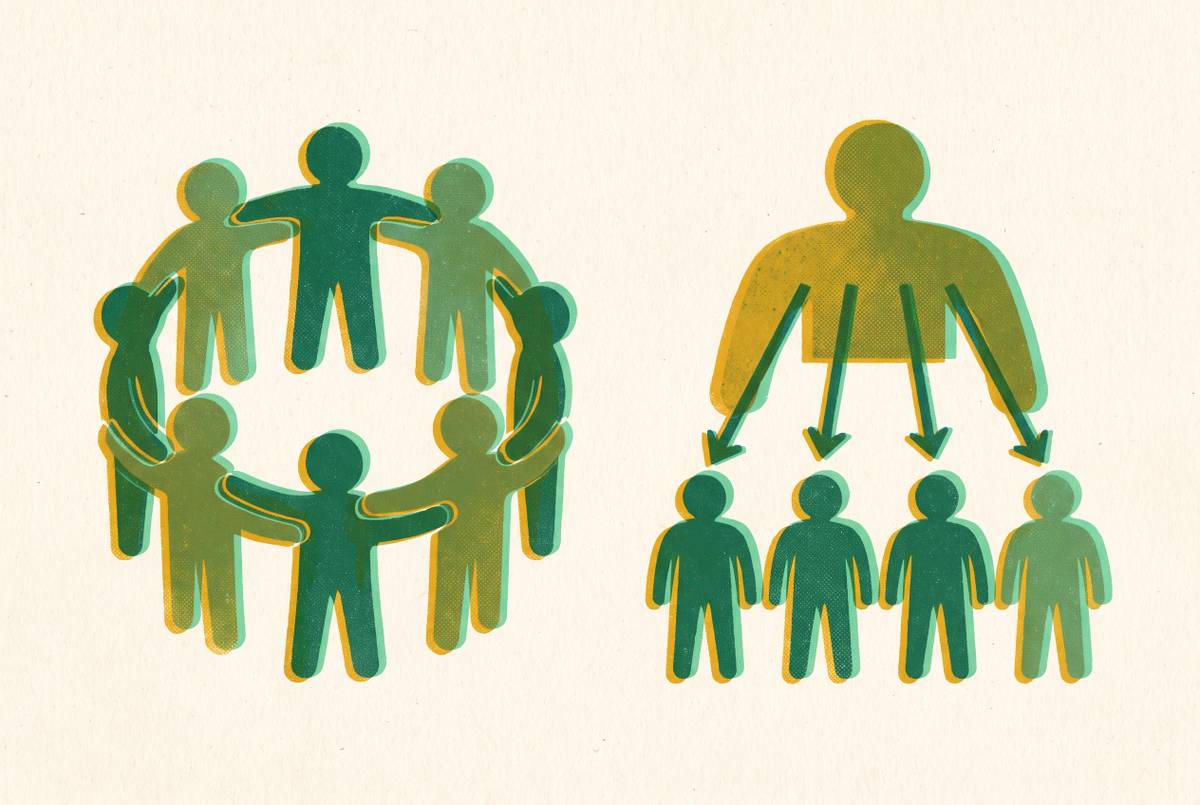
The effectiveness of a peer specialist rests on a specific mechanism: shared biography closes a trust gap that professional credentials, however legitimate, cannot close for a lot of people with serious mental illness. Why does that matter so much in practice? Because trust is often the precondition for engagement, and engagement is the precondition for everything else a treatment plan is supposed to accomplish.
This logic is written directly into how the role is defined. One program's description frames the specialist's purpose as drawing on common experience "to validate clients' experiences," not to assess or diagnose, but to stand beside someone as a person who has actually been there. description frames the specialist's purpose as drawing on common experience "to validate clients' experiences," not to assess or diagnose, but to stand beside someone as a person who has actually been there. Research backs up the value of that stance: people who engage with peer support report fewer psychiatric hospitalizations, improved quality of life, increased treatment engagement, and stronger feelings of hope and empowerment, with the relationship built on shared experience identified as the mechanism driving those gains.
The honest objection deserves a direct answer. The evidence base is still developing: the literature finds that peers are consistently at least as effective as non-peers at delivering services, but it is less consistent on whether peer support produces better clinical outcomes than traditional services alone. How peers are deployed shapes how much value they add. The claim was never that peer specialists replace clinical care, but that they do work clinicians are not positioned to do: the outreach, the accompaniment, the daily navigation, the trust-building that keeps someone engaged with treatment long enough for that treatment to work. Clinical care and peer support work as complements, and each extends what the other can reach.
The health equity dimension gives this argument its sharpest edge. The clinical workforce is overwhelmingly white, and the populations with the highest rates of serious mental illness are disproportionately BIPOC. Peer specialists drawn from those same communities offer culturally resonant care that the existing clinical workforce cannot structurally provide, reducing barriers to engagement through relational authenticity rather than through programmatic accommodations layered on top of an unchanged system.
firsthand builds its model on exactly this premise. Its Guides and STRIVE Specialists are people who have personally navigated serious mental illness, substance use disorder, or both, and that lived experience is treated as the most valuable clinical asset available for building trust and driving recovery, not as a limitation to be managed around.
The structural barriers that limit what peer specialists can do
The systems around the specialists fund, credential, and integrate the role, and those structural gaps, not the specialists themselves, shape who gets reached and at what scale.
Reimbursement is the clearest fault line. Medicaid rates for peer recovery support services swing wildly from state to state, from a low of $5.98 per 15 minutes in South Carolina to a high of $27.66 per 15 minutes in New York, with an average across states of $14.75, according to the CFRI 2024 Report presented at a NASMHPD National Dialogues on Behavioral Health conference in February 2026. That points to barriers beyond money: workforce shortages, administrative complexity, and the sheer difficulty of building a pipeline of qualified peer specialists fast enough to meet demand. None of this undercuts the model itself. It describes a policy and infrastructure problem that is solvable, if the systems around peer support are willing to build toward it.
Integrating peer support into a care team that uses it
Hiring a peer specialist and placing them next to clinical staff isn't integration. Real integration requires role clarity, supervision structures, reimbursement that reflects the actual scope of the work, and a genuine institutional commitment to treating lived experience as a clinical input.
Valle del Sol's tiered career structure offers one working model: specialists advance through levels of independence, mentorship responsibility, and program leadership, which builds workforce capacity that retains talent. The Copeland Center's national scan is a reminder that integration can't be designed once and copied everywhere. Peer specialists work in settings as different as prisons, emergency rooms, schools, and warmlines, and each context demands a model built for it.
firsthand's approach to this problem combines community-based Guides and STRIVE Specialists, people who meet clients where they actually are, with HITRUST r2-certified infrastructure through the helpinghand platform. That pairing is built to address the trust gap, the social determinants workload, and the documentation and compliance demands all at once, rather than solving for one and leaving the others unaddressed.
The open question for health plans and care systems isn't whether peer support works. The evidence, while still maturing, points consistently in one direction. Whether the organizations positioned to deploy this model are willing to build the supervision, the reimbursement pathways, and the infrastructure that let peer specialists do the full scope of the work laid out here, the coaching and the crisis calls, the grocery runs and the group facilitation, the advocacy in a treatment team meeting and the ride to a housing appointment, is what will decide the outcome. For the person on the other end of that work, whether that happens means staying connected to care instead of falling through the gap it was built to close.
Sources
- SMI Peer & Recovery Support Specialist
- Peer Support Specialist Job Description PRIMARY OBJECTIVE OF POSITION:
- Revised August 29, 2025 ADMINISTRATION
- Peer Specialist Job Descriptions
- PEER SUPPORT SPECIALIST DEPARTMENT OF BEHAVIORAL HEALTH SERVICES
- Peer Support Services for Individuals With Serious Mental Illnesses: Assessing the Evidence