Why Serious Mental Illness Makes It Hard to Keep Food in the House
Each step to get food requires mental capacity the illness disrupts.
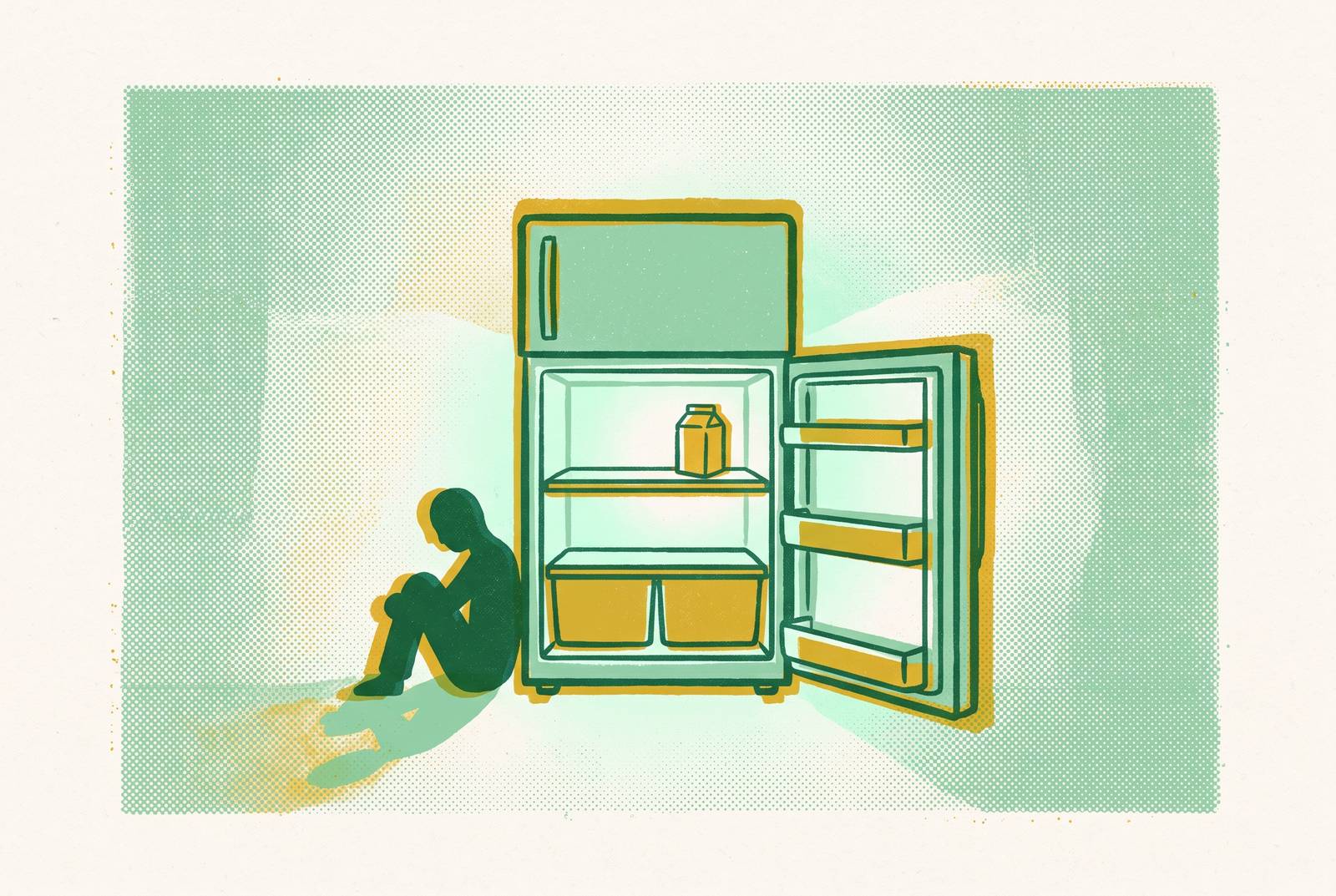
Getting food into a kitchen and onto a plate is a sequence: noticing that supplies are low, deciding what to buy, having the money to buy it, getting to a store, moving through that store without becoming overwhelmed, carrying the groceries home, storing them somewhere that keeps them edible, and then, days later, finding the energy to cook them before they spoil. Each of those steps asks something different of a person, some financial, some physical, some purely mental. Serious mental illness does not make someone generally worse at this sequence. It can knock out any single link on any given day, and because the steps depend on each other, one failure is enough to stop the whole chain. That is the structural part of this problem: the illness creates conditions that make each step harder regardless of how much someone wants to eat well or intends to plan ahead. A 2024 systematic review and meta-analysis found that adults with serious mental illness experience food insecurity at rates substantially higher than the general population, and that gap appears across the population, not in scattered cases of bad luck or poor choices.
Income Loss and Financial Instability
Money is usually the first link to go, and it goes before a person ever reaches the question of what to cook. Severe psychiatric disorders do not simply make it harder to hold a job while everything else stays stable. They produce unemployment and income loss as part of how the illness runs its course, so poverty here is downstream of the illness itself rather than a separate misfortune that happens to land on the same person. Research on schizophrenia and related disorders treats unemployment, meager per-capita income, and residence in poorly resourced neighborhoods as features of the illness trajectory, baked into the course the disorder tends to take.
Once that income floor collapses, everything downstream gets more expensive and less reliable. Buying in bulk, the standard way to lower the cost per meal, requires upfront cash that may not exist. Without it, shopping shifts to whatever is closest and open, often a corner store stocked with packaged food and little produce. Even the physical equipment food requires, a working stove, a refrigerator that holds a steady temperature, enough storage to keep perishables from spoiling, depends on money to buy, repair, and keep running. None of this is a commentary on poverty in general. It is what happens, specifically, when a psychiatric illness removes income before a person has even gotten to the question of what to eat that week.
Executive Function Impairment and Planning
Money solves one problem, but it doesn't solve the mental work food access demands even when the money is there. Keeping food in the house asks a lot of a brain: remembering that supplies are running low, deciding what to buy, writing it down or holding it in memory, keeping that list intact through a bus ride and a store layout and a checkout line, and then actually following through once energy and motivation have both been spent getting there. Executive function is the term for the set of mental operations that handle exactly this kind of multi-step, self-directed task, and it is one of the capacities that psychotic illnesses disrupt most consistently. Research on diet and serious mental illness identifies impaired executive functioning, common in psychotic illnesses, as a direct mechanism that undermines planned, restrained eating and opens the door to its opposite: impulsive, disorganized eating driven by whatever is available in the moment.
What does that look like on an actual day? Someone might know perfectly well that the refrigerator is empty and still be unable to sequence the steps that would fix it, so the trip never happens. Someone might get to the store and have the whole plan fall apart under the sensory load of the place, leaving without having bought anything. Neither of these is a motivation problem in the way that phrase usually gets used. A co-design study of Australians with serious mental illness named lack of access and lack of education as two key drivers of food insecurity, and when the gap in that education is traced to its source, a good deal of it comes down to executive function, the ability to actually use information about food systems, benefits programs, or meal planning once a person has it.
How medication side effects create new food-related problems
Taking medication as prescribed does not protect a person from food-related harm, and in some respects it adds a new category of it. Antipsychotics and mood stabilizers, the drugs that make it possible for many people with serious mental illness to function day to day, carry their own effects on appetite, metabolism, and the money available for food. These medications treat symptoms that would otherwise be far more dangerous to live with, and treatment and food security are entangled in ways that clinicians and care teams need to account for.
Research on dietary intake in serious mental illness documents that antipsychotics and mood stabilizers increase appetite, and participants in qualitative studies describe weight gain that arrives fast and feels out of their control. An appetite that has been chemically increased burns through a limited food budget faster than before, and it tends to push choices toward whatever is cheap and calorie-dense rather than whatever is nutritious, since cost, not nutrition, becomes the deciding factor once the budget is strained. The weight gain itself often brings shame that complicates a person's relationship with food on top of the practical problem of paying for more of it. Other research on antipsychotics points to cognitive, psychological, behavioral, and metabolic effects that stack on top of the appetite changes, so the same medication that quiets psychiatric symptoms can simultaneously make the food environment harder to manage. Some of this research also points to possible changes in the gut microbiome tied to antipsychotic use, changes that may affect how appetite gets regulated in ways a patient has little ability to see or control from the inside.
Chronic Stress, Stigma, and Mental Resources
Food insecurity does not sit quietly downstream of serious mental illness, waiting there as a side effect. It feeds back into the illness and makes the whole situation harder to manage, because the constant low-grade worry about where the next meal is coming from uses up the same mental and emotional bandwidth that planning, shopping, and cooking already require. Research on food security and mental health describes how that worry keeps the nervous system in a state of heightened alert, the kind of chronic vigilance that leaves less capacity available for everything else a person is trying to handle that day.
Shame adds its own weight on top of the stress. People with serious mental illness already carry stigma tied to their diagnosis, and the embarrassment that often comes with needing food assistance stacks a second source of shame on top of the first. Two separate reasons to avoid asking for help compound into something stronger than either alone, and the result is that people disengage from exactly the kind of support, medical, social, or community, that might interrupt the cycle.
The strongest evidence that this cycle runs in both directions comes from research published in PLOS Mental Health, led by Melissa Bateson at Newcastle University. The study found that food insecurity predicted worsening anxiety and depression within a single month, and that restoring food security reduced clinically relevant anxiety symptoms by 20.79 percentage points, showing that food insecurity actively drives those symptoms worse and that fixing it measurably eases them. Treating the psychiatric symptoms while leaving the food problem in place means the loop between the two keeps running, each side reinforcing the other regardless of how well the medication or therapy is working on its own.
Housing Instability and Neighborhood Conditions
Every barrier described so far assumes a person has a kitchen to come home to. For many people with serious mental illness, that assumption does not hold, and when it fails, the food-access chain cannot even start, no matter how much money, planning ability, or motivation a person has that day. NAMI's policy work on housing and the social determinants of health names poverty, unemployment, and the severe shortage of affordable housing as recognized causes of homelessness, with mental illness and substance use disorders named as factors that raise that risk further. That traces a direct line from serious mental illness to the loss of the physical infrastructure food access depends on.
Without stable housing, a person loses a working refrigerator, a stove, a safe place to store groceries, and often a fixed address needed to receive SNAP benefits or other assistance by mail. Every one of those losses hits at once, not one at a time, which is part of why housing instability is such an efficient way to sever the whole chain. Neighborhood conditions compound the damage even for people who do have housing. Research on serious mental illness and food access finds that people with these conditions disproportionately live in disadvantaged, under-resourced neighborhoods, the kind where grocery stores selling fresh food are scarce and whatever is available tends to cost more. The American Journal of Psychiatry documents that food insecurity and housing instability, as social conditions, fall disproportionately on minoritized populations. Race and class intersect with serious mental illness in ways that concentrate food insecurity most heavily in communities that already have the fewest resources to absorb it.
Meeting People Where They Are
Every link described in this piece, financial, cognitive, pharmaceutical, psychological, environmental, points to the same conclusion: this problem was built by several systems acting together, so no single intervention aimed at just one of them is going to resolve it. Handing someone a list of food bank addresses does nothing for the person who cannot sequence the bus trip to get there. A referral assumes the very capacities that serious mental illness disrupts: the ability to plan independently, navigate an unfamiliar system, and follow through without support along the way.
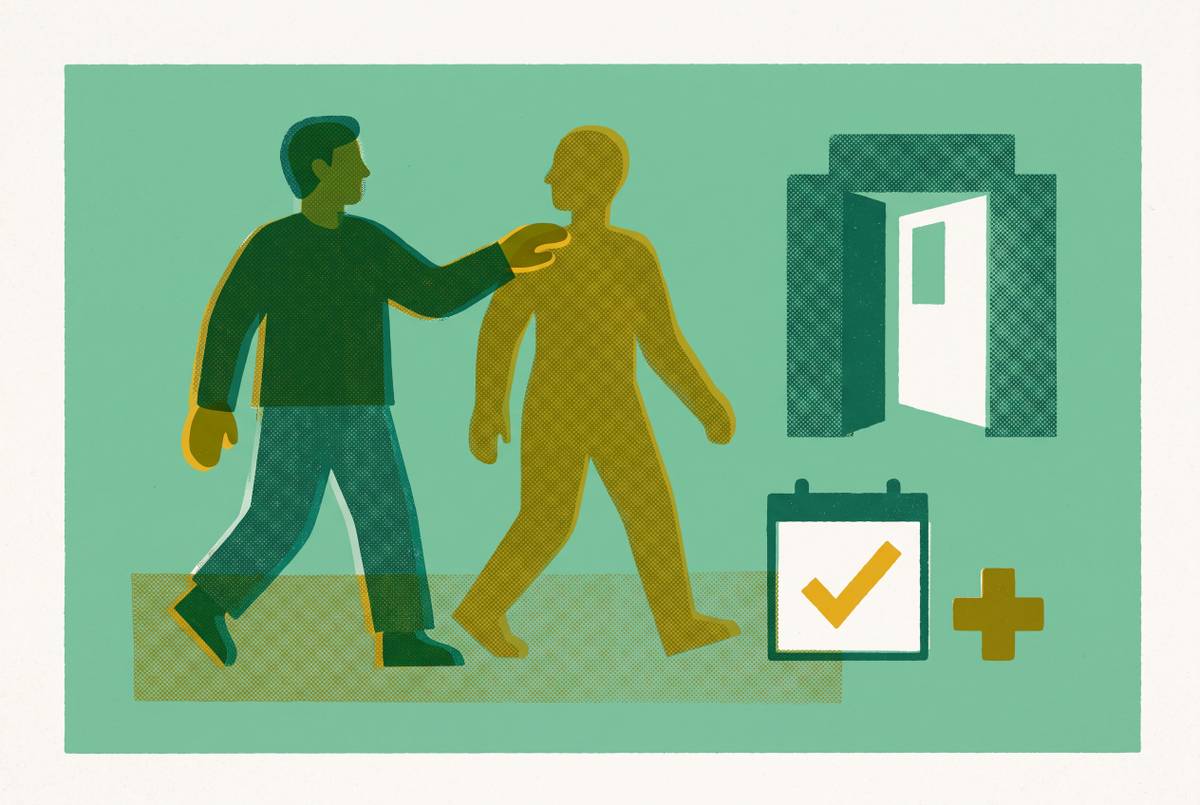
What a referral list cannot do, sustained, trust-based support can. Peer support, built around people with lived experience of serious mental illness who are trained and credentialed as specialists, closes that gap in a specific way: it puts someone who has navigated this same broken chain alongside a person at the exact link where it is currently failing. That might mean physically accompanying someone to a food bank, sitting with them through a SNAP application line by line, or simply showing up on the day motivation has collapsed and nothing else was going to get done. Research assessing the evidence base for peer support found that, compared with professional staff, peers were better able to reduce inpatient hospital use and improve a range of recovery outcomes, pointing to real clinical value in the trust and shared experience peers bring. That research describes the model as resting on respect, shared responsibility, and mutual agreement about what actually helps, principles that speak directly to the shame and stigma that make food insecurity so hard for people with serious mental illness to disclose and address. Crisis response programs have begun building peer specialists into their core function specifically to connect people with food banks and housing services, a sign that this model is becoming recognized care.
Food insecurity in serious mental illness is a structural problem, assembled from income collapse, executive function impairment, medication side effects, chronic stress, stigma, and housing instability, each one capable of breaking the chain on its own. A structural problem needs a structural response: consistent, present, and built by people who understand the chain because they have lived inside its broken links themselves.
Sources
- Does food insecurity cause anxiety and depression? Evidence from the changing cost of living study
- Food insecurity in adults living with severe mental illness in Australia: an exploration of causes and experiences using a co-design approach - PubMed
- Peer Support Services for Individuals With Serious Mental ...
- Food Insecurity, Neighborhood Disorder, and Homelessness among People with Serious Mental Illness
- Food Insecurity, Neighborhood Disorder, and Homelessness among People with Serious Mental Illness - PMC
- Social Determinants of Health: Food Security
- The impacts of antipsychotic medications on eating-related outcomes: A mixed methods systematic review