Why Lived Experience Makes a Better Recovery Coach
Peer coaches build trust through lived experience clinicians cannot replicate.
Lived experience functions as the working core of clinical care. It is the functional mechanism that lets a recovery coach build trust where credentials alone cannot, and that trust, in turn, is what makes the rest of recovery possible.
What a recovery coach does that a clinician does not
Mental Health America draws a distinction that sounds subtle but is not: recovery coaching helps someone live with a serious mental illness, rather than treat it. That is a different job entirely. Treating an illness is a clinical act, bounded by diagnostic criteria, medication protocols, and appointment windows. Living with an illness happens everywhere else, in the hours and days between those appointments, and it demands a different kind of investment of time and relational energy.
What does that investment look like in practice? A recovery coach spends time expanding a person's social network, helping them navigate medical, housing, social service, and legal systems, and coaching symptom management using natural supports and community resources rather than clinical tools alone. None of this replaces therapy or medication management. It surrounds them.
Formally, peer recovery support is defined as services, guidance, and mentorship delivered by specially trained individuals who themselves have lived experience of substance use or mental illness. That qualifier, specially trained, matters and will come up again later in this piece. But the foundation under the training is lived experience, and that foundation is what separates the role from adjacent clinical functions.
The role carries particular weight for people managing co-occurring substance use and psychiatric disorders, a population that faces distinct and often compounding challenges just starting recovery, let alone sustaining it. A single diagnosis is hard enough to organize care around. A recovery coach works in that terrain, which is important to understand clearly before asking who is best equipped to work it.
The trust gap that clinical training alone cannot close
Millions of Americans live with serious mental illness, and a meaningful share of them cannot reach the clinicians, medications, and therapies that exist, in principle, to help them. That is not a capacity problem alone. A 2025 narrative review of 34 articles identified medical mistrust as one of several intrapersonal and patient-level barriers to care for people with SMI, sitting alongside, but distinct from, the structural and logistical obstacles that get more attention. Mistrust is not visible on a waitlist chart. It shows up as someone who has an appointment available and does not go.
Provider scarcity makes this worse. Over 150 million Americans live in federally designated Mental Health Professional Shortage Areas. So even where trust is not the barrier, the clinician often simply is not there to be trusted or mistrusted. Both problems run in parallel, and they compound each other: fewer providers means less time per patient, less time means less relationship-building, and less relationship-building deepens exactly the mistrust the review identified.
Here is the question that matters for the rest of this piece: can more clinical training close that trust gap? Credentials communicate competence. They do not, on their own, communicate that the person across the table understands what it feels like to lose a job to a manic episode, or to sit in a waiting room dreading judgment. That is a different kind of knowledge, and it takes a different kind of person to supply it. Lived experience is a load-bearing part of the system, essential to how it works. It is a direct response to a documented, structural shortfall in trust, one that shortage areas and provider training programs are not built to fix on their own.
Why shared experience creates relational safety that credentials cannot manufacture
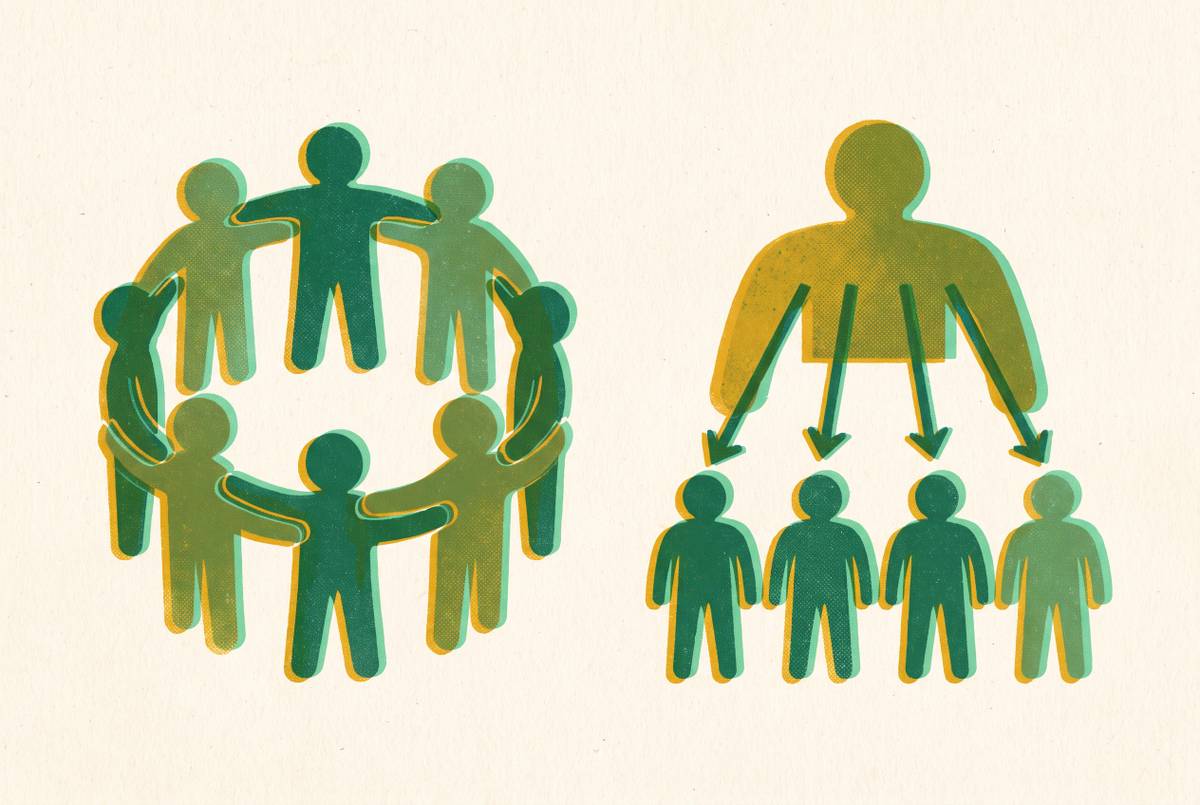
Peer support has a specific architecture. It is defined as the mutual giving and receiving of help, grounded in respect, shared responsibility, and mutual agreement, delivered by someone with lived experience. That describes a specific structural design for how support is delivered. It is a structural claim about how the relationship is built, and it means the relationship starts on different footing than a clinical one does.
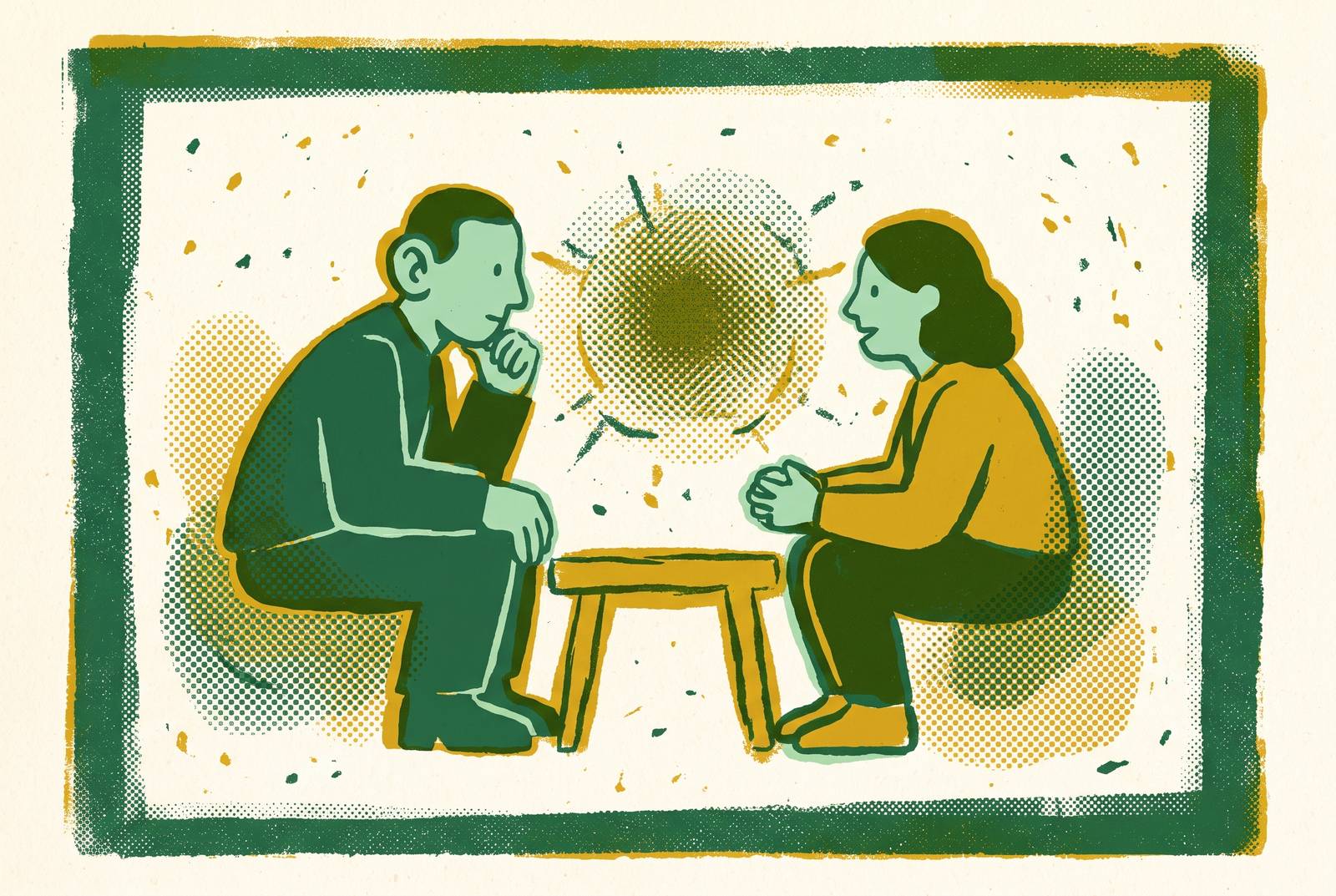
One mechanism does a lot of the work here: positive self-disclosure. When a peer coach shares their own story, that story serves as direct evidence within the relationship itself. It is evidence, delivered in real time, that recovery is possible and that the relationship in front of the person is not hierarchical. A clinician can tell someone that recovery is achievable. A peer coach can show them, because they are standing in front of them having achieved it.
Recovery itself, according to a paper in Frontiers in Psychiatry, is best understood as relational and participatory, something enacted through interaction with peers, professionals, and communities rather than something that occurs only inside a single person's head. If that is true, the coach's own history is not a credential sitting off to the side. It becomes material the relational work is built from. The identity shift from illness story to recovery story, something clinicians can describe and encourage, is something a peer coach can model, because they have already made that shift themselves.
That points to something deeper about agency. People living with mental illness are not passive recipients of care; they can be, and often need to be, active agents and first-person experts in their own recovery. A peer coach's presence reinforces that framing structurally, simply by existing as proof that someone who has been where the client is now became the expert in their own path forward. A clinician's expertise is expertise in illness. A peer coach's expertise is expertise in living with it, day to day, decision to decision. Both matter.
What the evidence shows about peer support outcomes
None of this would carry weight without outcomes to back it up, and the data has been accumulating from multiple directions. The UPSIDES trial, a multicentre randomised controlled trial published online in the British Journal of Psychiatry in mid-2025, found that peer support functions as an effective component of recovery-oriented mental healthcare across high-, middle-, and low-income countries, including settings disrupted by COVID-19. That geographic and economic range matters: this is not an effect confined to one health system or one funding model.
A systematic review and meta-analysis of 49 randomized controlled trials, published in Psychiatric Services, found a small positive effect on personal recovery and a reduction in anxiety symptoms. The effect on personal recovery was most pronounced when peer support was added on top of standard hospital treatment, not used instead of it. Many RCTs in this space carry a meaningful risk of bias, a limitation the Psychiatric Services authors acknowledge themselves. That caveat means the underlying studies may overstate the benefits of peer support, and it should not be waved away. But it does not erase the direction of the signal, which appears repeatedly across independent bodies of research using different populations and different methods.
A systematic review found evidence that peer supports improve outcomes for people in both inpatient and outpatient treatment for substance use disorder and co-occurring mental disorders. Claims data tells a similar story from a different angle. Pennsylvania Medicaid claims data from 2016 to 2019 found that people receiving peer support had fewer acute care readmissions, maintained lower readmission rates 90 days after discharge, and were more likely to engage in outpatient and community-based services. Kentucky Medicaid managed care data found reduced reliance on intensive service settings among peer support recipients, along with a slight decrease in opioid overdose risk. And more broadly, Mental Health America's research compilation associates peer support with improved quality of life, greater empowerment, and stronger social functioning among people with serious mental illness.
Taken individually, each of these findings is modest. Taken together, spanning trial data, claims data, and cross-national comparisons, they describe a pattern that keeps reappearing regardless of how researchers slice the population or the setting. That consistency, more than any single number, is the strongest argument the evidence offers.
How lived experience equips coaches to address the full picture of recovery, including social needs
Recovery does not happen in a vacuum, and a growing body of research treats that observation as more than a truism. Housing instability, food insecurity, transportation barriers, and inconsistent medication access all directly undermine mental health recovery, and an April 2025 paper in Translational Psychiatry frames addressing those social determinants as a clinical, medical, and ethical responsibility, not an optional add-on. That framing raises the stakes for anyone doing recovery work: if the social scaffolding collapses, the clinical progress collapses with it.
Peer workers are specifically positioned to build that scaffolding. SAMHSA's Treatment Improvement Protocol 64 identifies peer workers as effective links to housing, employment, education, transportation, child care, and other community supports, with that linkage working especially well for people facing unfavorable social determinants of health. A brief real-world illustration makes the scale of the need concrete: a social determinants of health navigator on a team launched in 2025 at SouthLight Healthcare fielded requests for transportation, food, housing, clothing, and medical services, all within a single workday. That is not a hypothetical caseload.
The design logic behind peer support keeps this focus on strengths rather than diagnosis. That distinction shapes what a peer coach notices in the first place. Someone who has personally navigated housing insecurity, or the maze of prior authorizations required to keep a prescription filled, is not working from a printed referral list when they help a client through the same maze. They are working from tacit knowledge built through repetition and consequence, the kind that does not appear in a training manual but becomes visible immediately in how fast and how specifically they can help.
The populations most likely to be failed without peer support
Some populations pay a steeper price than others when the trust gap goes unaddressed. People with serious mental illness die significantly earlier than the general population and carry disproportionately higher rates of physical health problems, with inadequate healthcare access identified as a contributing factor. That is a mortality gap. It is a mortality gap.
The treatment gap beneath it produces its own consequences and is not marginal, either. Those numbers describe a system that, for most people who need it, simply is not reaching them.
There is also a research gap sitting quietly underneath the clinical one. Lived experience research still lacks sufficient narrative material from under-represented and non-dominant cultural backgrounds, even though the recovery themes that do appear in diverse accounts, family as a motivator, coping paired with generativity, empowerment through social engagement, are distinct and instructive in their own right. Building a peer workforce that reflects the populations it serves is not incidental to closing that gap; it is a precondition for it. Washington State's Health Care Authority trained 1,684 peer specialists in state fiscal year 2025, including 128 who identified as American Indian and Alaska Native, and ran four culturally specific trainings in AI/AN communities. That is what intentional workforce-building looks like at state scale, and it shows the equity argument is operational, requiring deliberate investment to pull off. It is operational, and it requires deliberate investment to pull off. Over 90% of people with a substance use disorder did not receive treatment at a specialty facility, and the WHO reports that only a minority of people with anxiety disorders receive any treatment, showing that the treatment gap is not marginal.
What it takes to turn lived experience into a peer support practice
None of the preceding argument should be mistaken for a claim that lived experience alone is sufficient. It is necessary, but training is what makes it reliable, safe, and repeatable across hundreds of coaches and thousands of clients. Formal peer recovery support explicitly involves specially trained individuals, and that word, trained, is doing real structural work in the definition, not decorative work. Lived experience without structure risks becoming inconsistent, or worse, risks recreating an individualistic, pull-yourself-up narrative that quietly blames the person for structural, political, and economic conditions well outside their control. Peer support done well accounts for those forces explicitly rather than papering over them with a personal story.
Consider the scope of what peer specialists are actually asked to do: educate and coach people through medical systems, social services bureaucracies, and legal processes. That is not a task list a personal history alone prepares someone for. It requires structured competency, built through training, on top of the lived experience that makes the relationship trustworthy in the first place.
Washington's certification fact sheet again offers a useful data point here, not for the equity story this time but for the operational one: a statewide infrastructure trained hundreds of peer specialists across dozens of training events in a single fiscal year, including cohorts built for specific cultural communities. That is proof the workforce-development problem is solvable at scale, given the institutional will to solve it.
And the outcomes data points to a specific model, not a vague endorsement of "more peer support." The Psychiatric Services meta-analysis found effects on personal recovery and self-efficacy were strongest when peer support was delivered in addition to standard hospital treatment, not as a replacement for it. Integration, not substitution, is the model the evidence actually supports. Lived experience is the necessary condition for the trust this piece has spent several sections describing. Training and structure are what make that trust sufficient to build a practice on.
How firsthand builds its care model around lived experience as a functional asset
The principles traced through this piece are not abstractions. They describe an operating model, one where lived experience is built into the organization rather than treated as a feature bolted onto clinical work. The majority of firsthand's team is made up of people who have personally navigated serious mental illness or substance use disorder themselves. That reflects a core operating principle of how the organization is built. It is the organizational foundation the rest of the model sits on.
Guides, STRIVE Specialists, and community operations staff meet people where they actually live, in their own neighborhoods and communities, rather than requiring them to travel into a clinical setting to receive support. That in-person, community-based presence is a deliberate design choice rooted in the model's relational logic. It is part of the care model itself, consistent with the relational argument built earlier in this piece: recovery happens through interaction with peers, professionals, and communities, and meeting someone in their own environment is one direct expression of that principle.
The model treats housing, food, medication access, medical appointments, and behavioral health resources as a connected set of needs rather than separate referrals handled by separate departments, mapping directly onto the social determinants evidence covered earlier: recovery falls apart when any one of those pieces falls apart, so the response has to hold all of them together. Supporting that work is the proprietary helpinghand platform, which holds HITRUST r2 certification, giving healthcare partners and health plans a secure, compliant infrastructure to evaluate alongside the peer support model itself. That certification will not be what earns a client's trust. The person across from them will. But it is what lets health systems trust the organization enough to make that relationship possible at scale.
The throughline across every section of this piece lands here: sustainable recovery starts with trust, and trust is built most reliably by someone who has walked a comparable path and can prove, simply by their presence, that the other side of it exists.
Sources
- Effectiveness of peer support for people with severe mental health conditions in high-, middle- and low-income countries: multicentre randomised controlled trial | The British Journal of Psychiatry | Cambridge Core
- The Effectiveness of Peer Support in Personal and Clinical Recovery: Systematic Review and Meta-Analysis | Psychiatric Services
- Lived Experience in New Models of Care for Substance Use Disorder: A Systematic Review of Peer Recovery Support Services and Recovery Coaching - PMC
- Peer support: Research and reports | Mental Health America
- Peer Support in Mental Health: Literature Review - PMC
- Evidence for Peer Support May 2019 The Case for Peer Support
- Peer recovery coaching reduces reliance on acute healthcare – Recovery Research Institute
- Implementation outcomes and strategies of a peer recovery coach program: findings from a qualitative assessment in the U.S. South, 2024–2025 - PMC