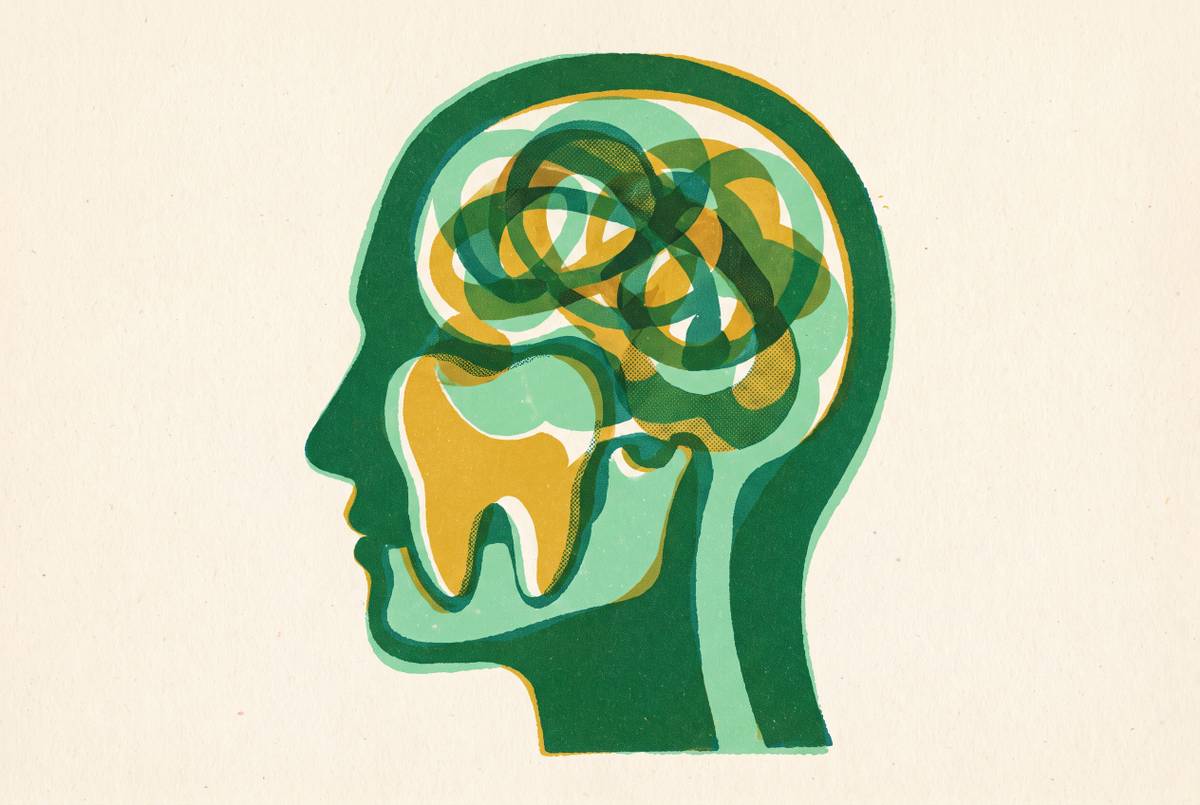
What Co-Occurring Disorders Look Like in Daily Life
How mental illness and substance use disorder reinforce each other in daily survival.
Co-occurring disorders, the presence of a serious mental illness alongside a substance use disorder, are not a rare complication that happens to a small, unlucky subset of patients. They are a routine feature of life for a large share of people carrying the heaviest psychiatric diagnoses, and this piece traces what that layered daily reality looks and feels like, from the missed appointment to the sleepless week to the substance that quiets what no one else can hear.
Why Co-Occurring Disorders Are So Common
Serious mental illness, as SAMHSA defines it, is a diagnosable mental, behavioral, or emotional disorder in an adult that causes serious functional impairment substantially interfering with one or more major life activities. That definition matters because it sets the baseline for everything that follows: these are not mild or transient conditions, and the people living with them are already managing significant disruption before any second diagnosis enters the picture. The 2025 National Survey on Drug Use and Health found that among adults with serious mental illness specifically, the overlap with substance use disorder has actually been declining, with co-occurring SMI and SUD decreasing from 2021 to 2025. Even as that trend moves in a positive direction, co-occurrence remains the modal experience, not the exception, for people with the most severe conditions.
Three overlapping mechanisms explain why the two conditions travel together so persistently. Shared genetic and environmental risk factors predispose some people to both; mental health symptoms increase vulnerability to substance misuse; and substance use itself can trigger or worsen psychiatric disorders. Self-medication is the most recognizable of the three: a person uses alcohol or other substances to manage thoughts and emotions that have become disruptive or unbearable, reaching not for a high but for quiet. That distinction, between seeking euphoria and seeking relief, shapes almost everything that follows in this piece. Research from the University of Sydney's Matilda Centre found that roughly half of people with any mental or substance use disorder in the past year experienced two or more diagnosable conditions simultaneously, and that younger cohorts are increasingly likely to fall into that group. The scale alone should settle any lingering assumption that co-occurring disorders are an edge case rather than a central feature of serious mental illness as it is actually lived.
How the Two Conditions Interact
Having two diagnoses is not simply additive. Each condition actively undermines a person's ability to manage the other, which produces a compounding loop rather than two separate struggles running in parallel. Diagnosis becomes less accurate as a result, and treatment becomes less targeted. The starting point for care is already compromised before a single session begins.
The traffic runs in both directions. Each of those consequences functions as its own barrier to getting help in the first place, not merely as a harm that arrives later. People may struggle to navigate care systems even when those systems are technically available to them, which is a very different problem than lacking access, and one that explains a great deal of what gets labeled as disengagement.
What a Missed Appointment Represents
A missed appointment rarely marks a single, isolated act of avoidance. It is usually the visible end of a chain of smaller failures that two interacting conditions made close to inevitable. The night before, a person in a psychotic or manic episode, or coming down from a substance, may not sleep at all, which means the morning of the appointment arrives with cognitive resources already spent before the day has properly started.
Transportation is not a minor logistical detail sitting in the background. The appointment itself can carry its own threat. The system someone is trying to reach often discourages the reaching, quietly and without anyone involved intending it that way.
From the outside, from the clinic's chart, a missed appointment looks like a single data point, maybe a checkbox marked no-show. From the inside, it is the outcome of a day, sometimes a week, in which two conditions took turns removing the capacity to follow through. One might argue that the chart should carry some notation for that difference, but it rarely does, and the absence shapes how the next appointment gets scheduled, and whether it gets scheduled.
Sleeplessness, Food Insecurity, and Housing Instability as Part of the Disorder
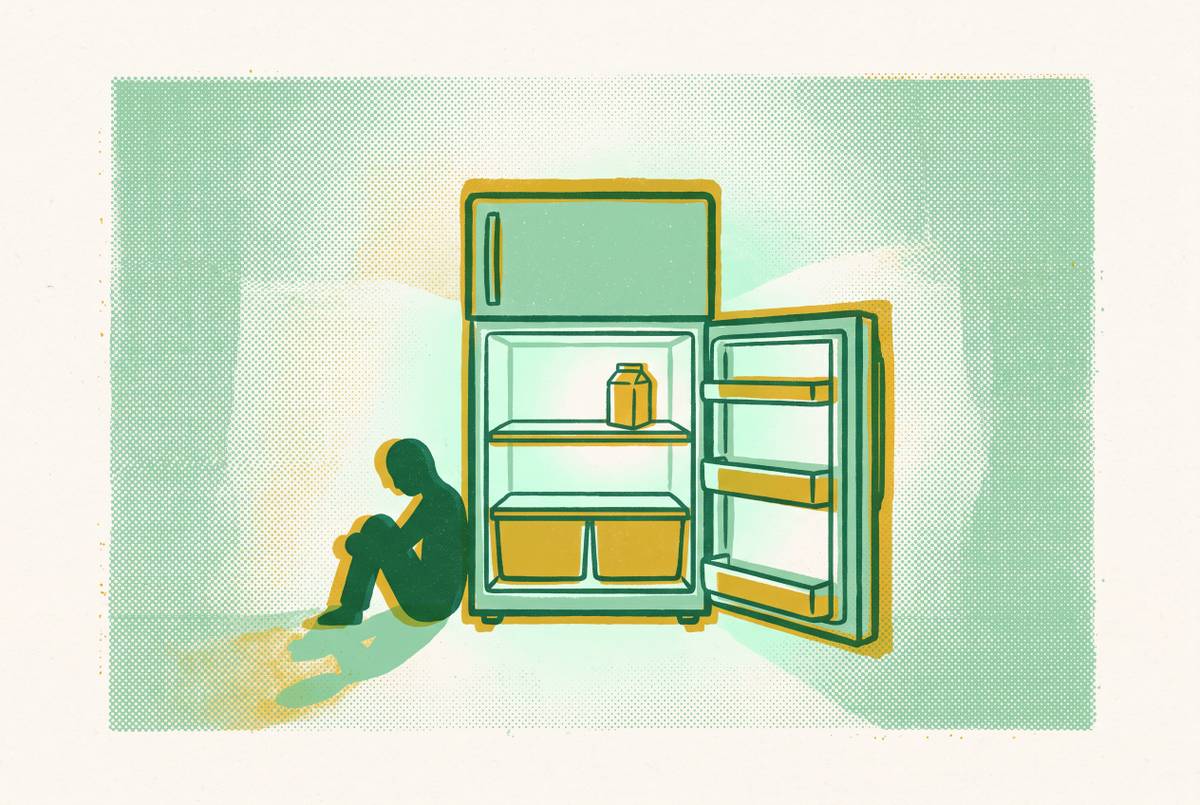
For people living with co-occurring disorders, the conditions of daily survival are not background context sitting outside the illness. They function as active ingredients in how severe the symptoms get on any given day. Sleep disruption illustrates the loop clearly: it is both a symptom of many psychiatric conditions and a trigger for substance use, so a person who cannot sleep because of psychotic symptoms may use a substance specifically to force sleep, which in turn worsens both the psychosis and the substance use disorder over time.
The NIDA framework establishes that untreated co-occurring disorders produce cascading functional impairment, and that cascade has a very practical consequence: a person managing severe psychiatric symptoms and substance use simultaneously is operating with substantially less capacity to solve the logistical problems of housing, food, and daily routine. Food insecurity is one of those problems, and it does more damage than hardship alone would suggest. People worried about food not lasting are substantially more likely to skip or otherwise not adhere to their medications, a pattern researchers call cost-related medication nonadherence. That finding comes from NIH's All of Us Research Program, and it demonstrates something specific: hunger does not sit beside psychiatric treatment as a separate hardship, it disrupts the treatment directly, because a person choosing between groceries and a prescription refill is making a decision that worsens the underlying illness either way.
Housing instability works on the nervous system in a similar fashion. The person living through all of this is managing an illness inside conditions built, however unintentionally, to make management nearly impossible, and that distinction should shape how support gets offered.
Substance use that looks like a choice as an attempt to manage symptoms no one else can see
The substance use that accompanies serious mental illness is frequently the most immediately available tool a person has for managing symptoms that nothing else touches. For someone experiencing command hallucinations, racing thoughts, or dissociative states, alcohol or another substance may produce the only reliable stretch of quiet available to them. Looked at from outside, the choice seems reckless. Looked at from inside, the cost-benefit calculation runs very differently, because the alternative on offer is often continued, unmanaged suffering with no clear end point.
The NIDA framework notes that self-medication is an ineffective long-term strategy that can make psychiatric symptoms worse over time. Ineffective across a year is not the same claim as not working tonight, and that gap between long-term failure and short-term relief is what makes the pattern so durable. Stigma compounds the problem further. Because substance use carries judgment even inside mental health settings, a person managing symptoms this way may hide that use from the very providers trying to treat the psychiatric condition, which leaves both conditions untreated because neither can be discussed honestly in the presence of the other. Treating the substance use as a moral failure rather than as a symptom-management strategy breaks the trust that any treatment relationship depends on, and without that trust, neither condition gets adequately addressed.
Who is most likely to be living this reality without adequate support
Co-occurring disorders do not distribute evenly across the population, and the people most likely to be living this daily reality are often the people least likely to find care that addresses both conditions together. Young adults, particularly young women, carry the highest rates of serious mental illness among adult age groups. Men with SMI are more likely to have a co-occurring substance use disorder, more likely to experience homelessness, and less likely to seek treatment at all, a convergence that makes co-occurring disorders in young men a particularly acute and underserved clinical reality.
People leaving jails and prisons face this combination at especially high rates, re-entering communities with little continuity of care, no insurance, and limited housing options, conditions that make symptom relapse for one or both disorders close to guaranteed. Australian population data from the Matilda Centre found that younger cohorts today are significantly more likely to experience co-occurring conditions than the same age group was a generation ago, a growing problem that is landing hardest on people now entering adulthood.
Why the systems meant to help treat the two conditions as if they cannot be in the same room
The treatment gap for co-occurring disorders is a product of systems built from the start to treat one condition at a time, not only a matter of too few resources spread too thin, and those systems still largely operate on that original design. A person who needs both is typically routed to one system, asked to stabilize there, and only then referred to the other, a sequencing that ignores the fact that the two conditions are actively affecting each other the entire time the person waits.
The experience on the ground follows a frustrating loop. Qualitative research on people with SMI navigating dual conditions describes this as moving between different worlds and logics, each system running on its own norms, its own language, and its own idea of what the person's primary problem actually is. SAMHSA has recognized this siloing as a structural problem and has called for integrated treatment approaches in response. Integrated care remains far from universal, and in a great many communities, it remains far from available.
What Helps: Integrated Care and Trusted Relationships
The evidence on what genuinely helps people with co-occurring disorders points consistently toward two things: treating both conditions at the same time, and doing so through relationships the person actually trusts. Integrated treatment, addressing psychiatric and substance use disorders simultaneously rather than sequentially, produces better outcomes than treating either condition alone. That is the clinical consensus SAMHSA has established, and it holds up across outcome data gathered in multiple treatment settings.
Integration alone is not enough if the relationship between a person and a provider cannot be trusted, and for many people with co-occurring disorders, a history of being dismissed, stigmatized, or shuttled between systems has made clinical relationships genuinely hard to form. Peer support workers, people with their own lived experience of serious mental illness, substance use disorder, or both, can reach people across that trust gap precisely because they are not asking anyone to trust an institution first. The relationship begins instead with shared experience. The international UPSIDES randomized controlled trial found measurable benefits of peer support on social inclusion and recovery-related outcomes, including empowerment and hope, with participants reporting relief from emotional burdens, decreased loneliness, and stronger community connections.
Peer support also reaches the functional, on-the-ground barriers described earlier in this piece, the missed appointment, the food insecurity, the housing instability, in ways clinical sessions alone cannot. Showing up in person, in the community, to help someone get to a provider or make sense of an unfamiliar system is part of what makes this model work specifically for people carrying two conditions at once. firsthand's model reflects this approach directly, built around Guides and STRIVE Specialists who bring lived experience of serious mental illness, substance use disorder, or both to the people they support. It is designed for exactly this population: people whose two conditions interact in the ways traced throughout this piece, who need support that addresses both without first requiring them to enter a system that has historically treated the two as separate problems.
Being seen whole when living with two conditions at once
The daily friction described throughout this piece, the missed appointment, the sleepless week, the substance that quiets a voice no one else can hear, is specific. Relief is also possible, and what makes relief possible is being met by someone who treats both conditions as part of one whole person rather than two competing problems fighting for attention. The person living with co-occurring disorders is not reducible to a diagnosis or to a pattern of substance use. Those two things are currently shaping, often dominating, daily life, but care that treats the person as nothing more than the sum of those two conditions adds to the burden.
Recovery from co-occurring disorders does not move in a straight line. A good week does not erase the risk carried into a bad one, and support that disappears the moment someone has a setback fails that person at precisely the moment it is needed most. Continuity matters as much as the quality of any single intervention. Qualitative research on SMI and comorbid conditions found that significant others function as a critical safety net for people navigating dual conditions, which suggests that any model of support has to extend into a person's actual social world and not confine itself to the four walls of a clinical appointment. Narrative research on recovery also shows that when people hear recovery stories from peers who have walked a similar path, something shifts in how they understand their own story, no longer a fixed diagnosis but something capable of developing into a future that looks different from the present.
What has been described across this piece is what two serious conditions look like when they interact without adequate support behind them. The right support, offered by the right people, in relationships a person can actually trust, changes the shape of that day, and of the days that follow it.
Sources
- Experiences of Everyday Life among Individuals with Co-Existence of Serious Mental Illness and Cancer—A Qualitative Systematic Literature Review
- Co-occurring mental and substance use disorders in Australia 2020–2022: Prevalence, patterns, conditional probabilities and correlates in the general population
- Co-Occurring Disorders and Other Health Conditions