Nervous Breakdown Treatment and Recovery Pathways
Effective recovery requires clinical care, housing, and trusted human connection working together.

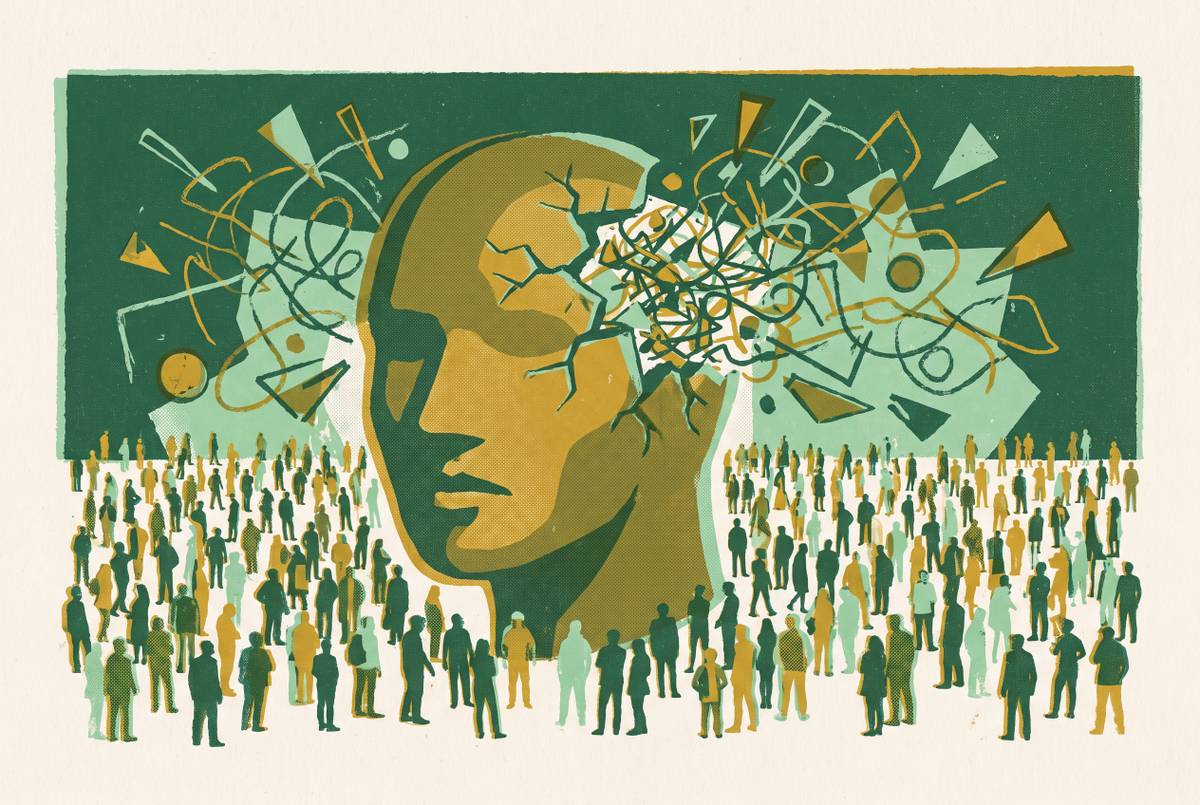
Treatment and recovery after a “nervous breakdown” involve more than getting through the worst moment. Acute psychological collapse is an entry point into a longer process. A recovery pathway needs clinical care, practical support, and trusted human connection working together, because treatment can only help when the person can reach it and stay engaged.
Why "nervous breakdown" is a useful starting point, not a diagnosis
“Nervous breakdown” gives people a shared language that typically describes a point at which severe anxiety, depression, a trauma response, or a psychotic episode makes ordinary functioning impossible. The term names the threshold at which familiar ways of coping no longer hold. Its usefulness lies in expressing that loss of function, rather than identifying a single condition or prescribing a particular treatment.
That distinction matters when someone enters care. Clinical assessment must look beyond this broad description to find out what support the person needs. Yet identifying the condition does not settle the larger question of what happens next. The threshold moment may force contact with a care system, but recovery depends on whether that system can receive the person and support them beyond the immediate crisis.
Why recovery from a breakdown spans months, not days
Recovery from acute psychological collapse typically unfolds over weeks to months, with gradual changes in sleep, energy, and thinking. The passing of the most intense distress is therefore not the same as a return to ordinary functioning. Improvement is also nonlinear, so the need for support cannot be judged only by whether the person seems better at a particular moment. A useful distinction is between reducing the immediate crisis and rebuilding the capacity to manage daily life. Those are connected tasks, but they do not run on the same timetable.
Medication can help reduce acute anxiety or depressive symptoms, yet measurable change can take weeks. Therapy also needs a plan for ongoing care beyond a single visit. A structured recovery plan brings these treatments together with daily self-care and changes at work. Each part takes time to establish, and the balance often needs calibration as the person’s needs change. Once treatment has begun, the support around it needs to last long enough to help.
This longer timescale explains why an intervention can be appropriate without being sufficient on its own. A plan needs to accommodate gradual progress instead of treating the end of the acute episode as the end of care. That creates a demanding test for the system receiving the person. It must provide continuity during a period when the person may still struggle to organize and sustain that continuity themselves.
How the care system tends to fail people at their most acute moment
People often enter mental health care through emergency departments, which reflects delays in getting help and breaks in care after discharge. Their role makes a structural mismatch visible. The place that receives someone in acute distress is not necessarily organized to support a long recovery. Systems built around throughput can move people through a visit without giving them the ongoing support they need. For people with serious mental illness, that gap is especially consequential because recovery needs can be complex.
The clinical encounter can itself introduce barriers. These include limited knowledge about serious mental illness, stigma toward people with SMI, and diagnostic overshadowing. Diagnostic overshadowing means that a mental health diagnosis can obscure attention to other health concerns. Both the availability of an appointment and whether the encounter recognizes the person’s needs accurately therefore matter.
Psychiatrist supply is projected to fall significantly short of demand, while its concentration in metropolitan areas leaves rural and regional communities persistently underserved. Public attention to mental health does not, by itself, correct that distribution. The administration announced in May 2025 that it would not enforce strengthened mental health parity regulations finalized in late 2024. The American Psychological Association warned that this represented a concerning deprioritization of mental health and health care infrastructure.
New York City’s Office of Community Mental Health’s 2026 annual report found that nearly one in seven NYC adults reported an unmet need for mental health treatment. Most of those with unmet need faced more than one barrier at the same time. Removing one obstacle may leave others in place, so a recovery pathway cannot be judged only by whether it offers a clinical service.
Why housing, food, and transportation are not background conditions — they are clinical variables
Even when care is available, material conditions can prevent someone from using it. Stable housing, transportation, and the ability to remember and afford medication directly affect the work of recovery. A plan that assumes these conditions are already secure can miss the reasons treatment is difficult to sustain. These concerns shape whether the clinical plan is workable in the first place.
A 2025 study of urban emergency department patients found that financial instability and transportation difficulties were associated with poor medication adherence and greater difficulty with healthcare utilization tasks. The association places those barriers within an assessment of clinical risk, rather than treating them as evidence of personal failure. A separate 2025 study found that convenient, affordable transportation to clinic or urgent care visits can reduce the risk of relapse and hospitalization. Transport coordination therefore has a legitimate place in care. It addresses a condition affecting treatment.
Food access follows the same logic. Research published in 2025 found that people who kept taking part in food assistance programs such as SNAP were more likely to have episodic than chronic poor mental health. That finding suggests food support can buffer against the accumulation of chronic distress, although an association does not settle every question about causation. For clinical treatment to be complete, it must also address what keeps people from getting food, housing, and transportation.
SouthLight Healthcare offers a concrete example of organizing care around that premise. It launched a dedicated Social Determinants of Health team in 2025, funded by opioid settlement dollars, to help patients secure housing, transportation, food, and other resources affecting their ability to stay in treatment. About 20% of its patients are homeless, and the large majority are covered by Medicaid. The team makes these needs part of the service response rather than leaving individuals to resolve them alone. That practical work also creates a role for someone who understands both the care system and the experience of navigating it.
What peer support actually does that clinical care alone cannot
Someone who has navigated serious mental illness and recovery brings lived experience to the relationship, giving that person a distinct form of relational authority. This changes how support may be received by someone whose experience of care includes stigma, misunderstanding, or disrupted relationships. A similar experience provides a basis for trust.
One important mechanism is “voice,” meaning the experience of being seen and heard in terms that feel authentic. Relational peer support has been documented as helping both peer providers and service users change how they understand their recovery. That matters because care involves more than accepting a treatment plan. It also involves whether the person can understand their life as containing the possibility of recovery. Peer support makes room for that interpretation without requiring the clinical relationship to carry every part of it.
Systematic reviews and meta-analyses have found improvements in self-efficacy, hope, empowerment, and social networks, as well as reduced hospital rates among people with SMI receiving peer support. These gains reach parts of recovery that care focused on symptoms alone may miss. A multicentre randomized controlled trial published in The British Journal of Psychiatry in July 2026 found significant effects on social inclusion and empowerment in adults who had lived with severe mental health conditions for a long time. The trial covered six sites, including two in Germany and one each in Uganda, Tanzania, Israel, and India. Effects were also found in the per-protocol analysis among participants who received three or more sessions.
Research in community mental health centers identifies peer roles including advocacy in interprofessional meetings, sharing lived experience and connecting people to resources, preparing for care visits, mutuality, and affiliations, funding, and sustainability of peer support services. Clinical therapists in that research described having someone with lived experience at the table as a way to maintain accountability. Peer support helps build trust and keep care going, but it needs an organization that can support the work over time.
Why building a peer workforce is harder than it should be, and what makes it work
The evidence for peer support does not mean that every organization can deliver it simply by hiring peer workers. Its effectiveness depends on whether peers are treated as legitimate members of the care team or as low-cost adjuncts to clinical staff. That distinction affects whether their contribution has a clear place in care. A role built around lived experience needs recognition on its own terms. Otherwise, the very quality that makes peer support distinct can be lost in how the job is defined.
The work also places demands on the people providing it. Peer workers help people whose lives are complex and emotionally demanding, and they face a greater risk of burnout without structured supervision and mentorship. Their own recovery experience does not remove the need for support at work. Continuity for service users and support for the workforce are linked concerns.
Training and a clear account of what peers do help teams work with them more effectively. Healthcare leaders also need to understand how peer support complements clinical care. This allows clinical expertise and lived experience to remain distinct while contributing to the same recovery plan. The organization must also plan how to fund this work and keep it going.
What a recovery pathway actually looks like when the right pieces are in place
A workable recovery pathway brings clinical, social, and relational support together rather than asking one to compensate for the absence of the others. The clinical layer gives the person an immediate medical assessment, a safety plan, therapy, and medication management. These components address acute needs and longer-term treatment with realistic expectations about the time change requires. The social layer makes that treatment reachable through stable housing, consistent food access, reliable transportation, and help navigating financial and benefits systems. Its purpose is to make care possible under the conditions of the person’s actual life.
The relational layer helps hold those pieces together through the uneven course of recovery. A trusted peer can sustain engagement, advocate in clinical settings, and help the person develop a narrative that includes the possibility of getting better. This is a way of connecting assessment and treatment to a person who must live through the months between an acute episode and more stable functioning. The pathway works through coordination.
The strongest objection is that comprehensive support takes resources and is difficult to scale. Yet leaving people without that support also has costs, including repeated emergency department visits, rehospitalizations, and breaks in recovery. For someone navigating recovery, a clinician, or a health plan, the question is therefore whether the system is designed to deliver the full pathway. When the right support is present, the person is not left to turn a discharge plan into a recovery process alone.
Sources
- Testing a mobile peer support intervention for persons with serious mental illness (DigiPer) in community mental health services: a feasibility study protocol - PMC
- Effectiveness of peer support for people with severe mental health conditions in high-, middle- and low-income countries: multicentre randomised controlled trial