Nervous Breakdown Causes by Population
Crisis triggers differ by age, income, race, and whether basic needs are met.
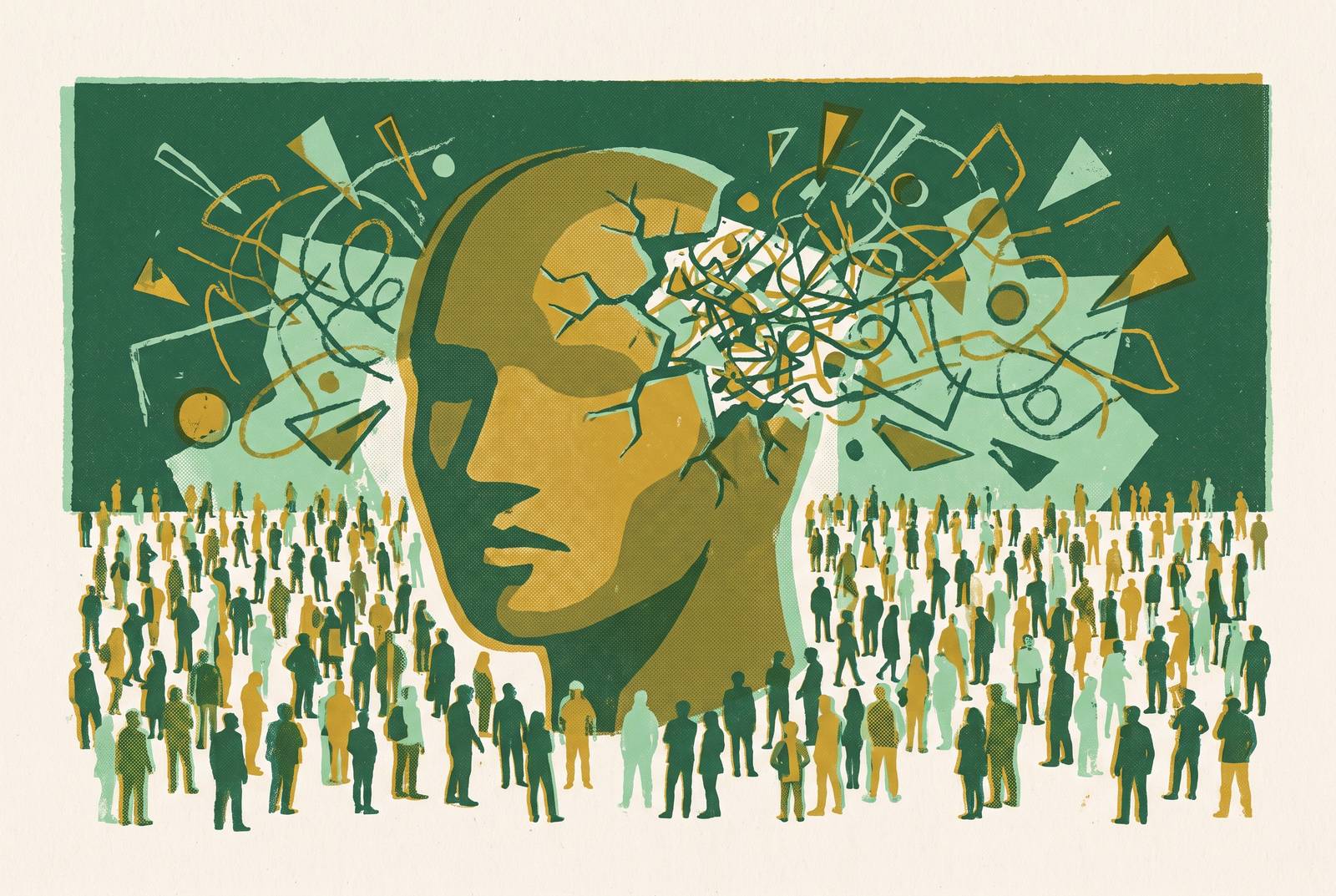
A “nervous breakdown” does not have the same causes across populations. The pressures that overwhelm functioning differ by age, income, race, and social circumstance, so effective support depends on understanding what is driving a particular person’s crisis.
What "nervous breakdown" actually means and why population-level causes matter
“Nervous breakdown” is a lay term. It describes the point at which accumulated stress overwhelms a person’s ability to function. Exhaustion, insomnia, withdrawal, and difficulty concentrating may signal that point and describe its effects.
Looking at populations helps separate the crisis people see from the pressures that drive it. Those pressures reflect life stage, material resources, social support, and access to care. Population patterns help identify conditions that an assessment focused only on symptoms could miss. A support system calibrated to one population’s pressures may therefore fail another even when their distress looks similar.
How age shapes the specific pressures that accumulate into crisis
As adults grow older, what they must take care of and what they feel unsure about change. For adults 18–26, debt, cost of living, climate anxiety, and job insecurity are major sources of stress. These pressures involve what people need now and what they fear about the future. Their accumulation is different from a single setback because several sources of insecurity can remain unresolved at once.
For adults 27–42, more of the stress comes from work-life balance, childcare costs, and housing instability. Gen X adults (43–58) face health concerns and retirement insecurity while managing “sandwich” caregiver duties for children and aging parents. This is role overload, in which people face demands from several parts of life at once.
A 2025 GBD analysis found that global anxiety incidence is highest in the 10–14 age group, while disability-adjusted life years are highest in 25–29-year-olds. Those are different measures, distinguishing the onset of cases from the burden of impairment. The findings add context without establishing which stressor caused any individual’s anxiety. Debt and precarity call for a different response from years of competing caregiver responsibilities.
How economic stress becomes a direct pathway to crisis, not just background noise
Economic pressure can be a sustained condition in which financial stress chronically activates the stress response, reducing the opportunity to recover between demands. When paying for necessities remains uncertain, the source of distress does not disappear after a difficult day. This makes financial precarity a pathway into persistent impairment.
The APA’s 2026 mental health poll found that a majority of U.S. adults reported anxiety about paying bills or expenses. The economy also topped its list of specific current events causing concern. Concern about a bill and an inability to pay for utilities without losing heat are not equivalent exposures.
Georgia Southern University research associated difficulty paying utility bills with significantly lower odds of episodic poor mental health relative to chronic poor mental health. It also found that people unable to afford a doctor had significantly lower odds of reporting no poor mental health days compared with chronic poor mental health. These associations support an important distinction between passing distress and enduring deprivation. They also show how financial exclusion from healthcare can compound the burden that economic hardship helped create.
Why racial and ethnic minorities carry a disproportionate crisis burden, and what drives it
Race is a distinct lens because financial resources alone do not explain unequal exposure to isolation, mistrust, and barriers to care. Social isolation and lack of social and emotional support are more prevalent among American Indian/Alaska Native, Black, Native Hawaiian/Pacific Islander, multiracial, and Hispanic/Latino adults than among non-Hispanic White adults. These conditions weaken the support available when stress accumulates. The resulting disparities reflect differences in the conditions meant to buffer distress.
Medical mistrust among African American people with serious mental illness is another barrier that research has found. Historical and ongoing healthcare failures can suppress help-seeking even when a service exists. This separates nominal access from care that someone can trust enough to use. Cultural stigma, geographic disparities, and limited mental health literacy add barriers that are not evenly distributed by race.
Public narratives about schizophrenia and bipolar disorder can deepen that distance from care. They associate these conditions with violence despite evidence that affected individuals are more likely to be victimized than to perpetrate violence. Such stigma further discourages help-seeking among people already navigating distrust.
How housing instability, transportation gaps, and food insecurity function as mental health crises in their own right
Material needs make the structural argument concrete. People without stable housing have disproportionately higher rates of serious mental illness and co-occurring substance use. The relationship runs in both directions, with housing instability contributing to mental health deterioration and being worsened by it. Housing is therefore not just a setting in which crisis occurs. Its instability can help produce and sustain the crisis itself.
Transportation barriers can also lead to distress that lasts. Georgia Southern University research found that these barriers were linked to chronic mental health problems. Unreliable access to care is thus more consequential than an isolated missed appointment. Food insecurity and utility instability also keep people under stress over time, leaving them unable to recover between crises. What presents as a mental health problem may have an unmet material need at its center.
People in rural communities face several of these problems at once. Workforce shortages, transportation deserts, internet access gaps, and housing shortages converge. Financial hardship in these settings is linked to the onset and chronicity of mental disorders. Establishing a dependable route to help for those needs is especially consequential for people who need sustained support after acute care.
What happens to people with serious mental illness when the system doesn't catch them
For people with serious mental illness, stabilization may end an acute episode without changing the conditions that make another crisis likely. The 2024 NSDUH findings indicated that nearly three in ten U.S. adults with serious mental illness received no mental health treatment that year. Schizophrenia spectrum disorder, bipolar disorder, and disabling major depressive disorder are among the conditions included in serious mental illness. People with SMI die approximately 10 to 25 years earlier than the general population.
After stabilization, long waits for follow-up care, social instability, and out-of-network patterns can interrupt recovery. Limited peer-support reimbursement and diagnostic overshadowing add further obstacles. The psychological effects of SMI, medical mistrust, and limited health literacy can also make re-entry into care difficult. A system that asks someone to find a way through all these barriers after a crisis may leave that person without ongoing support.
In NYC jails, roughly one in five people is diagnosed with serious mental illness. That figure illustrates the consequences of untreated crisis reaching institutions that are not a substitute for ongoing care. It should not be read as a defining feature of people with SMI. Rather, it sharpens the question of what support can remain accessible after existing systems have failed someone. Acute treatment and a durable path to recovery are not the same thing.
Why peer support reaches people that clinical models miss, especially across the populations most at risk
Peer support offers a way to address the trust gap. It is delivered by people with their own lived experience of mental illness or recovery. That experience provides a basis for connection that clinical training alone cannot confer. For someone navigating medical mistrust, contact with a person who has faced the same system may make engagement possible. The value lies not in replacing clinical knowledge, but in making support more approachable.
A growing evidence base associates peer support with fewer psychiatric hospitalizations, improved quality of life, and increased treatment engagement among people with SMI. It also links peer support to stronger feelings of hope and empowerment. A July 2026 multicentre RCT spanning Germany, Uganda, Tanzania, Israel, and India found significant effects on social inclusion and empowerment outcomes. Those effects were particularly evident among participants who received three or more sessions.
Community-based peer work also addresses needs that do not fit neatly into a clinical appointment. Peers can help people access housing, food, medication, and behavioral health resources where they live. Peer services also help family members learn, find ways to cope, and build shared understanding so they can better support recovery. Washington’s Medicaid State Plan formally authorizes peer support activities promoting wellness, recovery, self-advocacy, natural supports, and community living skills. That authorization demonstrates that lived-experience support can be part of reimbursable care.
The structural gap between peer support's promise and its current reach
Evidence of benefit does not mean peer support reaches everyone who could use it. Low average Medicaid reimbursement, fragmented financing, and low compensation constrain the workforce. Limited career advancement and minimal use of value-based or bundled payment models further weaken its stability. The Department of Labor also lacks a standard occupational classification for this work.
Only a small number of states provide peer recovery support services to more than a fraction of eligible Medicaid beneficiaries with substance use disorders. This lack of support matters most for people who already face rural isolation, unstable housing, and racial or economic barriers. When reimbursement decides whether support is available, the people who have the most trouble getting help may have the least access to it. The gap is therefore an equity issue as well as a workforce issue.
What matching support to population actually looks like, and where to start
Matching support begins by identifying what is overwhelming functioning and what prevents help from reaching the person. For individuals and families, that means distinguishing immediate symptoms from the conditions sustaining them. A young adult facing economic precarity may need food, housing stability, and financial navigation before or together with clinical intervention. Someone from a community with documented medical mistrust may first need a relationship grounded in shared lived experience. The entry point changes because the barrier changes.
For people with SMI cycling through crises, the evidence points toward consistent, community-based presence. Showing up in person and addressing housing and medication together responds to needs that a clinic-only route may leave unresolved. Health plans and provider systems therefore have reason to integrate peer support as a primary trust-building layer. Its role is to make clinical services accessible while helping address the circumstances that undermine recovery.
The first-ever lived experience–led research agenda on early mortality in SMI offers a related model for designing support. Developed through a virtual roundtable using a Delphi method, it centered lived experience with clinical knowledge and other expertise. That approach treats people affected by serious mental illness as contributors to the answer. Recovery is possible, but support must be holistic, dignified, and consistent enough to hold beyond the immediate crisis. Understanding population differences makes that aim practical by connecting people with the right support, from the right people.
Sources
- The changing trend and prediction of the burden of anxiety disorder in Chinese population from 2022 to 2035
- Stress in America 2025: A crisis of connection
- Testing a mobile peer support intervention for persons with serious mental illness (DigiPer) in community mental health services: a feasibility study protocol - PMC