Returning to Daily Life After a Nervous Breakdown
Peer support helps people rebuild daily life where clinical care alone leaves gaps.

Returning to daily life after a nervous breakdown is a phased process. Recovery follows the nervous system’s capacity. Clinical care matters, but people with shared lived experience are especially well positioned to help translate that care into a sustainable return.
What "nervous breakdown" actually means for the body and brain
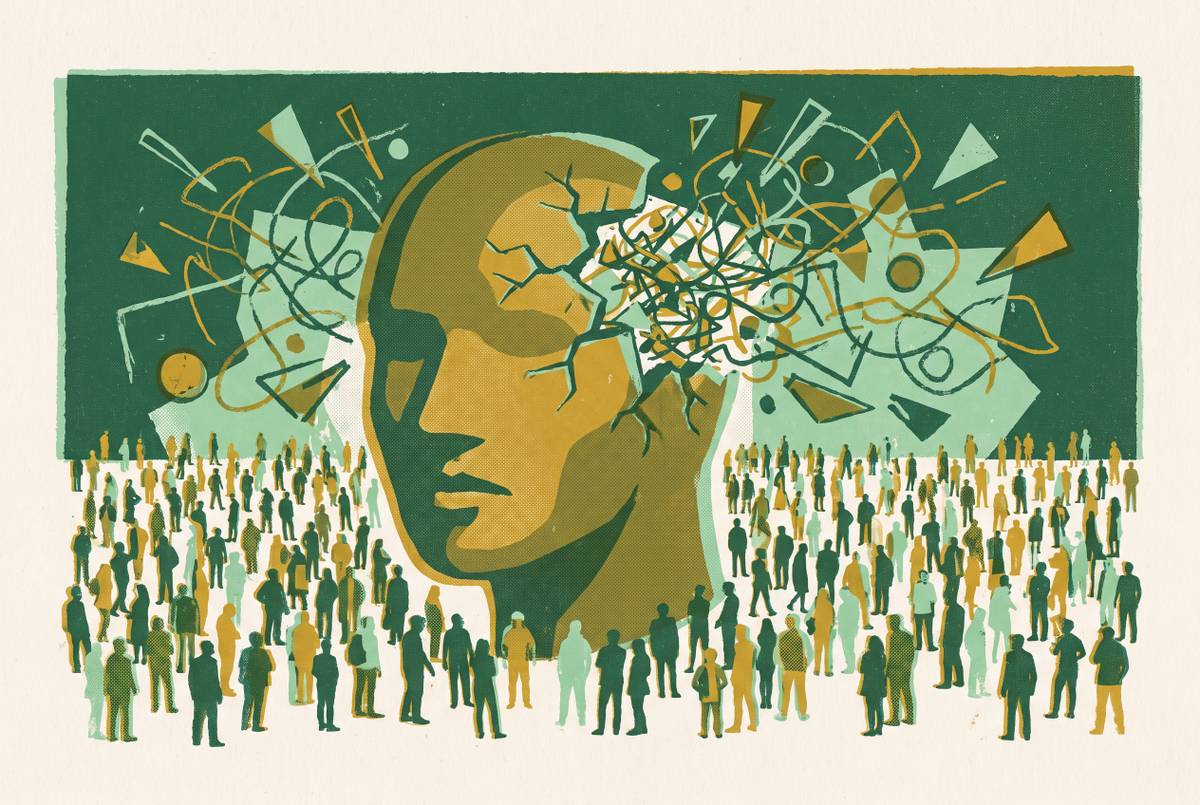
Things that once happened almost automatically can become difficult or impossible. Basic self-care, social contact, and work may demand more than a person can manage. That loss of daily function is central to what people call a “nervous breakdown.” The term describes a real collapse in which demands exceed the nervous system’s coping capacity. Acute anxiety, depression, and dissociation can be part of that collapse.
Understanding this as a biological event changes the interpretation of what has happened. The body is signaling that its resources have been exhausted. Calling the collapse a failure therefore misidentifies the problem and adds pressure where capacity is already depleted. What matters is what demands their system can currently bear.
The starting conditions also matter. Many people who experience a breakdown have underlying diagnoses, including schizophrenia, major depressive disorder, and bipolar disorder, which can make recovery more complex. Childhood trauma, discrimination, social isolation, unemployment, food insecurity, and housing instability can further increase vulnerability. These are not merely circumstances surrounding the event. They contribute directly to the demands under which the person is trying to function, so the collapse cannot be understood apart from them.
Why the nervous system sets the pace of recovery, not the calendar
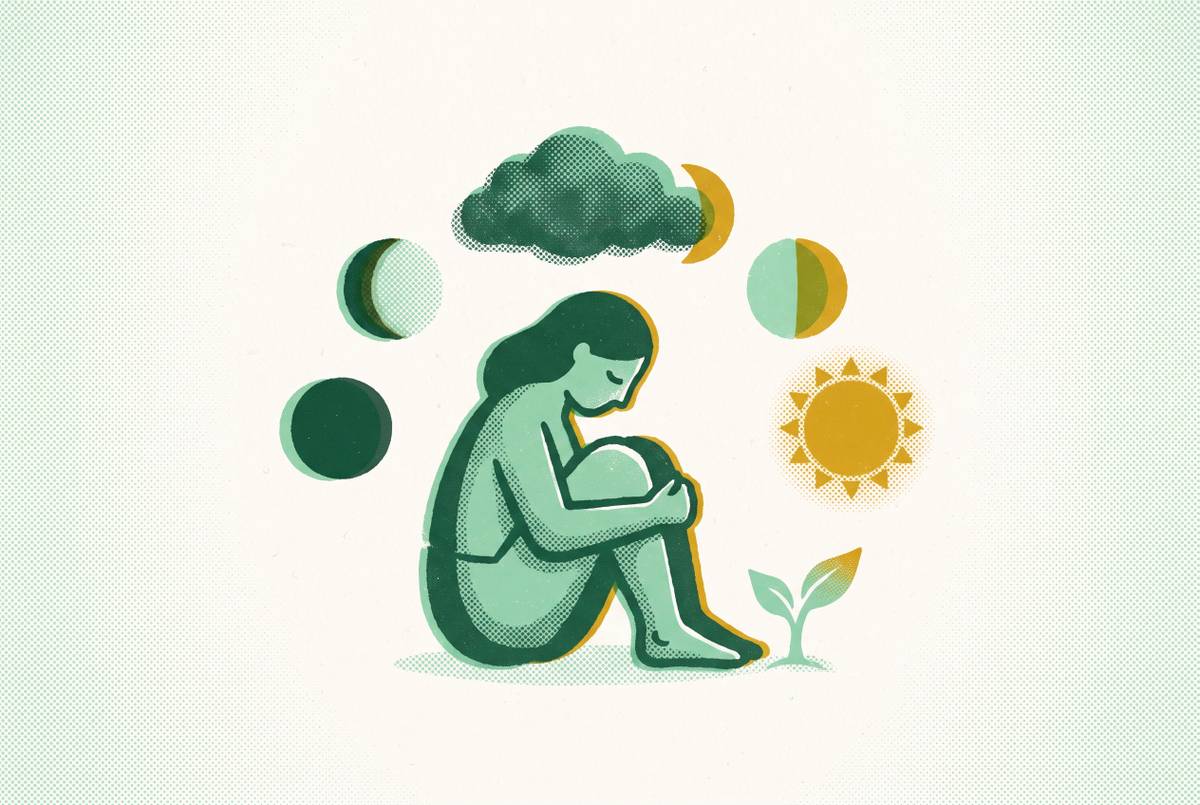
Because the collapse involves a loss of coping capacity, recovery cannot be measured simply by time away from ordinary responsibilities. It moves through recognizable phases, from acute crisis to stabilization and then integration. The acute phase may last days to roughly two weeks, but stabilization and integration take weeks and months. It often takes many months to recover fully from the first collapse. These broad ranges allow for variation in the time needed to complete the process.
The distinction matters most when visible improvement creates expectations of a complete return. Someone may be moving out of crisis without being ready for a full workload or all their previous family responsibilities. Returning to full function before stabilization is complete can produce setbacks that lengthen total recovery. An employer’s leave policy or a family’s expectations cannot determine when the nervous system has regained enough capacity.
A phased return is therefore a strategy for durable recovery. Flexible schedules, changes in duties, and fewer demands during stabilization let people take on more without having to return to the full load each time they improve. Employers and families can support that process by recognizing that improvement can precede readiness. The useful measure is whether the next demand can be sustained. Speed has little value if it costs the stability on which the return depends.
What a phased return to daily life actually looks like on the ground
Pacing a return to daily life means building back what someone can do a step at a time. Therapy and medication, where appropriate, can support that return, while realistic, measurable goals give it a practical shape. Basic self-care and sleep come before spending time with more people again. Short periods of social contact precede the return to work, and part-time or modified duties precede a full workload. The sequence maps increasing demands while allowing for individual variation in recovery.
Clear communication helps protect that sequence. Telling employers and family what is possible now, and what is not, reduces the pressure to perform at a level the person has not yet reached. A reduced schedule means little if everyone still expects the same output. Likewise, a plan to ease back into social contact loses its purpose if the person has to pick up every relationship at once. The plan and the expectations around it need to match.
Yet a workable schedule cannot compensate for missing essentials. Housing stability, food access, transportation, and medication continuity are the terrain on which recovery happens. Housing instability can make anxiety and other symptoms worse, and symptoms of serious mental illness can make it harder to keep housing stability. Transportation barriers can interrupt appointments and access to medication, compounding other difficulties. This raises the practical question of who can help someone navigate daily goals and these basic needs together.
Why clinicians alone cannot close the trust gap that recovery requires
Clinical care is essential to managing symptoms, but symptom management is not the whole task of returning to daily life. Recovery also requires trust, hope, and the capacity to act outside an appointment. Credentialed care alone is not designed to deliver every part of that work. The way care is set up leaves this gap even when clinicians care about the people they treat. A system can offer the right treatment and still leave someone without help putting it to use in daily life.
For many people, even access to treatment is uncertain. SAMHSA’s advisory on care deserts describes millions of Americans who face far too few providers, long wait times, and high costs. Research on minority mental health treatment engagement also finds that Latino, Asian, and Black individuals have more need for care that goes unmet than non-Latino white individuals do. When people from these minority populations obtain care, they frequently receive less appropriate or lower-quality services. Availability and trust are therefore related problems, but they are not interchangeable.
The Commonwealth Fund’s 2026 State Health Disparities Report finds higher uninsured rates for Black, Hispanic, and American Indian and Alaska Native residents than for white residents in most states. Gaps in insurance coverage make it harder to stay in care. Even Medicaid expansion did not close the racial treatment gap, and many state Medicaid-based accountable care organizations have not incorporated mental health services into their provider networks. Making licensed care more widely available still matters, but that alone cannot overcome every barrier tied to where people live, their culture, or their finances. Recovery requires support that can reach the person where the clinical system does not.
How peer support works and what it produces that clinical care cannot replicate
Peer support can reach people in that gap by giving them a different reason to trust. Its distinguishing resource is shared lived experience. Recognition can make the relationship less one-directional, with the person recovering participating as someone whose knowledge of their own life matters. The mechanism is reciprocal accountability.
A peer relationship can produce a form of mutual recognition that a clinical encounter does not automatically supply. The distinction also helps explain why hope and empowerment belong among meaningful recovery outcomes. They concern whether someone sees room to act and can take part in decisions about their life. Peer support is therefore more than encouragement attached to an otherwise unchanged care plan.
The UPSIDES multicentre randomized controlled trial, published in The British Journal of Psychiatry, found effects on social inclusion, empowerment, and hope across high-, middle-, and low-income countries. That breadth suggests the model’s value is not confined to well-funded systems. The PeerTECH randomized controlled trial, published in 2025, tested a structured 12-session mobile health program delivered by certified peer support specialists for people with serious mental illness and chronic comorbidities. It showed that physical health improved and that psychiatric recovery trends were promising, though it did not establish improvement in both. PeerTECH also demonstrates a practical extension of the role, addressing technology and health-literacy barriers as part of support beyond clinical walls.
What peers actually do during a phased return — beyond emotional support
The value of that support becomes especially concrete at transition points. Leaving hospital changes the setting of recovery, but it does not remove the need for benefits, housing, medication, and appointments. Peer specialists help secure benefits, connect people to housing, accompany them to appointments, and navigate services. Without them, a return that appears feasible in a discharge plan can be difficult to carry out at home.
NYC Health + Hospitals provides an example of how support can be organized around this transition. Its Critical Time Intervention teams include peer specialists and complement the Peer Bridger Program. The teams accompany patients home after discharge, help secure benefits, and connect people to community-based care, serving approximately 650 New Yorkers. Critical Time Intervention is a nine-month, time-limited model designed to prevent homelessness among people with severe mental illness. Its structure recognizes that the passage from hospital to community requires sustained support.
During the first week at home, practical help concerns whether the essentials of daily life are in place. As responsibilities increase, the same relationship can provide continuity through the shift toward social contact and work. A peer’s role is not to authorize a return to full duties, but to help the person navigate the demands around that return. Someone may need to be understood, but they may also need help reaching an appointment or keeping access to medication while the rest of life changes.
Why peer support reduces costly escalation — the case health systems need to hear
Recurrent psychiatric hospitalizations and emergency department use among people with serious mental illness represent high costs and potentially preventable overuse. Peer support is designed to interrupt that cycle by helping people remain engaged and supported in the community. Its economic case follows from its recovery function. Reducing the breakdowns in support that make expensive escalation more likely can help reduce hospital use.
An ASPE assessment describes a peer specialist program embedded in local emergency departments in which only a small fraction of people seen over a 14-month period required hospitalization. That example does not, by itself, quantify how many admissions peers prevented or establish a universal savings estimate. It does show why peer presence at the point of crisis warrants attention from those who fund care. Certified peer support specialists are reimbursable through Medicaid in the vast majority of states, so payment pathways already exist. The system-level task is to treat this support as part of recovery infrastructure rather than as an optional addition after clinical services have been arranged.
What the person beginning their return needs to hold onto
For the person returning to daily life, the central distinction is between a direction and a deadline. With a direction to work toward, people can take on more as their capacity returns. A deadline can turn each day into a judgment about whether recovery is happening quickly enough. Moving with the nervous system’s pace is the strategy. The aim remains a return that can hold.
Setbacks during reintegration show something about the pace of a return, but do not prove that recovery has stopped. A guide with shared lived experience can help someone see what a setback says about their pace while leaving decisions in their hands. Trust makes room for an honest account of what is manageable and what is not.
The next step needs to fit someone’s present capacity and the conditions around them. That may mean setting a measurable self-care goal, arranging short social contact, or communicating the limits of a proposed work schedule. Where housing, food, transportation, or medication access stands in the way, addressing that barrier is part of the step itself. With a peer’s support, the person can identify the next manageable demand and what must be in place to meet it.
Sources
- PeerTECH: a randomized controlled trial of a peer-led mobile health intervention to improve medical and psychiatric self-management for persons with serious mental illness - Fortuna - mHealth
- Effectiveness of peer support for people with severe mental health conditions in high-, middle- and low-income countries: multicentre randomised controlled trial
- An Assessment of Innovative Models of Peer Support Services in Behavioral Health to Reduce Preventable Acute Hospitalization and Readmissions