What is Community Health?
It's a distinct discipline addressing neighborhood conditions that make people sick.
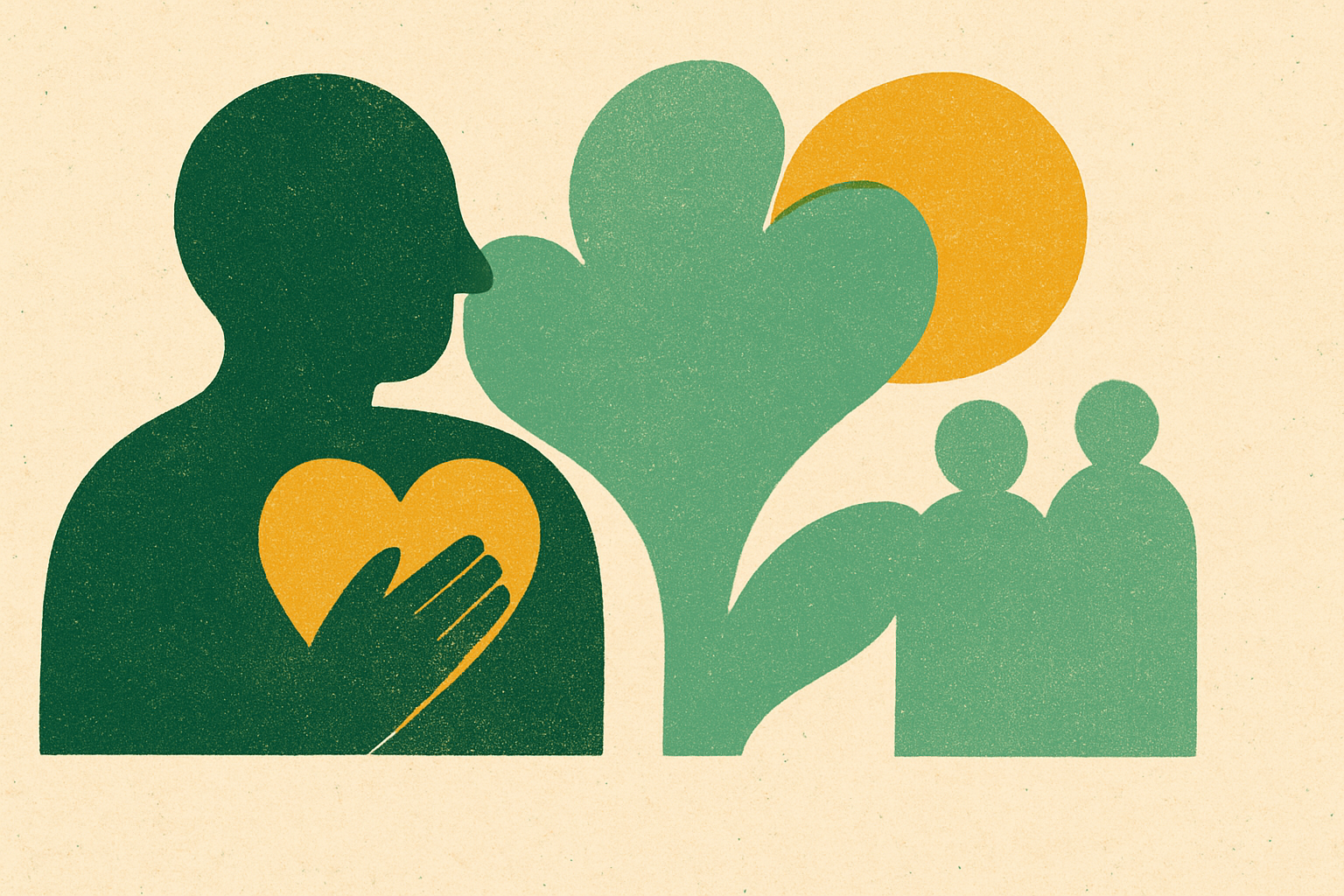
Community health is not a softer version of medicine. It is a distinct discipline with its own logic, its own tools, and its own theory of change. After years working at the intersection of clinical systems and the communities they nominally serve, I've watched well-resourced hospitals struggle to explain why their surrounding neighborhoods remained persistently sick. The answer, consistently, was not a shortage of treatment. It was a misidentification of the problem.
The World Health Organization defines health as "a state of complete physical, mental and social well-being and not merely the absence of disease or infirmity." That framing is deceptively radical. It positions the absence of illness not as health, but as a floor. Community health takes that definition seriously. It is a field organized around maintaining, protecting, and improving the health of population groups, and it operates almost entirely outside hospitals and clinics, by design. The American Hospital Association captures the operational logic well: community health encompasses non-clinical approaches for improving health, preventing disease, and reducing disparities by addressing social, behavioral, environmental, economic, and medical determinants within a geographically defined population.
Geography is the operative word. Community health is a subspecialty within public health, not a synonym for it. It is also distinct from population health management, which considers outcomes across patient panels regardless of where those patients live. Understanding these distinctions matters practically: a clinic visit is designed to address what is already wrong with a person. Community health is organized around the conditions that made them sick in the first place.
How Community Health Differs from Public Health in Scope and Method
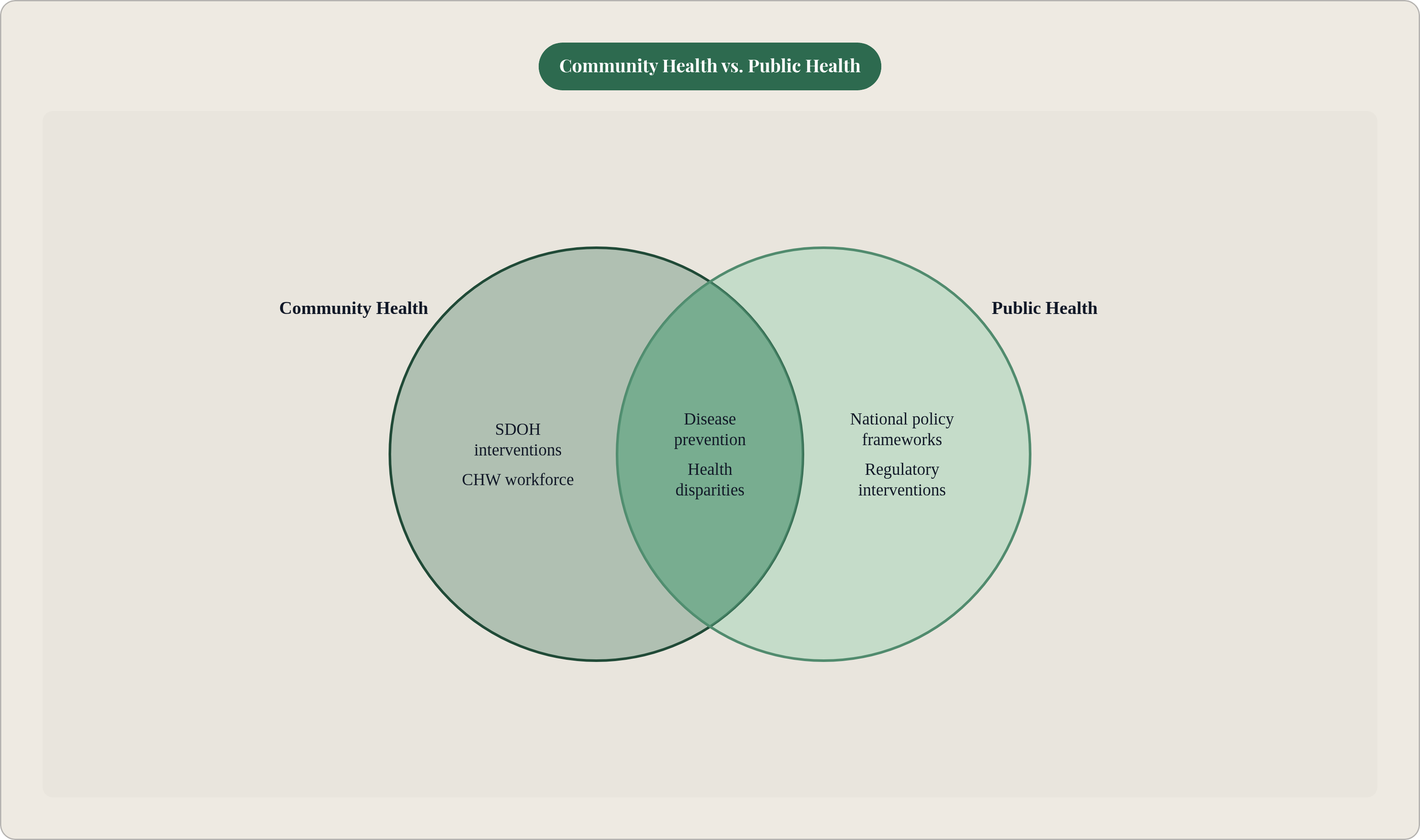
Public health operates at scale. It sets policy frameworks, conducts epidemiological surveillance, and designs regulatory interventions at the state, regional, or national level. Community health is where that architecture meets the ground. It works at the city and neighborhood level, engaging local government policy, cultural context, and neighborhood-specific conditions in ways that broader public health strategy cannot.
The distinction is methodological as much as geographic. Public health asks: what are the patterns of disease across populations? Community health asks: what is producing those patterns in this particular place, and what can be done about it here? Where public health studies disease directly, community health focuses on how socioeconomic hardship, cultural norms, and local environment shape the conditions that precede disease. The CDC frames the work of community health professionals as reducing health gaps caused by differences in race, ethnicity, location, social status, income, and related factors.
One useful frame: public health is the policy layer; community health is the street-level layer. Neither works well without the other, but confusing them produces strategies that are coherent in theory and ineffective in practice.
Why Where People Live Shapes Their Health More Than Most Clinical Care Does
The social determinants of health, referred to in the field as SDOH, are the conditions in which people are born, live, learn, work, play, worship, and age. They are not background variables. They are primary drivers of health outcomes and quality of life. A person who cannot access a grocery store stocked with nutritious food faces an elevated risk of heart disease, diabetes, and obesity regardless of what any clinician tells them about diet. Promoting healthy choices cannot close a gap that infrastructure created.
The WHO's 2025 World Report on Social Determinants of Health Equity states this plainly: social injustice continues to kill at scale in both high- and low-income countries because the root causes of ill health remain unaddressed. Limited access to quality housing, education, and employment raises the risk of illness and death in measurable, documented ways. The same report offers a striking scale indicator: between 2008 and 2024, the number of forcibly displaced people tripled to 122 million. That is a population carrying compounded health consequences with almost no clinical solution available to them.
Community health professionals work at the intersection of healthcare and sectors like education, transportation, and housing. Not because the field has overextended its scope, but because the evidence points there. Clinical care can treat what SDOH produces. Only community health approaches address what produces it.
How Widespread SDOH-Related Health Need Actually Is in the U.S.
The scale of SDOH-related need in the United States is not a marginal concern. A 2024 study published in Preventing Chronic Disease, drawing on 2022 Behavioral Risk Factor Surveillance System (BRFSS) data from over 324,000 adults across 39 states, the District of Columbia, and two territories, found that 66.3% of participants had one or more chronic diseases. Nearly 60% reported one or more adverse SDOH or health-related social needs. Critically, the prevalence of adverse SDOH measures was generally higher among participants who already had chronic diseases, meaning the burden compounds rather than distributes evenly.
Policy has begun to follow the data. In 2024, the Joint Commission and the Centers for Medicare and Medicaid Services both began requiring the collection of SDOH data, a signal that social need has moved from research concept to formal accountability metric. HRSA figures from 2023 counted more than 30.5 million people living in underserved communities.
What these figures imply is that SDOH-related need describes the majority experience for large portions of the American population, not an edge case. What they leave unresolved is the distance between measurement and action. Collecting data on social need does not automatically produce interventions. That gap is precisely where community health operates.
How Health Disparities Reveal Which Communities Community Health Must Reach
The CDC defines health disparities as preventable differences in the burden of disease, injury, violence, or opportunities to achieve optimal health, experienced by socially disadvantaged racial, ethnic, and other population groups. The word "preventable" carries real weight here. It assigns the cause not to individual behavior but to conditions, and it implies that someone, or some system, had the capacity to prevent the harm and did not.
The disparities are specific and documented. 2024 KFF data on obesity rates show Black adults at 42%, American Indian and Alaska Native adults at 41%, and Hispanic adults at 36%, all facing higher rates than White adults at 32%. Those gaps track closely with differences in food access, income, and neighborhood conditions. They are not random. Among people under 65, American Indian and Alaska Native adults and Hispanic adults were uninsured at more than twice the rate of White adults as of 2023. Among adults with any mental illness in 2024, Hispanic, Black, and Asian adults were all substantially less likely than White adults to receive mental health services.
Life expectancy in the United States, which had increased over many decades, is now declining. That is a population-level signal that aggregate progress has been masking serious underlying fragility. Despite this landscape, a recent Deloitte survey found that fewer than one in four health plan and health system executives cited health equity as a priority for 2025. The gap between documented need and institutional commitment is, itself, a finding.
These disparities are not randomly distributed across the country. They follow the geography of disadvantage. That is the geography community health is designed to address.
What Community Health Centers Actually Do and Who They Serve
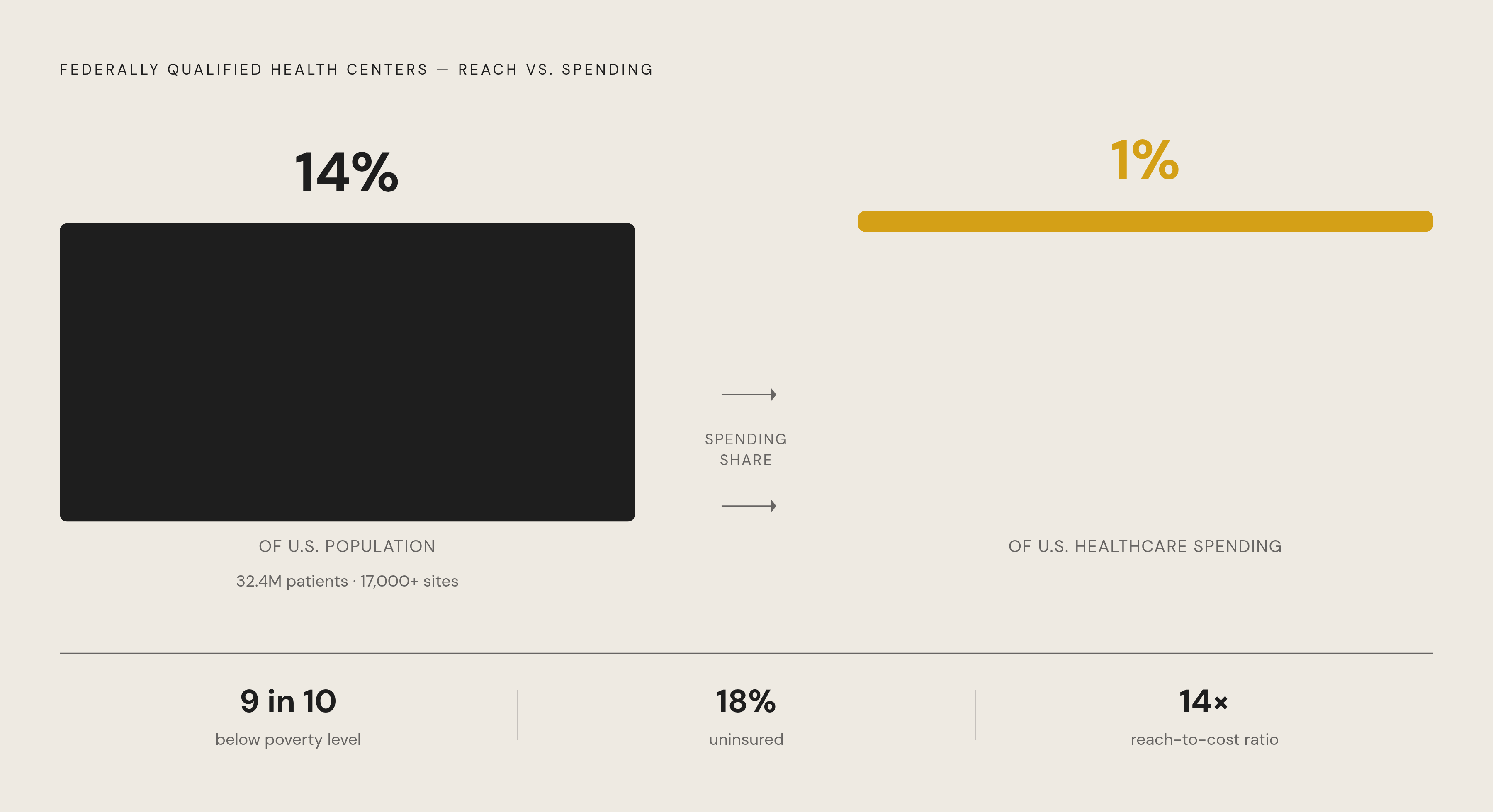
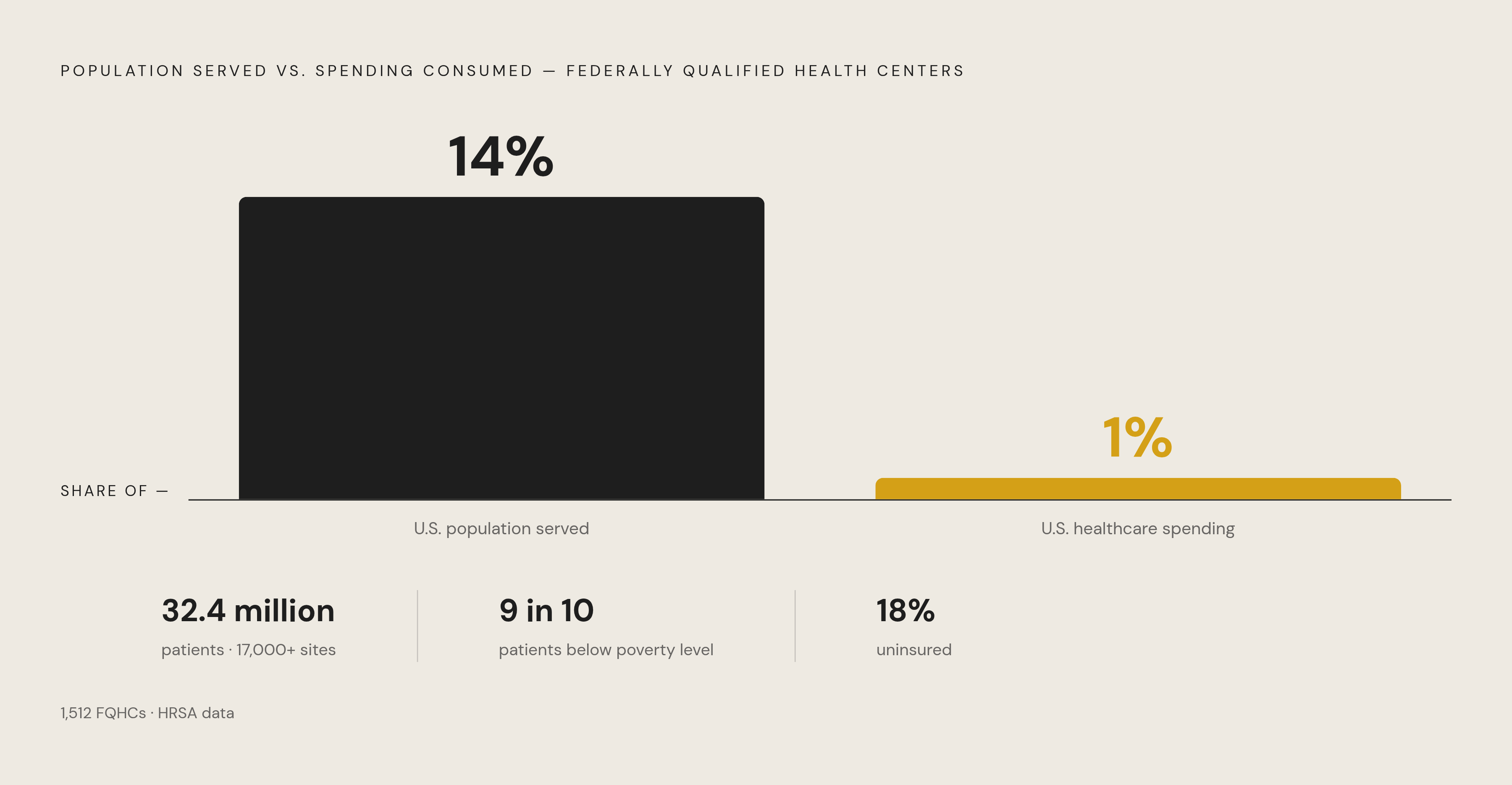
The primary delivery infrastructure for community health in the United States is the Federally Qualified Health Center, or FQHC. The scale is substantial: 1,512 community health centers operate across more than 17,000 locations, employing a workforce of 326,000 full-time staff. In 2024, federally funded community health locations served nearly 32.4 million people. Nine out of ten of those patients were below the federal poverty level; 18% were uninsured. FQHCs deliver primary care to 14% of the U.S. population for approximately 1% of total healthcare spending. In 2025, one in five rural residents received care from HRSA-funded health centers.
The service model extends well beyond primary care. FQHCs deliver behavioral health, chronic care management, preventive care, dental services, radiology, laboratory work, transportation, translation, and social services, often in the same building, to patients who would otherwise access none of it. The overdose crisis has become a significant part of that work; FQHCs increasingly treat opioid use disorder in a patient population where nearly 20% of adults with OUD are uninsured and the majority are low-income.
Telemedicine adoption has been rapid. As of 2025 HRSA data, 98.38% of health centers used telemedicine to deliver clinical services. Among those, 93.18% used it specifically for mental health services and 64.69% for substance use disorder services. That is a meaningful infrastructure shift in a field whose patients have historically faced the most barriers to access.
One structural feature distinguishes FQHCs from most other healthcare institutions: at least 51% of each center's governing board must be patients of that center. Community voice is not aspirational here; it is embedded in the governance requirement by federal law. A 2024 study found that FQHCs outperformed non-FQHCs in safety-net primary care capabilities, including social needs referrals and behavioral health integration, during the COVID-19 pandemic. That finding is worth sitting with. The institutions built around community accountability performed better under pressure than those that were not.
The Community Health Worker's Role as the Field's Human Infrastructure
Federally Qualified Health Centers provide the institutional backbone of community health. Community health workers, or CHWs, provide something the institution cannot: trust, earned through proximity. CHWs are frontline professionals who facilitate entry into, exit from, and use of the formal health system. They also provide services that medical institutions are not designed to offer, including support groups, wellness events, and the kind of sustained, relational social navigation that does not fit neatly into a billing code.
What makes CHWs effective is not a set of clinical competencies. It is that they work within their own communities as trusted sources of health education and social support. The trust relationship is the mechanism, not merely the method. A clinician can tell a patient what to do; a CHW can sit with them through the reasons they haven't been able to do it. Those are different functions.
The workforce currently numbers approximately 80,000 across the United States. The U.S. Bureau of Labor Statistics projects CHW employment will grow 11% from 2024 to 2034, faster than the average for all occupations. Policy attention has followed: states are actively exploring mechanisms to expand access to CHW services, and in December 2024, a major healthcare coalition launched the Common Health Challenge on Community Health Workers to advance CHW initiatives through healthcare-public health partnerships.
CHWs are not a workaround for physician shortages. They do work that physicians are structurally not positioned to do, because their effectiveness depends on community embeddedness. Conflating the two roles misunderstands both.
How Community Health Measures Progress and Identifies Where to Act
Community health assessment is the mechanism by which practitioners identify which populations carry the greatest burden and where interventions should be targeted. The tools are specific, and they reflect the field's underlying premise: that social conditions are measurable, addressable variables, not background noise.
The County Health Rankings, published annually, track high school graduation rates, obesity, smoking, unemployment, access to healthy foods, air and water quality, income inequality, and teen births in nearly every county in the United States. Each of those indicators is treated as health data. The framing is deliberate. When a county's graduation rate appears in the same dataset as its diabetes prevalence, the implication is that the two are connected, and that both are addressable.
The CDC's PLACES data, most recently released in August 2024, allows individuals, clinicians, and policymakers to explore BRFSS health information at the local level through interactive maps and visualizations. Published research from this dataset has examined mammography access and racial and ethnic disparities in chronic disease. The underlying BRFSS is the world's largest ongoing telephone health survey system, tracking health conditions and risk behaviors across the country. It is the data infrastructure that feeds both local decision-making and national policy.
What these tools make possible is the connection of conditions in a specific ZIP code to health outcomes in that same ZIP code. That local specificity is what distinguishes community health surveillance from broader public health data collection. It is also what makes community health actionable rather than merely descriptive.
The field, at its best, is defined not only by what it targets but by how it learns. Every assessment, every disparity mapped, every social need documented is an argument that the conditions producing illness are neither inevitable nor unmeasurable. That is both a methodological claim and a moral one.