SMI and Emergency Department Overutilization Patterns
Repeat ED visits reveal gaps in outpatient care and social support.
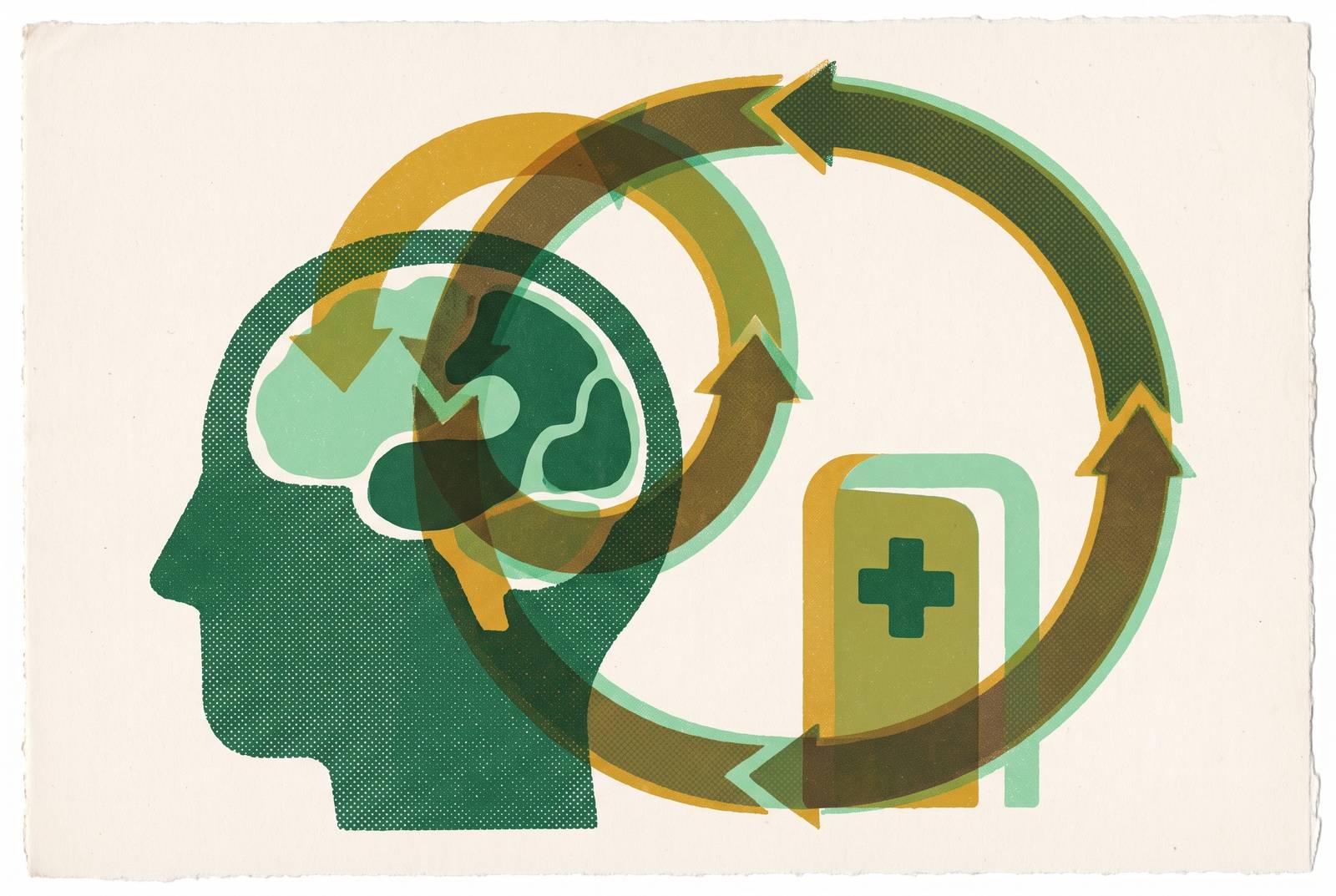
Emergency department overutilization among people with serious mental illness is a structural problem. Repeat visits show where people lack access to outpatient care, social support, and care after discharge. Breaking that cycle requires more than acute treatment. It requires community-based support that people trust and that helps them stay connected to care, including peer support as they move between services.
Why the ED has become the default crisis point for people with serious mental illness
For a person waiting in the emergency department for a psychiatric bed, reaching care can mean another prolonged wait that delays recovery. For someone returning after discharge, it can mean seeking help in the same setting because no workable alternative has emerged. People with serious mental illness, or SMI, have lower access to community healthcare services. When that access fails, the ED becomes the available destination, even though it is designed for urgent, episodic intervention rather than recurrent, complex needs.
Psychiatric bed shortages deepen this mismatch. NRI's 2025 State Profiles found that the vast majority of responding states reported a shortage of psychiatric inpatient beds. The National Research Institute's 2025 Use of State Psychiatric Hospitals data showed that shortages of psychiatric beds made people wait longer for state hospital beds in 31 states. Those shortages leave people boarding in emergency departments, delaying their move to appropriate care.
For the first time since the 1950s, more states are increasing psychiatric hospital capacity. That response signals the depth of the capacity gap, but beds address what happens after a crisis has already formed. Understanding why a person returns therefore requires examining which alternatives were available before returning became necessary.
What the ED visit data reveals about how SMI patients are actually treated once they arrive
Taub et al. in General Hospital Psychiatry (2025) studied matched cohorts of tens of thousands of ED patients and found less comprehensive assessment of patients with SMI who presented with subjective complaints such as pain and weakness. The most common admission reasons in both groups were pain, traumatic injury, and cardiac symptoms. These were not principally psychiatric emergencies.
That distinction matters because it changes how the assessment gap should be understood. Patients with SMI were seeking care for the same physical health reasons as other patients, yet their workups were less thorough. They also had higher rates of comorbid conditions including diabetes and obstructive pulmonary disease. Undertriage therefore occurred in a population whose medical needs warranted attention.
A reader might ask whether some patients needed care more urgently than others, which could explain the findings. The matched-cohort design makes that explanation less convincing, especially because the gap appeared in subjective complaints, where clinical judgment guides how patients are assessed. The findings suggest a role for implicit bias or triage heuristics, without establishing precisely which mechanism caused the difference. Repeated presentation cannot be assumed to compensate for missing community care when the emergency encounter introduces another quality gap.
How unmet social needs create the conditions for repeat ED visits before a crisis begins
The pathway to the ED often begins with a practical obstacle. A lack of stable housing, trouble getting to care, and money worries can keep a person from staying in treatment. Yang et al. in the American Journal of Emergency Medicine (September 2025) studied patients across three urban EDs and found that these challenges were associated with greater odds of poor medication adherence. A significant share also missed appointments because getting there was not feasible.
Yang et al.'s 2025 study found that 42.4% of patients in the ED forgot to take their medications. That figure describes the study's overall ED population, and forgetting medication is distinct from being unable to obtain it. Nevertheless, the association between social hardship and poor adherence helps explain a concrete pathway for people with SMI. An unmet need can lead to missed medication, destabilized symptoms, and an emergency visit.
Indiana's IHCP framework treats connections to housing or transportation resources as health interventions because they unblock access to clinical care. CMS has given that logic regulatory weight through inpatient social-needs screening that moved from voluntary in 2023 to mandatory in 2024 and pay-for-performance in 2026. Its five domains are personal safety, housing, utilities, transportation, and food insecurity. The policy validates the clinical importance of these needs, but the mechanism matters before any screening requirement does.
Why continuity of care breaks down at the moments that matter most for SMI patients
Acute treatment may stabilize a crisis without creating a reliable route out of emergency care. Immediately after discharge, the task changes from receiving treatment to sustaining it. Unless someone reaches out, there may be nobody to follow up, check on medication, or help with the next appointment.
Indiana's §1115 SMI/SED Waiver Evaluation Plan puts this transition problem at the center of its goals. Those goals include reducing ED utilization and preventable readmissions, improving crisis stabilization and community-based access, and improving continuity after acute episodes. Putting these goals together recognizes that acute care and community care need to work together. When appropriate placement is unavailable, discharge from the ED may return someone to the community without additional support.
NYC Healthix data covering millions of patients showed greater disruptions in service continuity among SMI patients than non-SMI patients during the pandemic relative to the pre-pandemic baseline. The pandemic amplified an existing weakness at the handoff between services. Funding is part of the explanation, but the care model determines where that funding goes. Additional acute capacity does not by itself create a relationship that persists after discharge, which is the bridge the next stage of care requires.
How peer support intercepts the cycle at the transition point the clinical system misses
Peer support addresses that missing bridge through relational and logistical work. A peer specialist brings lived experience of mental illness or substance use to the relationship. That shared experience can establish trust where a clinical encounter has not secured engagement. Continued presence then gives the person support while moving between the hospital, outpatient services, and daily life.
ASPE/HHS identifies preventing unnecessary acute hospital admissions, avoiding preventable readmissions, and reducing ED overutilization as functions of the peer specialist role. NC Medicaid Clinical Coverage Policy 8G, amended September 2026, defines Peer Support Services as an evidence-based, community-based recovery model for Medicaid-eligible adults with SMI or Substance Use Disorder. It also makes an important boundary explicit. Peer support complements clinical care and enhances other services when integrated into a coordinated system.
The mechanism is therefore not substitution but connection. A trusted person can help navigate medication, appointments, housing, and food while remaining present across the transition. firsthand's Guides and STRIVE Specialists provide an example through community-based, in-person support in those domains. Lived experience is central to that model because the practical work depends on a relationship strong enough to keep someone engaged.
What the outcome data shows — and where the evidence is still being established
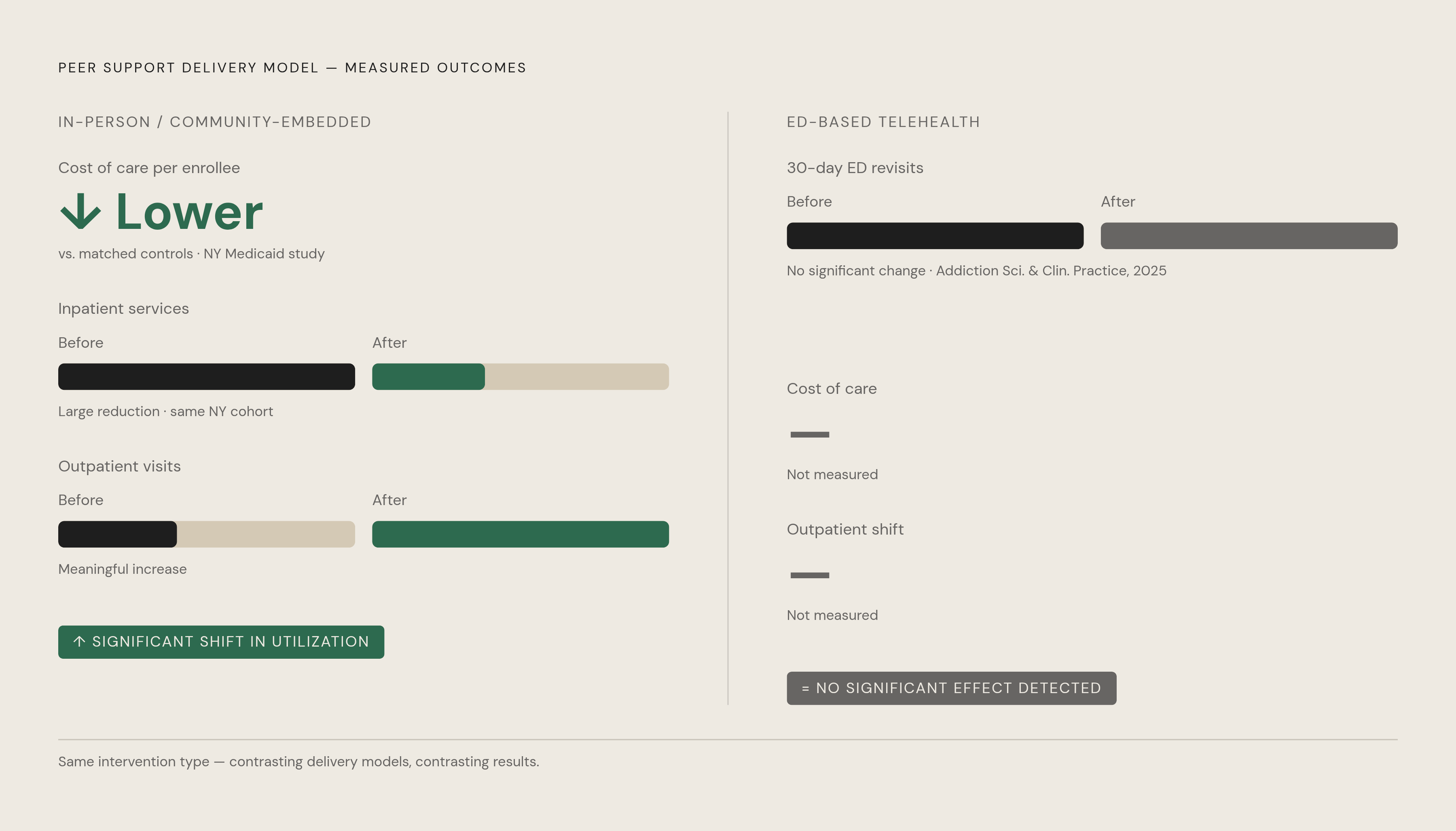
A New York study found that using peer support services lowered the total cost of care for each Medicaid enrollee. A separate study found a large reduction in inpatient services with a meaningful increase in outpatient visits. That shift matters because the aim is not simply fewer encounters, but access to care in a setting better suited to ongoing needs.
The counter-evidence deserves equal clarity. A 2025 study in Addiction Science & Clinical Practice found that an ED-based peer recovery support specialist telehealth program led to no significant change in 30-day ED revisits. That program did not demonstrate the expected reduction on that measure. The result gives reason to question whether peer support works the same way no matter how it is delivered.
At the same time, one telehealth finding does not establish that trust cannot develop through a screen or that every in-person program will succeed. The comparison instead sharpens the question of which conditions make peer support effective. The positive outcomes described here belong to in-person, community-embedded models, making presence a substantive design consideration. firsthand's on-the-ground approach reflects that consideration, while the evidence still calls for precision about the population, delivery model, and outcome being assessed.
How health plans and Medicaid managed care are beginning to fund the solution at scale
A relationship-based intervention cannot operate at population scale without a way to pay for sustained support. Medicaid is the dominant payer for behavioral health services in the United States, and the large majority of Medicaid enrollees receive services through a managed care organization. MCO contracting is therefore a central route for embedding peer support in covered care.
The Center for Health Care Strategies describes how Medicaid managed care has shifted from behavioral health carve-outs to carve-ins over several years. North Carolina and New Jersey planned or implemented integration in 2024. In states with integration, members with SMI have shown increased primary care access and higher use of behavioral health outpatient services. These findings support integration, though states differ in how they put it into practice.
Michigan's May 2026 §1915(i) State Plan Amendment operates concurrently with its §1115 Behavioral Health Demonstration to establish community-based behavioral health services through managed care contracts with regional Prepaid Inpatient Health Plans. CMS's 2026 social-needs pay-for-performance requirement further aligns financing with attention to needs that drive ED use. Participation nevertheless requires care coordination capability and secure, compliant infrastructure. firsthand's HITRUST r2-certified helpinghand platform addresses that contracting prerequisite, though infrastructure alone does not replace the community work being funded.
Why the peer workforce must grow to meet what policy is now demanding
Payment and coverage cannot deliver a service without enough people trained to provide it. Workforce.org's documentation of NAMI San Diego's Peer Support Training Project identified a shortage of 8,000 behavioral health workers in San Diego County. Certified peer support specialists were among the workers most in demand at hospitals, clinics, community organizations, and government agencies. The figure covers the whole behavioral health workforce, but it shows the strain that peer services face as they try to meet demand.
Washington State's legislature responded to its behavioral health workforce crisis with an explicit intent to expand peer services and eliminate financial barriers to credentialing. WAC 246-929 took effect in July 2025, with a November 3, 2025 amendment renaming the credentials Certified Peer Support Specialist and Certified Peer Support Specialist Trainee. The framework provides nominal certification and renewal fees for specialists and no fee for trainees. Its 80-hour training requirement and apprenticeship pathway create structured routes into the workforce.
Training takes time, so credentialing is not an immediate cure for an acute shortage. Yet the apprenticeship pathway and fee structure are designed to reduce barriers. Workforce development also depends on compensation and on jobs that payer arrangements can sustain. Organizations such as firsthand illustrate the lived-experience workforce these pathways support, while credentialing, coverage, and contracting are beginning to converge around a more durable role for peer services.
What it takes to break the cycle — presence, trust, and integration across the care continuum
Better assessment inside the ED remains necessary, but it cannot supply the community infrastructure missing outside it. Support that remains present before and after clinical care, builds trust, and helps people act on treatment plans can fill that structural gap. Success means a workable alternative to crisis-driven care.
Connecting managed care integration, which creates a contracting route, social-needs policy, which strengthens financial incentives, and credentialing, which opens workforce pathways, is the next task. Their value depends on whether they produce sustained support where people live. The uneven delivery evidence makes that operational question more important.
firsthand combines Guides and STRIVE Specialists with lived experience, community-based operations, and a HITRUST r2-certified platform as one example of this integrated model. Health plans and provider systems have a practical opportunity to build partnerships around that combination. The test is whether those partnerships reach people now cycling through emergency departments and give them a trusted route to care before the next crisis.
Sources
- Patients with severe mental illness in the general emergency department: Clinical characteristics, quality of care and challenges - PubMed
- Use of State Psychiatric Hospitals, 2025
- Serious Mental Illness/Serious Emotional Disturbance ...
- Evaluating Gaps in Mental and Non-Mental Services Utilization for Individuals with and without a Severe Mental Illness across New York City during the COVID-19 Pandemic
- Profiles of Emergency Department Users with Psychiatric Disorders Related to Barriers to Outpatient Care