Cold vs Flu Symptom Comparison for Community Health Guidance
Fever, body aches, and sudden onset separate flu from cold—and matter when antivirals work best.
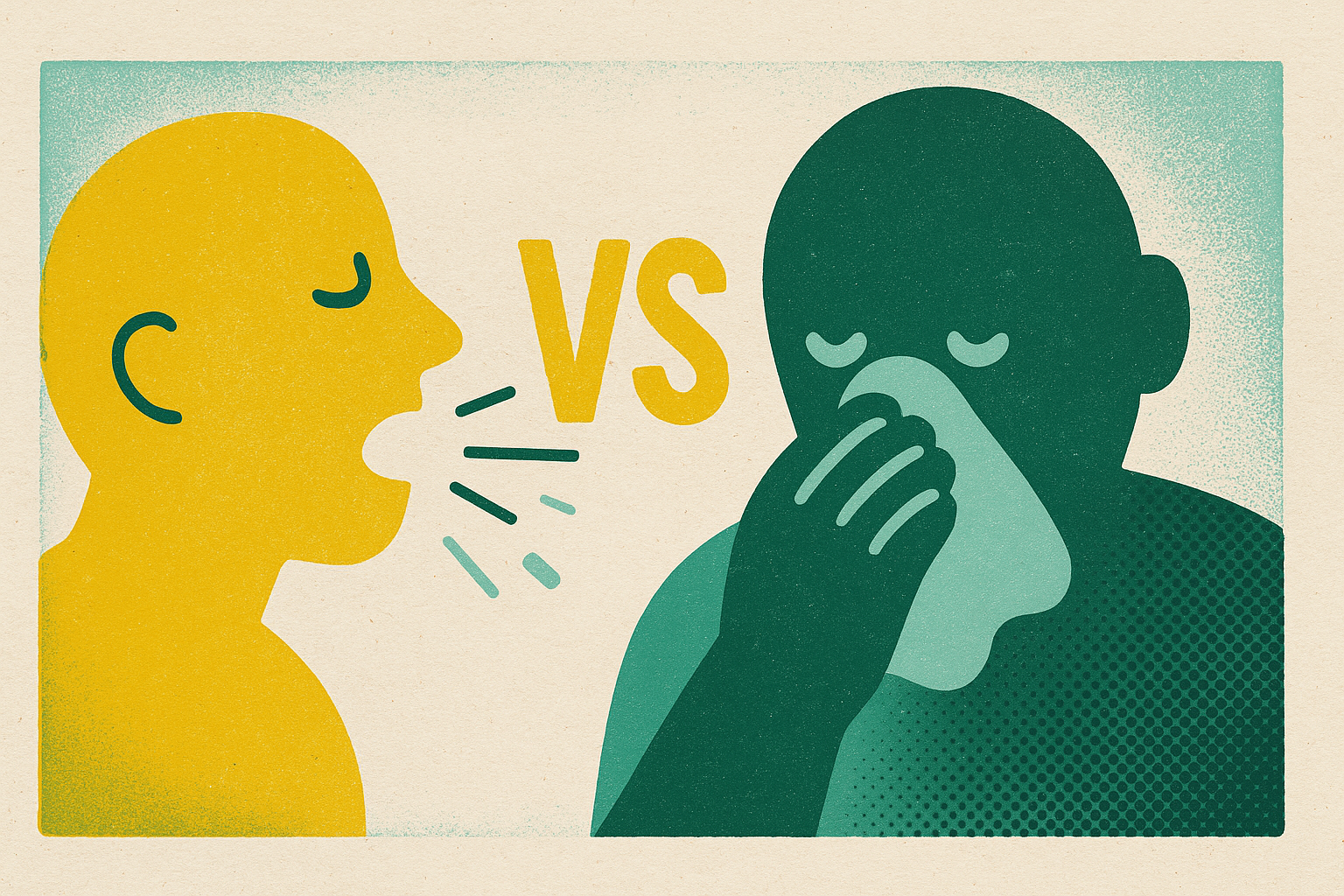
Cold and flu overlap so much in their symptoms that clinicians can't always separate them by looking at a patient, let alone a patient looking at themselves in the mirror. Three signals do most of the diagnostic work anyway: how fast the illness arrives, whether fever shows up, and how badly the body aches. Getting that read right matters more than it sounds, because the 2024-2025 flu season was classified by the CDC as high-severity across every age group, tied to an estimated 51 million illnesses, 710,000 hospitalizations, and 45,000 deaths. That is not a season to guess your way through.
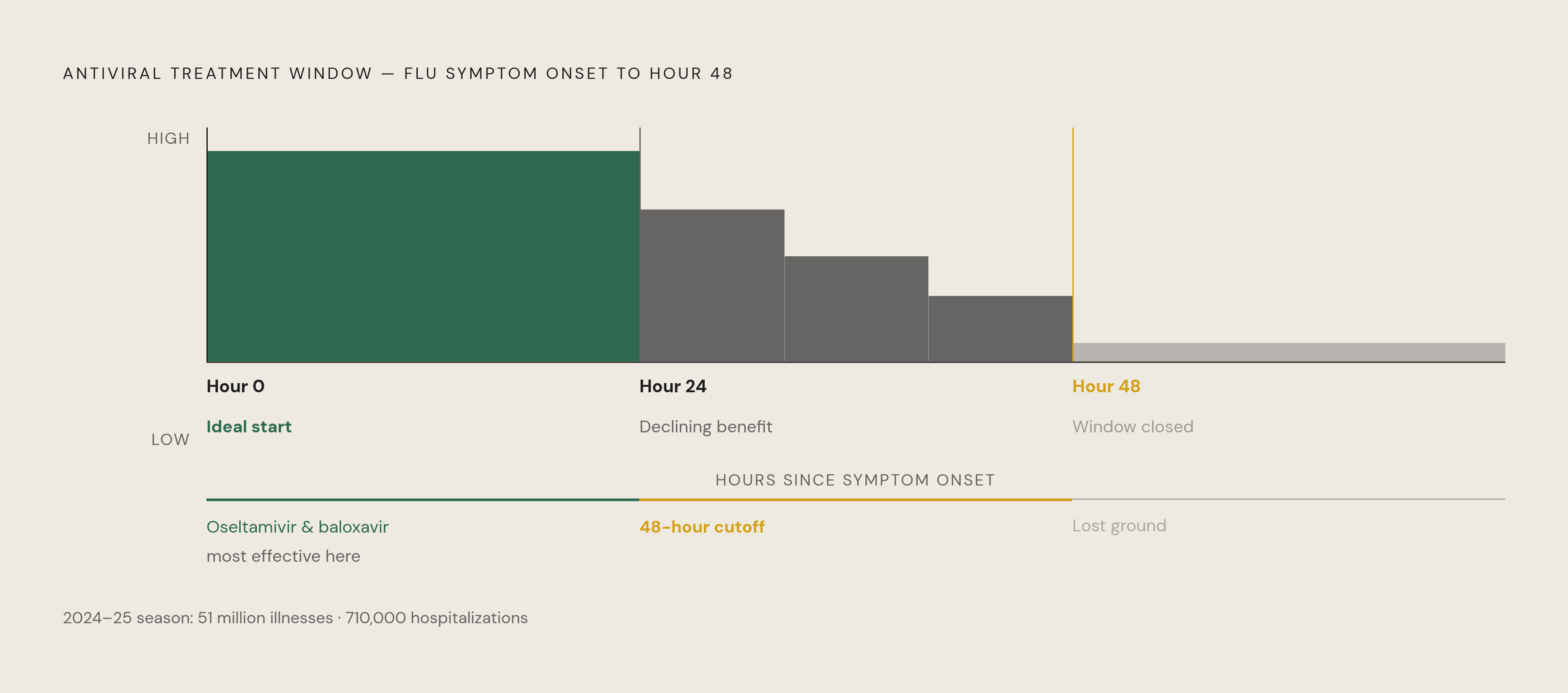
The guessing carries a real cost. Antiviral medications for flu work best within 48 hours of symptom onset, and the sooner treatment begins within that window the better, because once it closes, the drug that could have shortened the illness or kept someone out of the hospital does a lot less. What follows walks through the actual differences between the two illnesses, symptom by symptom, then turns to a harder problem: what happens when someone knows every warning sign and still can't get to care in time.
Different viruses, similar disguises: what actually causes each illness
Start with the biology, because it explains everything that follows. Flu comes from influenza viruses, a narrow family. Narrow does not mean tame: influenza mutates fast enough that a new vaccine formulation has to be built every single year, and that constant drift is a big part of why one flu season can be mild and the next one brutal.
Colds are the opposite kind of problem. More than 200 respiratory viruses can cause a cold, with rhinoviruses behind roughly half of all cases and the rest split among common human coronaviruses (not SARS-CoV-2), parainfluenza viruses, adenoviruses, enteroviruses, and human metapneumovirus. That sprawl is exactly why there is no cold vaccine and probably won't be one soon. Vaccinating against a cold means targeting hundreds of genetically distinct viruses at once, and current vaccine technology has no good answer for that.
Here is the part that actually matters for anyone trying to self-diagnose at the kitchen table: SARS-CoV-2 and RSV can produce cold-like symptoms without being colds at all. They sit in a different risk category, one far more capable of putting older adults, young children, and people with underlying conditions in the hospital. "Bad cold that's probably the flu" is a phrase that hides a trap. Sometimes it's neither. Sometimes it's a virus wearing a cold's disguise while doing a flu's damage, or worse.
The real takeaway from the biology isn't a single number, it's a shape: one narrow, fast-mutating virus family (flu) against a sprawling, genetically scattered group (cold) that happens to share symptoms with a couple of far more dangerous viruses. That shape is why treatment diverges so sharply once the label is right, and why getting the label wrong isn't a small mistake.
The three differences that do the most diagnostic work: onset, fever, and body aches
Onset speed is the single most useful tell, and it needs no thermometer to notice. Flu can knock someone flat within hours: well in the morning and in bed with fever and aches by evening. Dr. Neha Vyas of Cleveland Clinic puts it plainly: "One day, you're fine, and the next day, you feel like you've been hit by a truck." Colds don't work that way. They build over one to a few days, and the person catching one usually spends that stretch wondering whether they're actually sick or just worn out.
Fever draws the same line. Flu brings fever in up to 80% of cases, typically 100°F or higher and lasting several days, while fever from a cold is uncommon in adults and, when it does show up, tends to be low-grade and brief. Kids run warmer with colds than adults do, which matters if you're trying to sort out a sick toddler rather than yourself.
Body aches close out the trio, and they're arguably the most underrated signal of the three. Flu produces aches that are moderate to severe and spread across the whole body, often the complaint people remember most vividly after the fact. Colds barely touch the muscles, if they touch them at all. Headache tracks a similar pattern, common with flu and fairly rare with a cold.
None of these three signals is airtight alone. Stacked together, though, they tip the scale hard in one direction. A rough but useful test: someone who can still sit at a laptop and answer email probably has a cold. Someone who can't get off the couch, and has the fever to match, almost certainly has the flu.
The full symptom picture, symptom by symptom
Cough splits the two illnesses by texture more than presence. Cold-related cough tends to be productive, hacking up mucus, while flu cough usually runs dry. A prospective study from the 2024-25 season (Hu et al., run through Pfizer and CVS Health) found cough was the most frequently reported flu symptom at the one-week mark, showing up in 75.2% of confirmed flu patients. That number alone should retire the idea that flu is mainly a fever-and-ache illness with cough as an afterthought.
Nasal symptoms carry an assumption worth correcting. Runny or stuffy nose is the defining feature of a cold, usually paired with sneezing, and it clears within a week. But flu produces nasal congestion too, just less prominently, and that same Hu et al. study found stuffy or runny nose in 65.0% of confirmed flu patients at one week, a number too high to keep treating congestion as a cold-only clue. A separate cross-sectional study by Straburzyński and Romaszko-Wojtowicz, covering 276 patients with upper respiratory infections between November 2023 and March 2024, found nasal obstruction and nasal discharge notably less common in COVID-19 than in either flu or the common cold. So nasal symptoms are useful mainly for ruling COVID out, not for cleanly separating cold from flu.
Fatigue is where flu shows its teeth. Cold fatigue is usually mild, background noise. Flu fatigue can be profound enough that standing up feels like a project, and the Hu et al. study recorded fatigue or tiredness in 39.0% of confirmed flu patients at one week.
Chills are rare with a cold but turn up in roughly 60% of flu cases, which makes them a better tell than most people realize. Sore throat often arrives first with a cold and shows up less prominently with flu. Gastrointestinal symptoms, vomiting and diarrhea specifically, stay rare with colds, though the 2024-25 season saw these GI symptoms more often in flu cases than in prior years, especially in children, worth flagging for any parent assuming a kid's "stomach thing" is unrelated to the fever.
Duration draws one more line. Colds tend to build and then resolve within a week to ten days; rhinovirus specifically incubates in 12 to 72 hours and typically runs 7 to 11 days, sometimes longer. Flu typically runs its core course within roughly a week or so, but the cough and fatigue it leaves behind often linger beyond the fever itself.
Who is at serious risk when flu is mistaken for a manageable cold
None of the symptom detail above is trivia. For certain groups, misreading flu as a cold is not a minor miscalculation, it's the difference between a week in bed and a trip to the ICU. The CDC tracks several high-risk groups for severe flu complications, and the numbers behind them deserve to be sat with rather than skimmed.
Adults 65 and older account for 70% to 85% of flu-related deaths and 50% to 70% of flu-related hospitalizations in a typical season, a concentration of risk that ought to reframe how casually "it's probably just a cold" gets said around older relatives. Children under 5 carry elevated risk too, and that risk climbs further in the youngest infants. Pregnant people carry their own version of it: among hospitalized women of childbearing age (15 to 49) during the 2024-25 season, 22.6% were pregnant. People with underlying medical conditions made up 89.1% of hospitalized flu patients that same season, which means severe flu is overwhelmingly a disease that lands hardest on bodies already managing something else. Immunocompromised patients round out the list.
The toll among children in 2024-25 is worth sitting with on its own. The CDC received reports of 297 flu-related deaths in children, though statistical modeling suggests the real number may be closer to 790. About 90% of those deaths occurred in children who were not fully vaccinated, a detail that says less about flu's unpredictability and more about a preventable gap.
For anyone in these groups, "just a bad cold" deserves to be treated as a live possibility of flu until proven otherwise, because this is exactly where the symptom distinctions from earlier stop being academic and start functioning as a decision that has to be made correctly, and quickly. Colds do carry their own complications, ear infections and sinus infections chief among them, but they rarely turn dangerous in an otherwise healthy person. The gap in severity between the two illnesses is widest, and most consequential, in precisely these populations, which is the whole reason the distinction is worth teaching in the first place.
Warning signs that mean it's time to seek care, not wait it out
Most colds in healthy adults resolve on their own with rest, fluids, and time. A trip to urgent care over a garden-variety cold is rarely the right call. But certain patterns should end the wait-and-see approach and prompt an actual call to a provider.
Symptoms getting worse after seven to ten days, rather than gradually easing, is one such pattern. A bimodal course, feeling better for a stretch and then getting significantly worse again, is another, since that shape often signals a secondary infection stacking on top of the original one. A fever that won't break, chest pain or shortness of breath, a severe headache paired with dizziness or confusion, and trouble staying hydrated all belong on that same list.
Some signs cross into outright emergency territory: difficulty breathing, persistent chest pain, a fever above 103°F (a threshold Cleveland Clinic cites, though the CDC's own adult flu warning signs don't pin down an exact number), and symptoms that seem to improve before swinging back with a worsening fever and cough. Any of those calls for immediate care, not another night of "let's see how it looks tomorrow."
Timing decides almost everything with flu specifically. Antivirals like oseltamivir and baloxavir work best started within 48 hours of symptom onset, ideally within 24, which is exactly why the earlier sections on onset, fever, and aches aren't academic exercises: recognizing flu early is what keeps the antiviral option on the table at all. High-risk individuals should reach out to a provider early rather than waiting for symptoms to escalate, and high-risk or hospitalized patients should discuss antiviral options with a provider even if the early window has passed.
Testing is worth doing when the result would actually change the next step. Rapid influenza diagnostic tests, whether at home or in a provider's office, can return results quickly, and that speed matters most when a positive result is what triggers antiviral treatment that wouldn't happen otherwise.
How community support can close the gap between knowing the signs and acting on them
Knowing the warning signs is necessary. It is not sufficient. That gap between knowing and acting is where a lot of preventable harm actually lives, and it's worth being blunt about why: someone in an underserved community can recognize every red flag from the section above and still never make it to a provider, not from ignorance but from logistics. No ride to urgent care. No clarity on which clinic even takes their insurance, if they have any. A history of bad experiences in clinical settings. Or something more immediate, rent, childcare, a shift that can't be missed, crowding out the medical need entirely.
Peer support workers and community health navigators work exactly at that gap, and their value isn't in encouragement, it's in logistics: recognizing when a symptom has crossed from "manageable" into "needs care now," arranging the actual ride to the appointment, and following up afterward to confirm the visit happened instead of assuming it did.
Community health workers doing this work directly bring something a pamphlet never can: their own lived experience moving through the same health and social systems. They show up in the community rather than waiting behind an exam room door, and they translate the kind of symptom knowledge covered earlier into something someone can act on the same day. That often means handling what's sitting underneath the medical question, transportation, food access, whether the medication is even affordable, because none of the onset-speed or fever-threshold knowledge from earlier sections matters if a person can't act on it.
For people living with serious mental illness, the cognitive and logistical weight of managing an illness on top of an already strained relationship with the healthcare system can be heavy enough to stall action entirely. A trusted person who shows up consistently, rather than once, is often what separates care that arrives in time from care that arrives too late, or not at all.
Everything covered earlier, onset speed, the specific weight of a fever versus a chill, the significance of GI symptoms in a feverish child, is genuinely useful knowledge. But knowledge is a starting point, not a guarantee of action. What turns that starting point into someone actually walking through a clinic door is a consistent, trusted presence in the community, particularly for the people this season's numbers already show are carrying the most risk.
Sources
- Comparison of sinonasal symptoms in upper respiratory tract infections during the infectious diseases season of November 2023 to March 2024—a cross-sectional study
- P-697. Symptom Burden During the First Week of Acute Influenza Infection Among US Adults: An Interim Analysis of a Nationwide Prospective Study during the 2024/25 Season
- Is It a Cold or the Flu?
- cdc.gov
- cdc.gov
- cdc.gov