Anxiety vs Stress Distinguishing Features and When to Seek Help
Stress has a trigger; anxiety doesn't—and that distinction determines if you need rest or treatment.
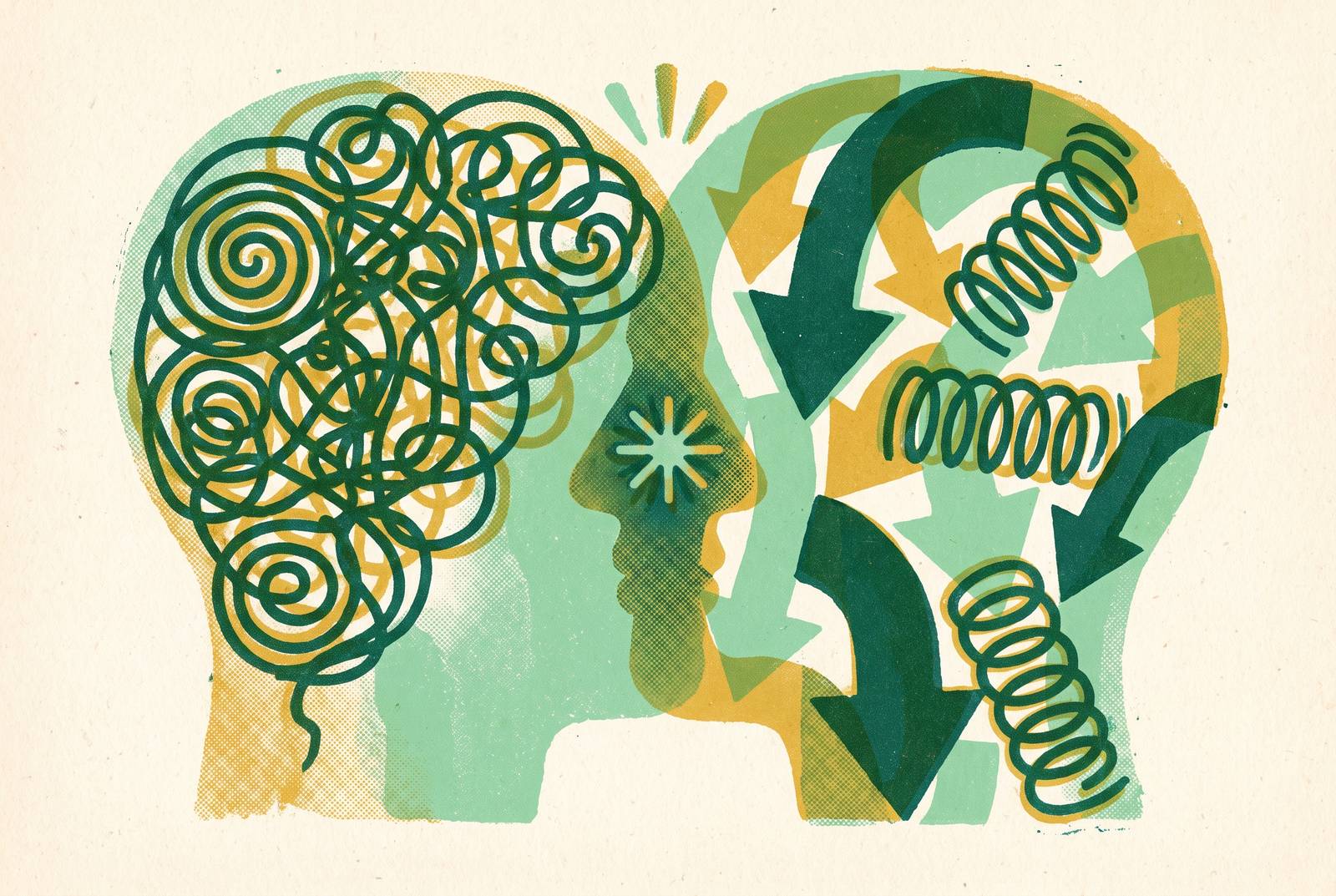
Stress and anxiety look almost identical from the inside: same racing heart, same tight chest, same mind that won't settle. But they are not the same condition, and whether a walk outside will fix the problem or someone needs a clinician depends on which one is at play. This piece walks through how to tell them apart, how one slides into the other, and what to do once the line has been crossed.
Both run on the same biological hardware. Fight-or-flight is an ancient survival mechanism, and it doesn't distinguish between a saber-toothed tiger and a Monday morning inbox packed with unread emails. Stress hormones, mainly cortisol and adrenaline, get dumped into the bloodstream almost instantly. Heart rate climbs, blood gets rerouted to the limbs, breathing quickens, senses sharpen. It's a full-body alert system, and it fires the same way whether the threat is happening, imagined, or just anticipated.
The overlap in symptoms is what makes this genuinely confusing for people trying to self-diagnose. Rapid heartbeat and shallow breathing appear in both. So does an upset stomach, constipation or diarrhea, trouble sleeping, muscle tension, irritability, fatigue, and difficulty concentrating. A person sitting with a pounding heart at 2 a.m. often cannot say, in the moment, which condition is driving it. The American Psychological Association describes it as a fine line between the two, but that line matters enormously. On one side is a coping problem. On the other is a clinical one. And whether someone needs a better sleep routine or a therapist depends on which side they are standing on.
What separates stress from anxiety: the trigger test
The test that actually works: stress has an address. It comes from somewhere specific, a deadline, an argument, an exam, a diagnosis, a layoff, and it resolves, at least partially, once that source is dealt with. Short-term stressors clear out fast. Long-term ones, like chronic illness or ongoing discrimination, can grind on for months or years, but they're still tethered to something external and nameable.
Anxiety doesn't need that tether. Psychologist Shagoon Maurya, quoted in Chegg's coverage of Student Mental Health Week 2024, described anxiety as persistent, excessive worry that continues even when there's no actual stressor present. The system stays activated with nothing concrete driving it. That's the mechanical difference: stress burns off when the fire is put out, anxiety keeps smoldering because there was never really a fire in the first place, just the fear of one.
What specific situation is being worried about, and will the feeling lift once that situation resolves? If the answer is yes, that's stress, however uncomfortable. If there's no clear trigger, or the worry keeps jumping from one topic to the next with no fixed target, anxiety is the more likely explanation.
Anxiety is not depression, and the two shouldn't get flattened into one vague "mental health thing."" Anxiety centers on excessive worry and dread about future outcomes. Depression centers on persistent sadness and a loss of interest in things that used to bring pleasure. Stress, anxiety, and depression are three distinct conditions, even though they frequently travel together.
Not all stress is bad. Eustress is the kind that sharpens focus before a big presentation or a competitive event, it's motivating, even energizing. Distress is the other kind, the cumulative, limiting, paralyzing version that doesn't let up. Distress is the one that, over time, tends to become the on-ramp to anxiety.
How stress becomes anxiety over time
Stress and anxiety aren't always running on separate tracks. Stress can convert into anxiety, and the conversion is often gradual enough that nobody notices it happening until they're several months in. Kara Kushnir, psychotherapist and clinical director at A Work of Heart Counseling, has pointed out that when stressful thoughts and feelings become chronic, what looks like ongoing stress may actually be an anxiety disorder in progress. The transition is a gradual erosion. It's closer to erosion.
But anxiety doesn't always start as stress. Genetics play a role, as do chemical imbalances and environmental factors, none of which require a preceding stressful event to set anxiety in motion. That matters because it means the "find the trigger and remove it" approach doesn't always apply, even early on.
Anxiety triggers, when they do exist, tend to differ somewhat from stress triggers. Conflict at work or home, chronic sleep disruption, a serious health diagnosis, long-term financial strain, and heavy caffeine intake all show up as contributors. Rumination, the habit of replaying negative thoughts on a loop, deserves particular attention here as a pattern that frequently accompanies generalized anxiety.
The signal to watch for is a period of high stress that doesn't ease up even after the original stressor is gone. That's not normal wear and tear. Kushnir's framing is useful here, too: heightened anxiety during genuinely hard stretches, such as finals week, a divorce, or a move, is expected and not itself a red flag. The concern arises when the anxiety no longer tracks with an actual event, occurs outside of specific episodes, and interferes with ordinary daily functioning.
When anxiety becomes a clinical condition: what the DSM-5 requires
Clinicians generally draw the line at functional impairment. That's the real separator between everyday worry and a diagnosable disorder: whether it's getting in the way of actually living.
For Generalized Anxiety Disorder specifically, the DSM-5 lays out a fairly precise checklist. There has to be excessive anxiety and worry about multiple areas of life, occurring more days than not. It has to last at least six months, not six days. Adults need three or more of the following: restlessness, fatigue, trouble concentrating, irritability, muscle tension, or sleep disturbance (children need just one). And the symptoms have to cause real distress or impairment, not just discomfort, and can't be better explained by substance use, medication, or another medical condition.
One tell that appears clinically: the worry in GAD tends to hop around. It's not fixed on one specific fear, the way a phobia is. It moves from health to money to relationships to work and back again, often within the same afternoon.
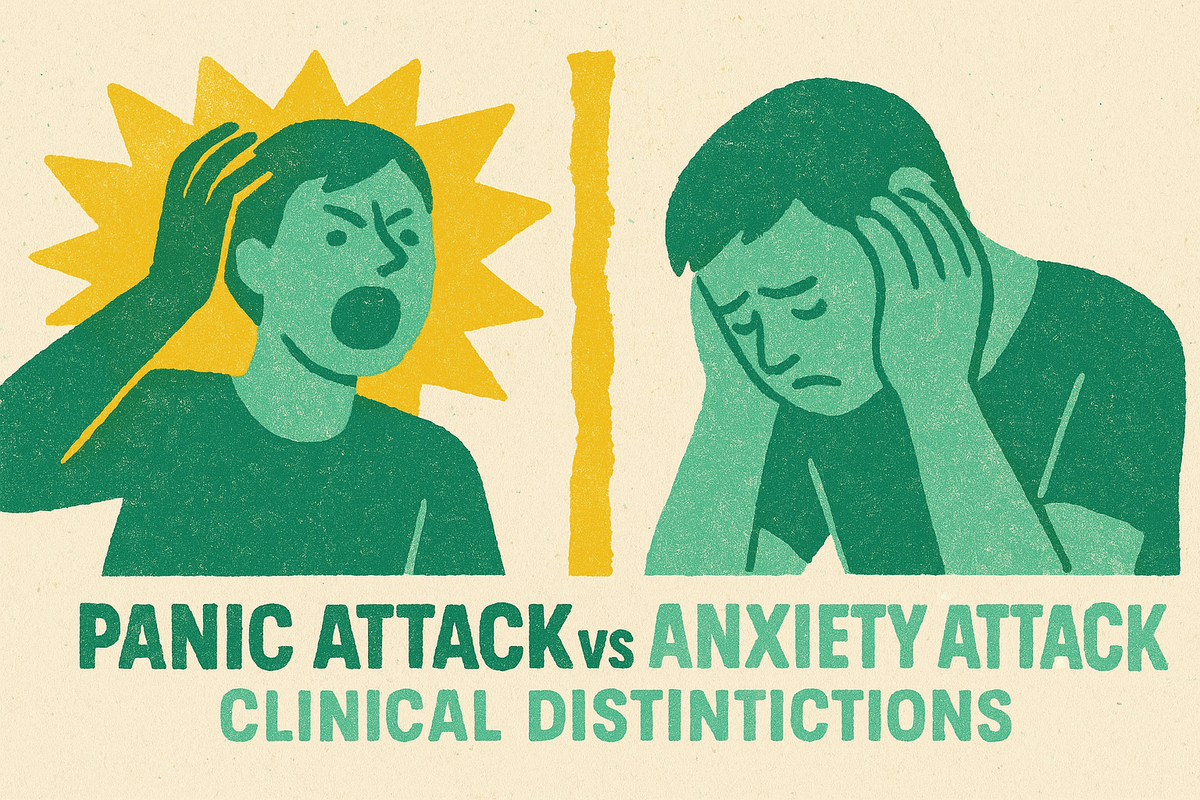
GAD isn't the only diagnosis on the spectrum. Panic disorder involves sudden attacks of intense anxiety, sweating, dizziness, shortness of breath, and it's recognized formally in the DSM-5. Social anxiety disorder centers on a pervasive fear of social situations. Specific phobias, including agoraphobia, cause people to structure their lives around avoiding certain places or situations. "Anxiety attack" isn't actually a DSM-5 term, despite how often it gets used that way. Panic attack is the clinical language, and the two terms shouldn't be used interchangeably.
The scale of this demands sitting with. More than 40 million adult Americans live with chronic anxiety, and the NIMH puts the lifetime prevalence at 31.1% of Americans experiencing an anxiety disorder at some point. Yet a relatively small share of people with anxiety symptoms ever seek treatment. That gap between how common this is and how rarely it gets addressed is why determining whether it's stress or anxiety matters as much as it does.
Coping strategies that genuinely help when the problem is stress
Everything in this section is built for stress and mild, episodic anxiety. None of it substitutes for clinical care once the DSM-5 threshold has actually been crossed. Trying to out-exercise a diagnosable anxiety disorder is a bit like trying to fix a broken bone with stretching.
That said, for garden-variety stress, the first-line tools hold up well. Physical activity has a direct, measurable effect on regulating stress hormones. A varied, nutritious diet and consistent sleep hygiene both directly support the body's ability to regulate stress hormones and recover from the physiological cascade described earlier. Deep breathing and other relaxation techniques work by directly countering the physiological cascade described earlier, slowing the heart rate back down, easing the muscle tension. And simply talking through what's causing the worry, naming the specific external trigger out loud, is itself clarifying. It forces the trigger test into the open.
Learning to anticipate and recognize specific stressors ahead of time also helps with picking the right coping tool for the situation, and it does double duty as a diagnostic step: if there's no real trigger to name, that's information too.
Eustress deserves a mention on its own. The alertness that occurs before a big pitch or a competitive event doesn't have to be treated as a threat. Reframed correctly, it can be channeled into sharper focus rather than dread.
But there's a ceiling to all of this. If these strategies stop moving the needle, or if daily functioning and mood stay impaired despite consistent effort, that's the signal the APA points to directly: the next step is professional support, not more coping.
What to expect from professional help and when to seek it
Certain signs shouldn't be brushed off. Significant changes in eating, sleeping, or hygiene habits. Thoughts of harming oneself or someone else. Using alcohol or other substances to numb the feeling rather than address it. Worry or physical symptoms that are actively interfering with work, relationships, or basic daily tasks. Panic attacks, obsessive thoughts, persistent avoidance, or fatigue that hasn't responded to any coping strategy. And, tying back to the trigger test, anxiety that has lingered for months with no resolving trigger in sight.
Even when symptoms feel manageable on the surface, treatment is still warranted if there's marked distress, or if complications like depression, substance use, or suicidal ideation are present. That judgment doesn't hinge on how bad things "look" from the outside.
What does treatment actually involve? Psychotherapy, particularly cognitive behavioral therapy, carries the strongest evidence base for anxiety disorders, largely because it directly targets the maladaptive thought patterns that keep the worry cycle running. Exposure therapy takes a different angle, having a person confront anxiety triggers in a controlled, safe setting specifically to break the avoidance-fear loop. On the medication side, SSRIs and SNRIs, escitalopram, sertraline, venlafaxine XR, duloxetine, are common first-line options, though they typically take four to eight weeks at a therapeutic dose before reaching full effect. Combining therapy with medication is common and, for a lot of people, the most effective path.
Not every anxiety disorder needs treatment. When symptoms are mild, transient, and not interfering with function, watchful waiting can be appropriate. But that call belongs to a clinician, not to the person white-knuckling their way through it alone. Given that only about one in five people with anxiety symptoms ever seeks treatment, the goal here is to name the threshold clearly enough that seeking help stops feeling like an admission of failure. It's to name the threshold clearly enough that the decision to seek help stops feeling like an admission of failure.
Barriers to getting that help for some people
A substantial share of adults in the United States with any mental illness receive no mental health services at all. That's not a small gap, and it's not distributed evenly across the population.
A 2024 systematic review found consistent disparities along several lines: racial and ethnic minorities, low-income individuals, LGBTQ+ populations, and rural residents all show higher rates of mental health disorders paired with lower access to quality care and worse treatment outcomes. Research has found that among adults reporting a mental health concern, disparities in who receives treatment fall sharply along racial and ethnic lines. It's a difference in who gets it, not who needs help.
The structural barriers that produce that gap are concrete. Getting to an appointment requires reliable transportation, and for a lot of people, that alone is the blocker. Insurance gaps and the cost of care shut plenty of others out before they even get to the scheduling stage. Stigma and prior negative experiences with the health care system breed a justified mistrust that keeps people away from providers who might otherwise help. And a shortage of culturally competent providers means that even those who do show up sometimes don't find care that actually fits their situation.
A cruel symmetry runs through this. Housing instability, food insecurity, and job loss are exactly the kinds of pressures that generate stress and anxiety in the first place, and they're also the pressures that make it hardest to access or sustain treatment once someone needs it. The same conditions that cause the harm block the relief.
That's why "just seek professional help" is necessary advice, but incomplete on its own. It has to be paired with an honest look at why the system makes that harder for some people than others, and with an acknowledgment that other models of support exist specifically to close that distance.
Peer support's role in filling the space where traditional care falls short
Peer support, at its core, means someone with lived experience of a mental health condition or substance use disorder supporting another person navigating something similar. That can look like advocacy, help navigating resources, shared experience and social connection, skill building, or working through concrete goals together.
Why does this work when formal care sometimes doesn't reach people? Trust is the mechanism. People tend to engage more openly with someone who has actually walked the path they're on, and that effect is especially pronounced among populations who've experienced stigma or been treated poorly by formal care systems before.
The evidence base backing this up has been growing. A systematic review and meta-analysis by Lee and Yu, published in Healthcare, pulled together 16 randomized controlled trials covering 4,008 participants and found peer support associated with meaningful gains across three areas: self-efficacy (effect size of 0.20), quality of life (0.70), and empowerment (1.17), specifically among people facing serious mental health challenges. Peer support showed measurable positive effect sizes across multiple recovery categories measured.
Peer specialists aren't a replacement for clinicians, and the model doesn't claim to be. What they do is encourage belief in the possibility of recovery, help someone identify goals that actually matter to them, and assist with the practical scaffolding, housing, food access, medication management, transportation, keeping appointments, that clinical care alone often doesn't touch. They work alongside clinicians, not instead of them, and they're often the ones who can translate a service user's actual day-to-day reality back to the treatment team in a way that improves the care itself.
firsthand's model puts this into practice through peer supporters with lived experience of serious mental illness and substance use disorder, who meet people where they actually are, addressing medical, behavioral, and social needs together rather than as separate, disconnected tracks. The helpinghand platform behind that work is HITRUST r2 certified, giving the peer support model the secure, compliant infrastructure it needs to operate at scale.
For anyone who finds the formal system inaccessible, hard to trust, or simply disconnected from the reality of daily life, peer support is a genuinely different point of entry. It's a genuinely different point of entry, and for people whose stress and anxiety are tangled up with housing instability, financial strain, or social isolation, it's often the entry point that actually works.