Heart-Healthy Meal Planning on a Limited Budget
Food insecurity directly raises heart disease risk, even decades later.
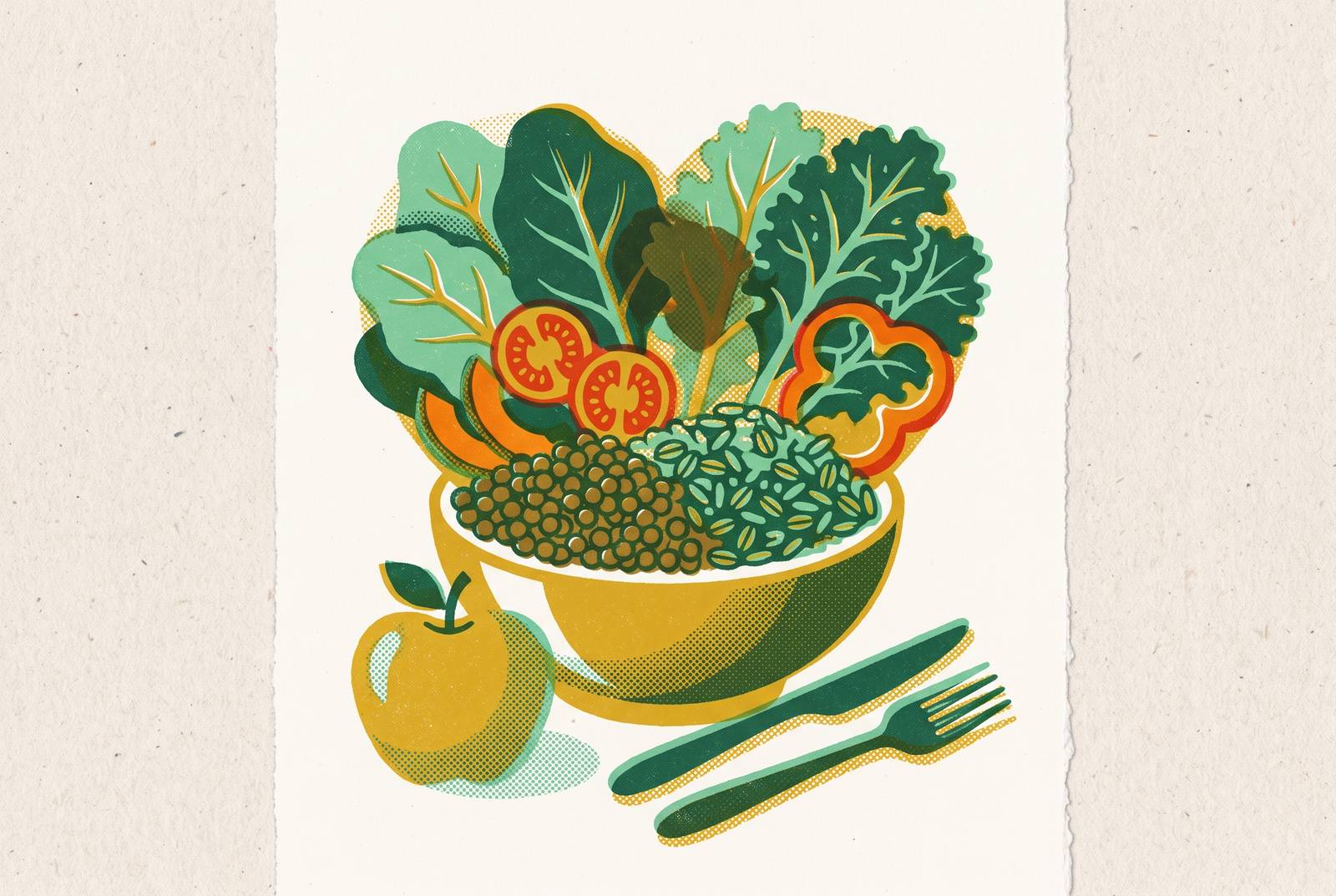
Cost is not what stands between most people and a heart-healthy diet. More than half of Americans blame price for their poor eating habits, but the foods with the strongest evidence behind them for heart health, beans, whole grains, frozen vegetables, canned fish, sit consistently among the cheapest items in any grocery store. This piece works through why that gap between perception and grocery-aisle reality exists, what the research says about food access and cardiovascular disease, and how a week of planning closes the distance for good.
Food insecurity as a direct cause of heart disease
Food insecurity does not sit next to heart disease as a risk factor that happens to travel alongside poverty. It appears to cause it, directly. A Northwestern Medicine study published in JAMA Cardiology found that young adults experiencing food insecurity carry a 41% greater risk of developing heart disease by midlife, and that number held even after researchers controlled for the demographic and economic factors that usually explain away this kind of link.
The data came from a long-running cohort study that has followed Black and white adults in a national population since the mid-1980s. Researchers identified food insecurity in participants during 2000 to 2001, when the group was in its early 30s to mid-40s, then tracked cardiovascular outcomes over the next 20 years. Eleven percent of the food-insecure participants went on to develop heart disease, compared with 6% of those who had reliable access to food. Nearly double the rate, traced back to a single exposure measured two decades earlier.
Dr. Jenny Jia, the study's lead author, points out that food insecurity comes first in the sequence, which is what makes it a target for prevention rather than just a marker of risk already locked in. One in eight American households experiences food insecurity in a given year. That puts it on the same public health scale as smoking or uncontrolled blood pressure, yet it gets nowhere near the same funding, screening, or urgency during a routine doctor's visit. Yet food insecurity rarely receives the same clinical attention as other established risk factors.
Where the problem concentrates: food deserts, geographic access, and the heaviest burden
Food insecurity does not distribute evenly across the map, and the geography of the problem matters almost as much as the economics of it. As of 2025, a federal agency estimated that 12.8% of the country's population lives in low-income, low-access census tracts, where the nearest full grocery store carrying fresh produce, lean protein, and whole grains sits beyond a reasonable walking or driving distance for a meaningful share of residents.
The burden is not shared equally, and pretending otherwise flattens a pattern that has a clear cause. About 20% of Black Americans report difficulty accessing stores that sell healthy food, compared with 15% of white Americans, a gap that reflects decades of disinvestment in specific neighborhoods rather than any difference in what people want to eat. Zogby Analytics polling done for the American Heart Association found that nearly 68% of Hispanic respondents and 66% of Asian American respondents named cost as their single biggest barrier to healthy eating, well above the overall rate.
That same poll found 53% of Americans believe the country is not making enough progress on food affordability and access, even though 68% recognize healthy eating as important for a long life. The desire is there. The infrastructure to act on it lags behind, and that gap between intention and access is where cardiovascular risk quietly builds up over years, not months.
Limited access to healthy food tracks with higher rates of obesity, smoking, poor sleep, and chronic stress. Each one counts as an independent cardiovascular risk factor, and each one clusters more often in a household already struggling to get food on the table. Cardiovascular disease kills close to 18 million people worldwide every year, and food access is one of the few levers actually attached to that number, one that policy and planning can move without waiting on a drug trial.
What a heart-healthy diet looks like (and why its core foods are inherently affordable)
The diet cardiologists actually recommend, once the branding and the supplement marketing are stripped away, is almost boring in its simplicity. The 2026 American Heart Association guidance emphasizes vegetables, fruits, whole grains, legumes, nuts, fish, and unsaturated plant oils, a pattern that overlaps heavily with both the Mediterranean diet and the DASH diet.
Research into both the Mediterranean and DASH patterns has linked higher adherence to lower cardiovascular risk, with the DASH diet showing benefit even after accounting for cardiometabolic factors that often explain away a diet's apparent effect. The Dietary Guidelines for Americans covering 2020 through 2025 recommend the Mediterranean-style eating pattern, which research associates with lower rates of chronic disease.
Here is where most people have the story backward. Dr. Muhammad Malik, a cardiologist at White Plains Hospital, points out that many of the foods behind these dietary patterns, beans, whole grains, frozen vegetables, lean proteins, are also among the cheapest items on the shelf. That is not a coincidence born of clever marketing. Beans and oats are shelf-stable, easy to grow at scale, and cheap to store, and that is why they end up priced the way they do. Nobody designed the Mediterranean diet in a lab chasing a health outcome. It grew out of what was available and affordable in a specific region long before anyone studied it, and the health benefits followed the affordability. Not the other way around.
The affordable staples that belong in every heart-healthy pantry
Whole grains anchor almost every affordable heart-healthy plate. A half-cup serving of dried oats, enough for a full bowl of oatmeal, typically runs under 10 cents. Brown rice bought in bulk costs pennies per serving and fills you up in a way refined grains do not. Barley, millet, and whole-wheat pasta round out the pantry, each one carrying fiber and phytonutrients that milling strips out of refined grains.
Plant-based protein cuts costs hard compared to a meat-heavy grocery list. Canned or dried beans, lentils, and tofu deliver protein and fiber for a fraction of what ground beef or chicken breast costs per serving. Peanut butter offers cheap protein too, though it pays to check labels, since some brands load it with added sugar and salt that undercut the benefit. Canned fish deserves more credit than it usually gets: canned tuna, sardines, and salmon carry the same omega-3 fats tied to lower cardiovascular risk as a fresh salmon fillet, at a fraction of the cost. The American Heart Association specifically calls out canned tuna as a budget-friendly source of those omega-3s.
Frozen and canned produce round out the list, and this is the category most shoppers get wrong out of habit rather than evidence. Frozen and canned vegetables generally carry the same nutrition as fresh, and sometimes more of it. A University of Georgia study found some frozen produce delivered higher nutrient levels than fresh produce that had been sitting in a fridge, with frozen green beans containing 40% more provitamin A than the refrigerator-stored version. That gap comes down to timing: produce frozen at peak ripeness locks in nutrients that degrade day by day once fresh produce sits on a truck, then a shelf, then a home fridge.
The label guidance is simple. Pick frozen produce with no added sugar. For canned goods, look for "lower sodium" or "no salt added." Cabbage, carrots, zucchini, bok choy, broccoli, Brussels sprouts, and green beans all combine a low price with real cardiovascular credentials, whether bought fresh, frozen, or canned.
A buying strategy layered on top of that staple list compounds the savings further. Buy produce in season, when prices drop as supply peaks. Skip pre-chopped fresh produce, which carries a real premium for a convenience that a few minutes with a knife eliminates for free. Buying protein in value packs and freezing whatever will not get used in the next couple of days saves money.
How meal planning reduces waste, cuts costs, and protects diet quality
The average American family of four throws away roughly $1,500 worth of uneaten food every year. That means a meaningful share of the "healthy food is too expensive" problem is a planning problem. And a weekly system fixes it almost automatically, once it is actually in place.
Consider what is already true about how people eat. About 9 in 10 Americans cook meals at home at least a few times a week already. Only 17% order takeout or delivery frequently, and just 12% eat at restaurants often. The habit that matters most, cooking at home, is already there for the vast majority of people. What is missing is not the habit itself but the direction of it: pointing cooking that already happens toward heart-healthy staples instead of whatever is fastest to grab off the shelf.
A few mechanics do most of the work here. Writing a weekly meal plan before shopping cuts down on impulse buys and kills the nightly "what are we even eating" scramble that tends to end in a drive-through. Building lunch into that plan as deliberate dinner leftovers, rather than a separate meal to shop and cook for, eliminates a whole category of spending before it starts. Planning overlapping ingredients across multiple meals, a batch of lentils that becomes soup one night and a salad base the next, follows the old cook-once-eat-twice logic that professional kitchens rely on for cost control. Breakfast deserves its own line in the plan too: oats and frozen fruit cost next to nothing and head off the mid-morning coffee shop muffin whose price chips away at a food budget without anyone quite noticing it happening.
A practical week of heart-healthy meals built around budget staples
Worked examples make this concrete faster than principles alone. A national heart health organization publishes a 7-day meal plan that costs around £29 for one person, £58 for two, and £116 for a family of four, landing just under the national average weekly grocery spend of roughly £31. The plan hits five daily portions of fruit and vegetables and clears the 30-gram daily fiber target set by the UK Government's Eatwell Guide, while matching the proportions the guide recommends across food groups.
Look at how a single day in that plan runs. Monday breakfast is porridge made with semi-skimmed milk and banana, part of a full day of eating that costs about £2.70. Lunch is a spicy carrot and lentil soup with wholemeal bread, made in a batch large enough to leave an extra portion for later in the week. Dinner is a jacket potato topped with sardines in tomato sauce and a side of peas. Tuesday's dinner, chicken in a creamy sauce with green beans and new potatoes, brings that day's full cost to around £3.95. Notice how few ingredients repeat across those meals, and how none of them demand a specialty grocery trip.
Both Western Health's $100-per-week meal plan and comparable plans reuse the same ingredients across more than one meal in a full week of breakfasts, lunches, and dinners, including vegan, vegetarian, low-carb, and heart-healthy variations. Both plans lean on the same structural moves. Bulk-cooked grains form a base that appears across several meals. Legumes stand in for meat on multiple nights rather than just one. Frozen vegetables handle the produce side for both cost and convenience, and leftovers are planned in from the start, not treated as an afterthought. Not every meal in the week needs to be cooked from scratch, and that is by design.
Shopping smarter: where to find the savings without sacrificing nutritional quality
Timing produce purchases around the season is one of the simplest levers available, and one of the most consistently ignored. Strawberries and blueberries cost less in spring and summer. Apples get cheaper in fall. Buying produce when local supply peaks reliably brings prices down across most categories. Buying outside those windows means paying a premium for produce that traveled farther and sat longer to reach the shelf.
Store brands are often meaningfully cheaper than name brands carrying the same nutrition. Checking the price-per-100g listed on most shelf labels strips away the packaging and the marketing and shows the actual cost comparison side by side.
Buying non-perishables in bulk, lentils, dried beans, brown rice, oats, drops the unit cost significantly, and these happen to be exactly the foods carrying the strongest evidence for cardiovascular protection. The cheapest way to buy in bulk and the healthiest way to eat point in the same direction, which is rarer than it sounds.
Frozen and canned produce deserve a promotion, from backup option to first choice sitting right next to fresh on equal footing. Treating them as a fallback is the mistake. They are nutritionally equivalent to fresh, sometimes ahead of it, as the University of Georgia data on green beans showed, and they last far longer in the pantry or freezer, as the University of Georgia data on provitamin A in frozen green beans illustrated. Less of what gets bought ends up in the trash, and that is the real point.
Putting it together: the habits that sustain heart-healthy eating on a budget over time
The idea that heart-healthy eating is expensive survives mostly because it never gets tested against an actual system. The foods themselves, oats, beans, lentils, frozen vegetables, canned fish, are affordable by any measure available. What has been missing is the planning discipline that turns that affordability into meals on the table night after night, week after week.
A few habits do most of the heavy lifting once they are in place. Weekly meal planning works best treated as a fixed routine rather than a project revisited from scratch each time, something closer to 20 or 30 minutes on a Sunday that pays back in less waste and fewer impulse purchases over the following week. A pantry stocked with oats, dried beans, lentils, brown rice, whole-wheat pasta, canned fish, and no-salt-added canned tomatoes removes the moment of panic that tends to end in a costly takeout order. Treating frozen and canned produce as legitimate first choices, not fallback options, removes the dependency on fresh produce being in season, in stock, and reasonably priced all at once. Batch cooking with leftovers built into the plan cuts both the time and the money spent on food across a week.
None of this erases the structural side of the problem. Food deserts persist, geographic access gaps affect where people can actually shop, and the disparities by race and ethnicity documented in that Zogby Analytics polling are not something any individual grocery list solves on its own. Within the range of what a household actually controls, though, planning and pantry strategy move the needle in a way that is measurable. For anyone reading this from inside a food desert, where the nearest full grocery store is a bus ride away and canned or frozen may be the only realistic year-round option, that is not a consolation prize to settle for. Canned beans and frozen green beans carry real cardiovascular protection, backed by the same evidence base as their fresh counterparts. The system described here works starting from a farmers market or from a corner store with a freezer case in the back.