DASH Diet Meal Plan for High Blood Pressure
Learn exactly how much to eat at each meal to lower blood pressure without medication.
The DASH diet is a structured eating plan built to lower blood pressure, and it has more clinical evidence behind it than almost any other dietary approach in medicine. This piece walks through what DASH actually asks of you, not vague advice to "eat clean," but exact serving counts, a full week of real meals, and the sodium tactics that make the whole thing work day to day.
Hypertension affects more than a billion adults worldwide, with rates running between 30% and 45% depending on the population studied. The number of people living with it roughly doubled between 1990 and 2019, climbing from 650 million to 1.3 billion, and nearly half of them don't even know they have it. That's the strange cruelty of high blood pressure: it doesn't announce itself with symptoms, it just quietly wears down arteries, the heart, and the kidneys while you go about your week. It remains the leading modifiable risk factor for stroke, heart disease, and chronic kidney disease, and the burden isn't spread evenly. Roughly 55.3% of non-Hispanic Black women in the U.S. live with hypertension, and they tend to develop it earlier, and at higher levels, than white women do.
Most conversations about treatment stop at medication, with diet getting little more than a passing mention or a pamphlet handed over as an afterthought.
What DASH actually is — its origins, its endorsements, and what makes it different from generic "eat healthy" advice
DASH stands for Dietary Approaches to Stop Hypertension. It came out of research backed by the NHLBI, part of the NIH, and it's been around for more than 20 years now, long enough to build a real track record instead of a marketing campaign. What separates it from the pile of "eat better" advice everywhere else is precision: DASH comes with specific food groups and daily serving counts you can put on a plate, not a loose philosophy you're left to interpret on your own.
It doesn't ask you to buy anything strange, since there are no powders, no supplements, and no walk down a specialty aisle hunting for something with a Latin name on the label. Everything in it comes from a regular grocery store, which is part of why it's held up so well over two decades of study.
The nutritional logic centers on three minerals: potassium, calcium, and magnesium, the ones most directly tied to how the body regulates blood pressure. To get enough of them, the diet leans on fruits, vegetables, legumes, whole grains, and low-fat dairy, while pulling back on red meat, sweets, and processed foods. This isn't a fringe recommendation. The American College of Cardiology, the American Heart Association, the American Academy of Family Physicians, and the American Medical Association all endorse it, and it shows up in the 2025 AHA/ACC guidelines. U.S. News & World Report named it the best heart-healthy diet and the best diet for high blood pressure in 2025, and it ranked near the top for diabetes management, cholesterol, and brain health too.
Sit with that distinction for a second: DASH tells you how many servings of grains, vegetables, and dairy to eat each day and each week, offering numbers instead of vibes. That's what makes it something you can repeat meal after meal instead of guessing your way through it.
The clinical evidence that DASH lowers blood pressure, and what the numbers mean in practice
The original DASH trial found the diet cut systolic blood pressure by 5.5 mmHg and diastolic by 3.0 mmHg. Those numbers look modest sitting on a page, but in cardiovascular terms they're substantial: drops of that size, held over time, track with meaningfully lower rates of stroke and heart disease across a population. Some blood pressure medications don't do much better than that, and this comes without a prescription.
One trial is a data point, but a meta-analysis pooling 30 randomized controlled trials, covering 5,545 participants, found reductions of 6.74 mmHg systolic and 3.54 mmHg diastolic, consistent enough across that many independent studies to take seriously. What's also notable is the speed: blood pressure can start dropping within two weeks of starting the diet, faster than most people would expect from eating differently.
The effect isn't the same for everyone, though. People who start with elevated blood pressure, at or above 140/90 mmHg, tend to see bigger drops than people whose numbers were closer to normal going in. The benefit also builds the longer someone sticks with it, especially past the eight-week mark, and younger adults, those under 50 on average, tend to respond more strongly than older participants. Why the age gap exists isn't fully settled, though it may come down to vascular stiffness, arteries simply growing less responsive to dietary change as we age, but that's still somewhat of an open question.
Sodium adds another layer. When researchers combined the DASH pattern with a reduced sodium target of 1,500 mg a day, it beat a typical American diet at every sodium level tested, even when that typical diet was also cut down on salt. DASH isn't a single-nutrient trick where trimming salt alone gets you there. It works as a whole pattern: the potassium, calcium, and magnesium from whole foods work alongside the sodium reduction, not instead of it, and pulling one piece out shrinks the effect.
The serving targets that define the DASH diet — translated into amounts a real person can picture
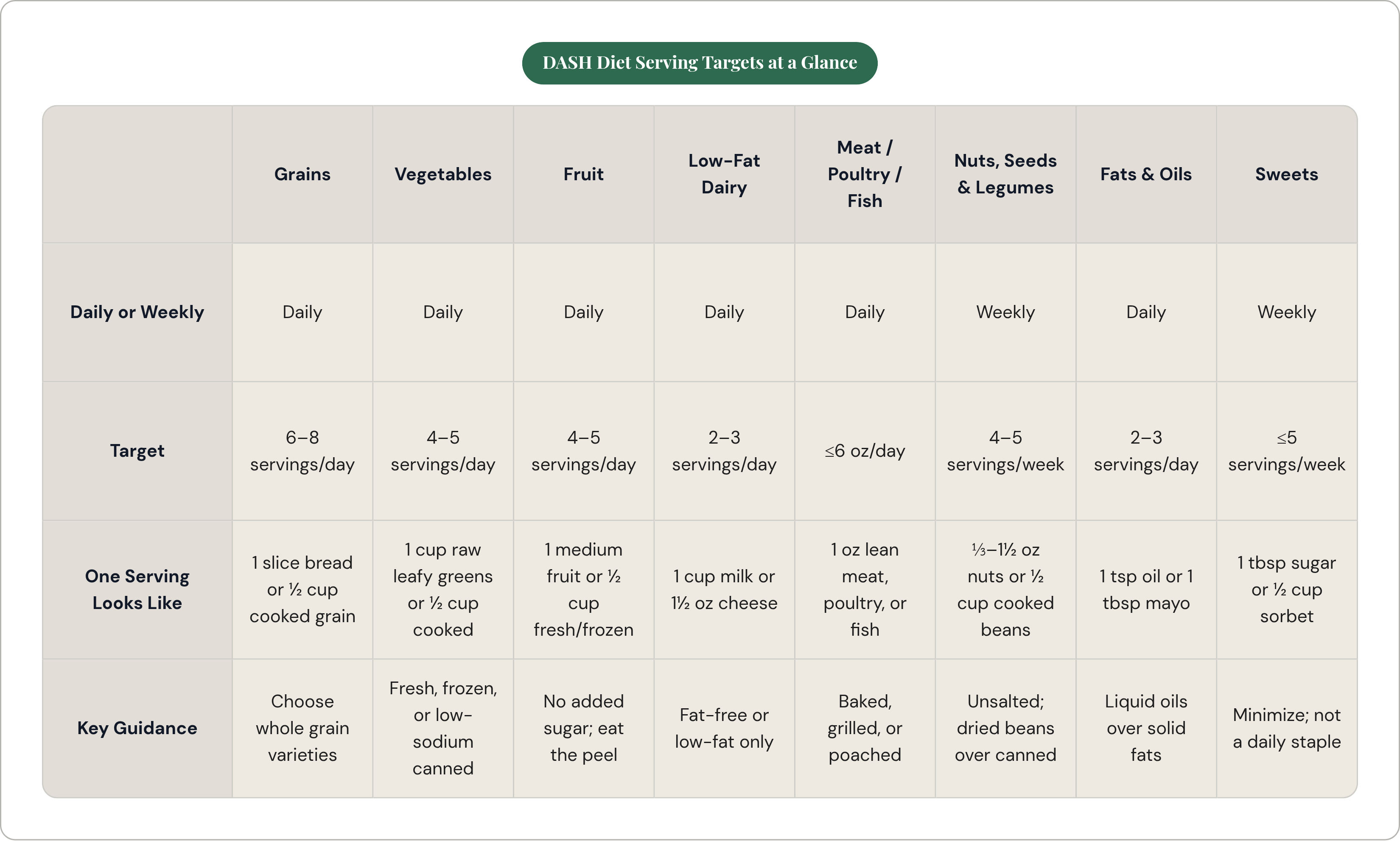
Everything below is based on a 2,000-calorie daily target, the standard reference point used by the NHLBI and Mayo Clinic. Your own numbers will shift depending on your calorie needs, but this gives you a baseline.
Grains get 6 to 8 servings a day. One serving is a slice of bread, half a cup of cooked rice, pasta, or cereal, or an ounce of dry cereal. Whole grains matter here: oatmeal, brown rice, whole wheat pasta, and quinoa keep the bran, germ, and endosperm intact, and that's where most of the fiber and minerals live.
Vegetables come in at 4 to 5 servings daily; a serving equals a cup of raw leafy greens, half a cup of other raw or cooked vegetables, or half a cup of vegetable juice. Fruit gets the same range, 4 to 5 servings a day, and fresh, frozen, or canned all count as long as there's no added sugar. Eating the peel where you can adds fiber you'd otherwise toss in the trash.
Dairy, kept low-fat or fat-free, sits at 2 to 3 servings a day. Meat, poultry, and fish top out at 6 ounces total per day, and how you cook it matters almost as much as how much: lean cuts, baked, grilled, or poached, rather than fried in oil.
Nuts, seeds, and legumes get measured weekly, not daily: 4 to 5 servings a week. A serving there is roughly ⅓ to 1½ ounces of nuts or seeds, 2 tablespoons of nut butter, or half a cup of cooked beans or lentils. Fats and oils get 2 to 3 servings a day, and the diet favors liquid oils, olive, canola, avocado, over solid fats like butter.
Sweets and added sugars cap out at 5 servings or fewer per week, where a serving is a tablespoon of sugar or jam, half a cup of sorbet, or a cup of lemonade. And then sodium: the standard DASH target is 2,300 mg a day, with a lower tier of 1,500 mg for people chasing a bigger blood pressure drop. In kitchen terms, 2,300 mg comes out to about a teaspoon of table salt total, and 1,500 mg is just over half a teaspoon. Fresh whole foods, eggs, plain meat, plain yogurt, vegetables, dried beans, run naturally low in sodium, which makes them the easiest lever anyone has for hitting that number without counting milligrams at every meal.
A day-by-day DASH meal plan for the first week
Here's what a week actually looks like once you turn those targets into food sitting on a plate. Each day covers breakfast, lunch, dinner, and one snack. Protein sources rotate between fish, poultry, legumes, and tofu across the week, partly to show the diet's range and partly because eating salmon seven nights running gets old fast, even if you like salmon.
Day 1: Old-fashioned oatmeal cooked with low-fat milk, topped with blueberries and a drizzle of honey, with a small glass of orange juice. Lunch is a vegetarian chili made with low-sodium canned diced tomatoes and a mix of black, pinto, and kidney beans, seasoned with no-added-salt chili powder, alongside carrot and celery sticks and a bit of low-fat shredded cheese on top. Dinner is baked salmon with garlic powder and black pepper, roasted broccoli in olive oil, and half a cup of brown rice. Snack: a small handful of unsalted almonds and a banana.
Day 2: Whole wheat toast with avocado, a soft-boiled egg, and sliced tomato. Lunch is a large spinach salad with grilled chicken, cucumber, red bell pepper, sunflower seeds, and an olive oil-lemon dressing. Dinner: turkey and vegetable stir-fry in canola oil with snap peas, carrots, and mushrooms over brown rice, using low-sodium soy sauce sparingly. Snack: low-fat Greek yogurt with a handful of berries.
Day 3: Low-fat cottage cheese with sliced peaches and a sprinkle of ground flaxseed. Lunch is a whole wheat pita stuffed with hummus, roasted red peppers, baby spinach, and cucumber. Dinner: herb-roasted chicken breast, a baked sweet potato, and steamed green beans with olive oil. Snack: apple slices with 2 tablespoons of natural peanut butter, no added salt.
Day 4: A smoothie with low-fat milk, frozen banana, spinach, and a small scoop of plain low-fat yogurt. Lunch is lentil soup, homemade or low-sodium canned, with whole grain crackers and raw bell pepper strips. Dinner: shrimp sautéed in olive oil with garlic over whole wheat pasta, plus a side salad with balsamic vinaigrette. Snack: a small orange and a small handful of walnuts.
Day 5: Whole grain cereal, low sodium and low added sugar, with fat-free milk and sliced strawberries. Lunch is a quinoa bowl with roasted zucchini, cherry tomatoes, and red onion, plus chickpeas and a tahini-lemon dressing. Dinner: baked cod with lemon, steamed asparagus, and roasted red potatoes with olive oil and rosemary. Snack: low-fat string cheese and a pear.
Day 6: Whole wheat pancakes made with low-fat milk and canola oil, topped with fresh berries and little to no syrup. Lunch is black bean tacos in corn tortillas with shredded cabbage, salsa, avocado, and lime. Dinner: a grilled, skinless chicken thigh with bulgur wheat, roasted beets, and steamed broccoli. Snack: carrot and cucumber sticks with hummus.
Day 7: Overnight oats with chia seeds, low-fat milk, diced apple, and cinnamon, no added sugar needed. Lunch is a turkey and avocado wrap in a whole wheat tortilla with romaine, tomato, and Dijon mustard, using roasted turkey rather than processed deli meat. Dinner: a vegetable and tofu curry with tomatoes, spinach, and chickpeas in a turmeric-ginger broth, over brown rice. Snack: a small bunch of grapes with a few unsalted cashews.
Look back over the week and notice how every day clears the vegetable and fruit targets without much strain, once the pattern's set. DASH isn't asking you to reinvent breakfast, only to swap ingredients inside meals you already know how to make.
Simple rules for keeping meals low-sodium without sacrificing flavor
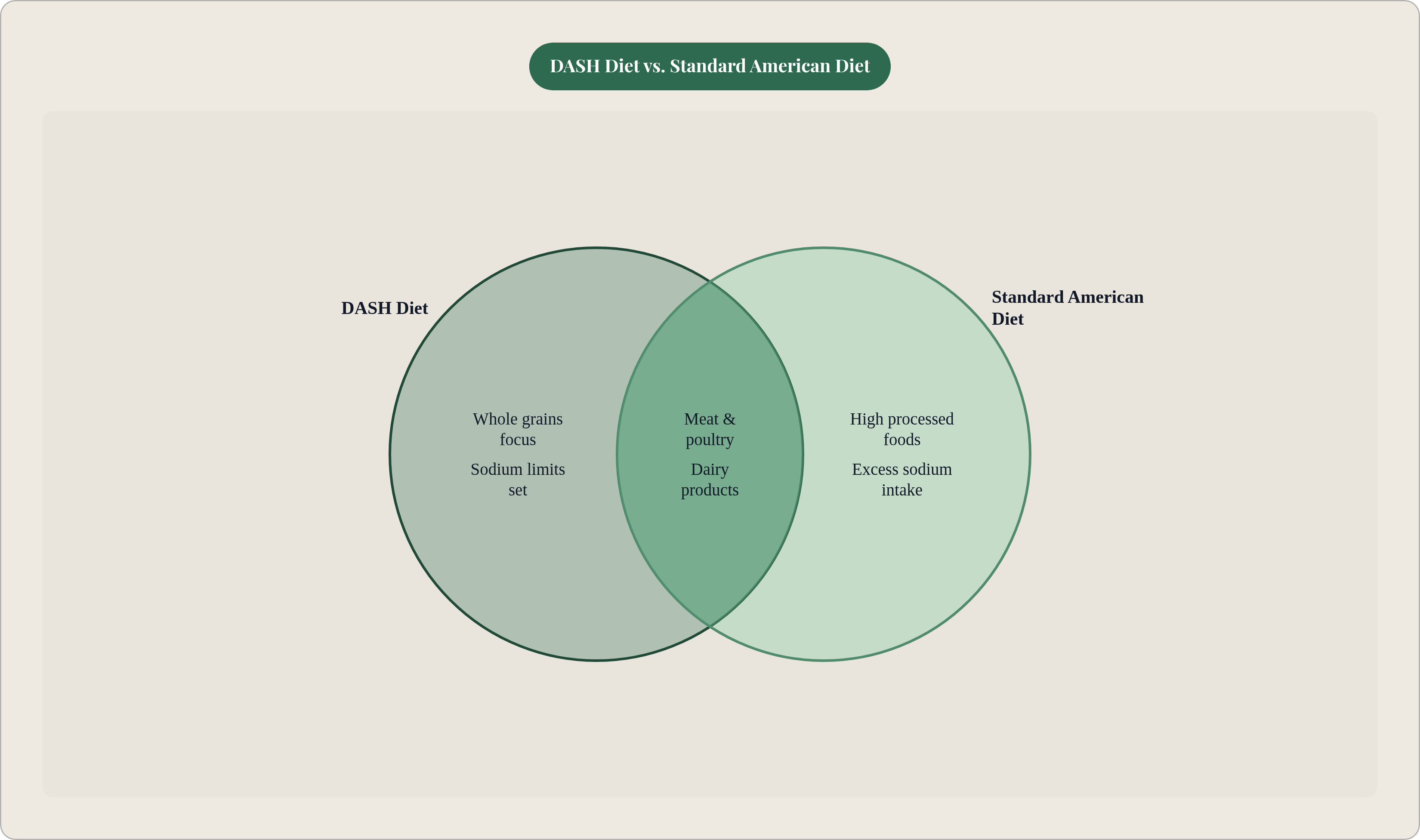
Sodium is where most people fall off without even noticing. The 2,300 mg daily limit sounds generous until you stack a bowl of canned soup, a slice of deli turkey, and a handful of crackers before dinner has even started; it vanishes fast the second processed food enters the picture.
Start by defaulting to fresh. Plain meat, eggs, plain yogurt, fresh vegetables, whole grains, and dried beans all run naturally low in sodium; the problem almost always comes from what gets added during processing, not the base ingredient itself. When you do buy canned goods, look for "low sodium" on the label, generally 140 mg or less per serving, and rinse canned beans under running water before using them, which cuts the sodium further still.
Flavor doesn't have to vanish just because the salt shaker stays in the cabinet. Citrus juice and zest, lemon, lime, orange, brighten a dish in a way that mimics some of what salt does on your tongue. Fresh herbs like cilantro, parsley, basil, and dill, plus dried spices such as cumin, smoked paprika, turmeric, and garlic powder, carry real depth. Vinegars, balsamic, red wine, rice, work well in dressings and marinades, and toasted nuts or seeds bring texture that fills in the gap.
A couple of structural swaps help too. Trade butter and other solid fats for olive, canola, or avocado oil; it's a direct one-for-one swap that also improves your cholesterol numbers over time. Swap white rice, white pasta, and white bread for whole grain versions: same meal, same shape on the plate, different nutrition underneath.
Cooking in batches on weekends makes weekday adherence a lot easier, since DASH-friendly grains, beans, and roasted vegetables hold up fine in the fridge for days. And when you're eating out, ask for dressings and sauces on the side, pick grilled over fried, and don't be shy about asking for no added salt, since most kitchens can do it but won't offer it unless you ask.
Health benefits the DASH diet delivers beyond blood pressure
Blood pressure gets the headline, but it's far from the only thing happening. DASH improves the lipid panel, supports weight management, and lowers the risk of type 2 diabetes and heart disease, likely because the same mechanisms regulating blood pressure, less sodium, more potassium and fiber, also shape how the body handles glucose and cholesterol. It's tied to lower risk of stroke, heart failure, and kidney stones too, and there's evidence linking DASH adherence with reduced risk of certain cancers, including breast and colorectal cancer.
The pattern shows up in places you might not expect from a diet built around blood pressure numbers. Research has connected DASH with lower rates of dementia, depression, and metabolic syndrome, which suggests the mechanisms at work here, less inflammation, better vascular health, steadier blood sugar, ripple outward into brain function and metabolism over time. It works earlier in life too: studies in children and adolescents found DASH improved blood pressure measures in overweight and obese youth, so this isn't only a tool for adults managing decades of accumulated risk.
One of the more interesting developments is how well the framework bends without breaking. Researchers at Johns Hopkins built a modified version called DASH4D, aimed at people managing type 2 diabetes, lower in carbohydrates and higher in unsaturated fat than the original. The core structure, the emphasis on whole foods, potassium, and reduced sodium, stayed put; the macronutrient balance shifted to fit a different metabolic need. That's probably the diet's most underrated strength, since it isn't a rigid script handed down from on high but a set of principles sturdy enough to adapt to diabetes, to kidney disease, to whatever a person's actual body needs, and still come back around to the same basic idea: whole food, less sodium, more potassium, eaten the same way next year as this one.