Shelter and Transitional Housing Pest Inspection Standards
Shelter operators must navigate overlapping federal, state, and local pest standards.
Pest inspection standards for shelters and transitional housing form an uneven patchwork of federal HUD requirements, state codes, and local rules. To comply, operators need to understand how those layers work together as well as pass an inspection. Operators need a pest management program that responds to the realities of congregate housing and records both ongoing prevention and corrective work.
Why pest control in shelters is structurally harder than in ordinary rental housing
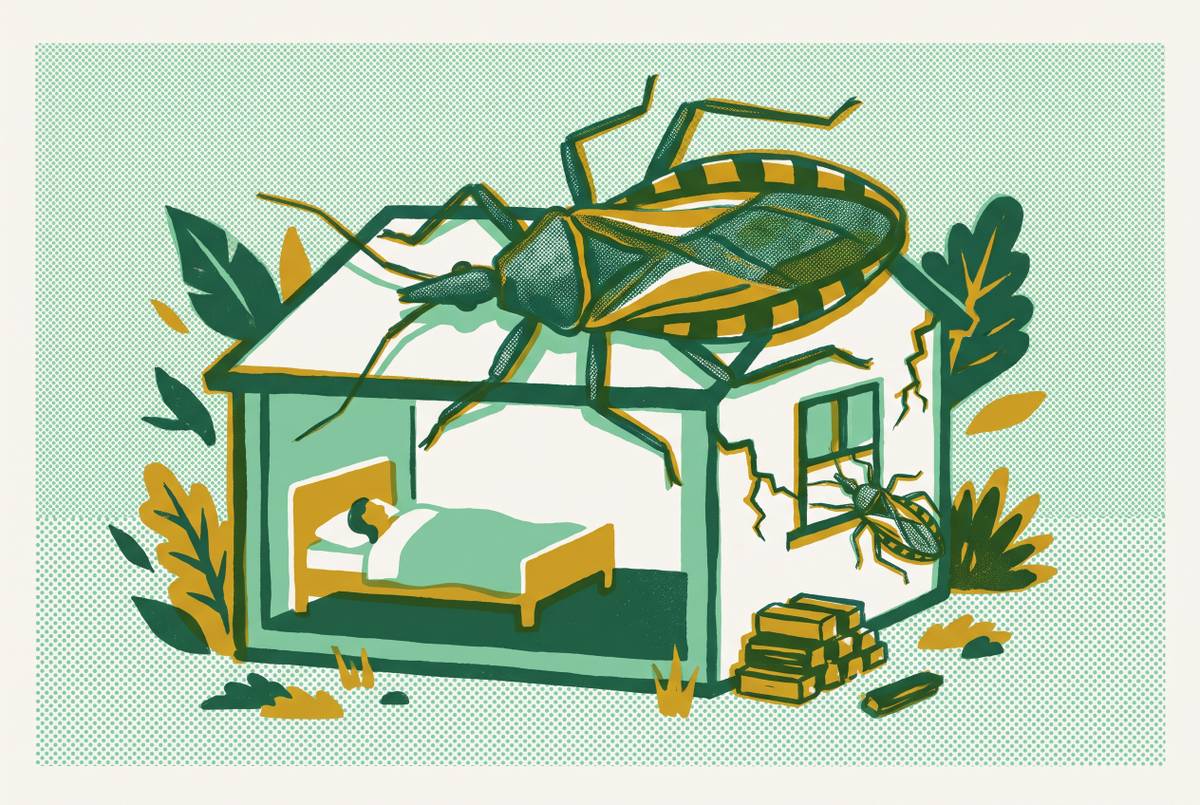
People live in shelters throughout each day as new residents arrive and others leave. An ordinary rental unit may be empty between leases, but a shelter cannot count on time without residents for inspection and treatment. Operators have no control over where residents or their belongings have been before arrival, so bed bugs can be introduced repeatedly. Prevention must work while the building remains in use. That makes daily turnover an operational constraint.
Crowded conditions, limited access to laundry, and compromised physical and mental health also contribute to the greater risk of insect bites and skin infestations among people experiencing homelessness. Yet buildings repurposed from churches, hotels, or schools may lack room for check-in inspection areas or separate storage for potentially infested bedding. Space limits what a protocol can accomplish. Financial pressure further restricts access to mattress encasements, monitoring devices, and intake inspection procedures, even when operators understand their value.
Cockroach infestation is associated with elevated depressive symptoms, while dual infestation compounds that association. This connects the physical environment to resident wellbeing. For operators and health-plan partners, pest prevention therefore belongs within the discussion of safe housing and recovery support.
How HUD's federal floor defines pest infestation as a compliance failure, not a maintenance inconvenience
HUD conditions housing assistance on physical conditions. Under 24 CFR 982.404, owners must keep units up to HUD’s physical condition standards for the whole assisted lease. Housing Assistance Payments stop if an owner fails to correct infestation within the housing authority’s cure window.
The Emergency Solutions Grants program similarly bars the use of ESG funds for housing with disqualifying deficiencies unless the owner corrects them within 30 days of the initial inspection. ESG-funded shelters receiving ongoing funds must undergo a periodic on-site inspection each time funds are received. Annual allocations require annual inspections. Funding and inspection are thus linked. However, that cycle does not replace the obligation to maintain acceptable conditions between visits.
HUD’s NSPIRE standard becomes mandatory for ESG and CoC programs on October 1, 2026. HCV/Section 8 voucher programs have a separate compliance date of February 1, 2027. NSPIRE names rats, mice, cockroaches, and bed bugs as separate deficiency categories, with Moderate classifications for evidence and Severe classifications for extensive infestation. Evidence includes blood stains on mattresses, excrement, and dead pests. Inspectors can still check locked utility closets and areas that people rarely enter, and old droppings can count as a violation even after treatment.
Documentation is part of the correction itself. Starting an appropriate pest management plan satisfies the correction requirement for most deficiencies only when the start date, servicing schedule, and monitoring and treatment methods are on file. A verbal assurance does not close the deficiency. For extensive infestation, the 24-hour correction window is difficult to meet without an existing relationship with a licensed pest management firm and documented monitoring already in place.
What state and local codes add — and where they conflict with the federal layer
Massachusetts 105 CMR 410.550 assigns pest elimination responsibility to owners of residences containing two or more dwelling units, including homeless shelters and rooming houses. Shelters do not follow ordinary rental housing’s pre-occupancy inspection requirements in the same way. Instead, they must have pest management policies that call for inspections at regular intervals. A state emergency shelter checklist also identifies certain temporary overnight shelter exemptions under state regulations. Operators should check whether a facility qualifies without treating an exemption as a general release from pest obligations.
Other jurisdictions add different requirements and guidance. Washington State requires reasonable attempts to keep emergency shelters free from pests, including rodents, flies, cockroaches, fleas, and other insects, a broader list than NSPIRE’s named categories. MSHDA standards require shelters to have adequate ways to remove garbage and control pests. The Michigan Department of Community Health and the Michigan Bed Bug Working Group’s 118-page Manual for the Prevention and Control of Bed Bugs includes a shelter intake and assessment guide for screening new patrons.
Toronto Shelter Standards, updated October 2026, offer a detailed look at another jurisdiction’s rules and are outside U.S. federal compliance. The standards require interior textiles and mattresses to be pest resistant and fire/moisture retardant, with an appropriate covering permitted for mattresses. They also require a mattress replacement plan with an inspection schedule for bed bugs and common defects. Maryland’s 2025 Phase 1 shelter certification report recommended a pest prevention and treatment plan and no evidence of pests. Those recommended criteria should not be confused with an already established obligation merely because they appear in a certification report.
NSPIRE accepts a documented pest management plan for most deficiencies, while Maryland’s recommended criteria and Toronto’s standards call for no evidence of pests. A treatment record and a pest-free condition are different forms of proof. In continuously occupied facilities, the latter can be much harder to demonstrate, so satisfying federal documentation requirements does not automatically satisfy another inspector’s standard.
California's AB 130 as the sharpest illustration of what happens when enforcement is added to existing rules
Before AB 130, California already required cities and counties to act on complaints about shelters. Yet, as of mid-2025, the vast majority had never filed a required report with the state. Consistent inspection and reporting were absent, leaving existing rules without the follow-through needed to turn them into enforceable standards.
AB 130, Chapter 22, Statutes of 2025, signed June 30, 2025, added an affirmative annual inspection duty under HSC § 17974.1(b). Every city and county must inspect every homeless shelter in its jurisdiction, whatever its source of funds and whether or not anyone has complained. Smaller cities may partner with their county. Each jurisdiction must also report annually to HCD and the Business, Consumer Services and Housing Agency by April 1, even if no complaints were received. That requirement removes silence as a substitute for reporting.
The reports must identify complaints, pending uncorrected violations, dangerous or uninhabitable conditions, emergency orders, and operators cited for three or more violations within any six-month period. HSC § 17974.1.5 also requires operators to give new occupants written information about their rights and how to report substandard conditions, and to display that information prominently. Enforcement now reaches beyond the inspection visit. It includes what residents know and what authorities record afterward.
HSC § 17974.4 prohibits cities and counties from awarding or distributing state funding to operators that fail to correct cited violations on time or whose shelters are determined unfit for habitation under the stated conditions. HCD must also withhold state funding from jurisdictions that fail to report or act on violations. California’s response therefore addresses both operators and their overseers.
HUD's own oversight failures and the federal inspection backlog
HUD’s Office of Inspector General has shown that keeping track of physical conditions depends on inspections done on time and data that is complete and accurate. The inspection-tracking IT system, however, lacked the ability to alert program offices when a property needed a future inspection. That is a weakness in the monitoring infrastructure.
The House Financial Services Committee began an investigation in February 2026 into the quality and safety of public housing, including poor conditions, failures in how troubled PHAs were run, and HUD’s past trouble following through on inspections. The investigation also raised concerns about effective implementation of NSPIRE. These findings concern federal housing oversight. Nevertheless, they extend the enforcement-gap argument beyond one state. The lesson for shelter operators is to use internal monitoring as the compliance driver, because waiting for an inspector can leave a problem undiscovered until a compressed correction window begins.
What integrated pest management actually requires in a shelter setting, and why it differs from reactive pest control
The EPA’s guidance for housing managers identifies integrated pest management as the most effective approach to pest control in the home. In multifamily housing, it requires residents, maintenance and custodial staff, pest management professionals, and managers to work together. A contractor visit is only one part. Reactive treatment begins after a complaint or discovery, while proactive IPM uses regular monitoring to prevent significant infestations and assess whether treatment works.
Shelter operators need a program that keeps working between complaints, with records of that work. Intake procedures include inspecting belongings at check-in and quarantining or treating items with evidence of bed bugs before they enter the facility. Continual monitoring covers sleeping and recreation areas. The policy also needs procedures specifically addressing bed bugs, consistent with Michigan’s manual and required by Toronto’s standards. The replacement plan should include a schedule for inspecting mattresses.
Records connect these activities over time. Keeping records over time helps operators spot patterns across sightings and see how well treatment works. In a shelter with limited space and daily turnover, this is a continuing process.
The UC Cooperative Extension IPM study in Contra Costa and Santa Clara Counties provides a bounded cost comparison. Proactive IPM contracts had higher base values than the earlier reactive contracts, but pest control cost less each month at both sites when supplemental costs were included. This is not a sector-wide finding.
Building a documentation system that satisfies overlapping federal, state, and local standards simultaneously
Operators should begin with NSPIRE’s documentation requirements and identify what the applicable state and local layers add. Massachusetts requires written policies for inspections at regular intervals, while Toronto requires operators to keep a log of sightings and infestation evidence as well as treatment records. Where a standard calls for no evidence of pests, inspection and clearance records become especially important. Maryland’s recommended criteria show why that matters, though they do not set a rule for every shelter.
A single pest log can provide the common record. It should include the date and location of every sighting or other evidence, the treatment provider, service date, methods used, and follow-up schedule. The plan’s start date, servicing schedule, and monitoring methods should also be explicit. Operators should keep the licensed pest control company’s contract and inspection schedule with that log, because severe NSPIRE deficiencies require proof that a licensed professional is involved and Toronto requires a licensed company to inspect on a schedule. These records provide a baseline for state inspections.
The same system should have an inventory of mattresses, a schedule for inspecting them, and written procedures for intake screening. Those records link the physical evidence inspectors check with the risks that come back as residents arrive and leave each day. ESG- and CoC-funded operators should use the October 1, 2026, NSPIRE deadline to audit their documentation, while HCV operators should work against their separate February 1, 2027, deadline. Each record needs to show ongoing diligence. In a funding dispute or enforcement action, a well-maintained pest log is stronger protection than a file assembled only after an inspection.
Safe, pest-free housing is a social determinant of health and a condition for effective recovery support, including for people living with serious mental illness. Documentation cannot substitute for safe conditions, but it can make the work of maintaining them visible and accountable.
Sources
- NATIONAL STANDARDS FOR THE PHYSICAL INSPECTION OF REAL ESTATE
- Homeless Shelter Inspection Reporting Requirements
- BOH Forms:#63 Emergency Shelter Checklist
- TORONTO SHELTER STANDARDS 2026 TORONTO SHELTER, SUPPORT SERVICES
- 105 CMR, § 410.550 - Extermination of Insects, Rodents and Skunks
- EMERGENCY SOLUTIONS GRANT (ESG) Minimum Standards for Emergency Shelter