Anxiety as a Risk Factor for Cardiovascular Events
New evidence links chronic anxiety to heart attacks and strokes independently of depression.
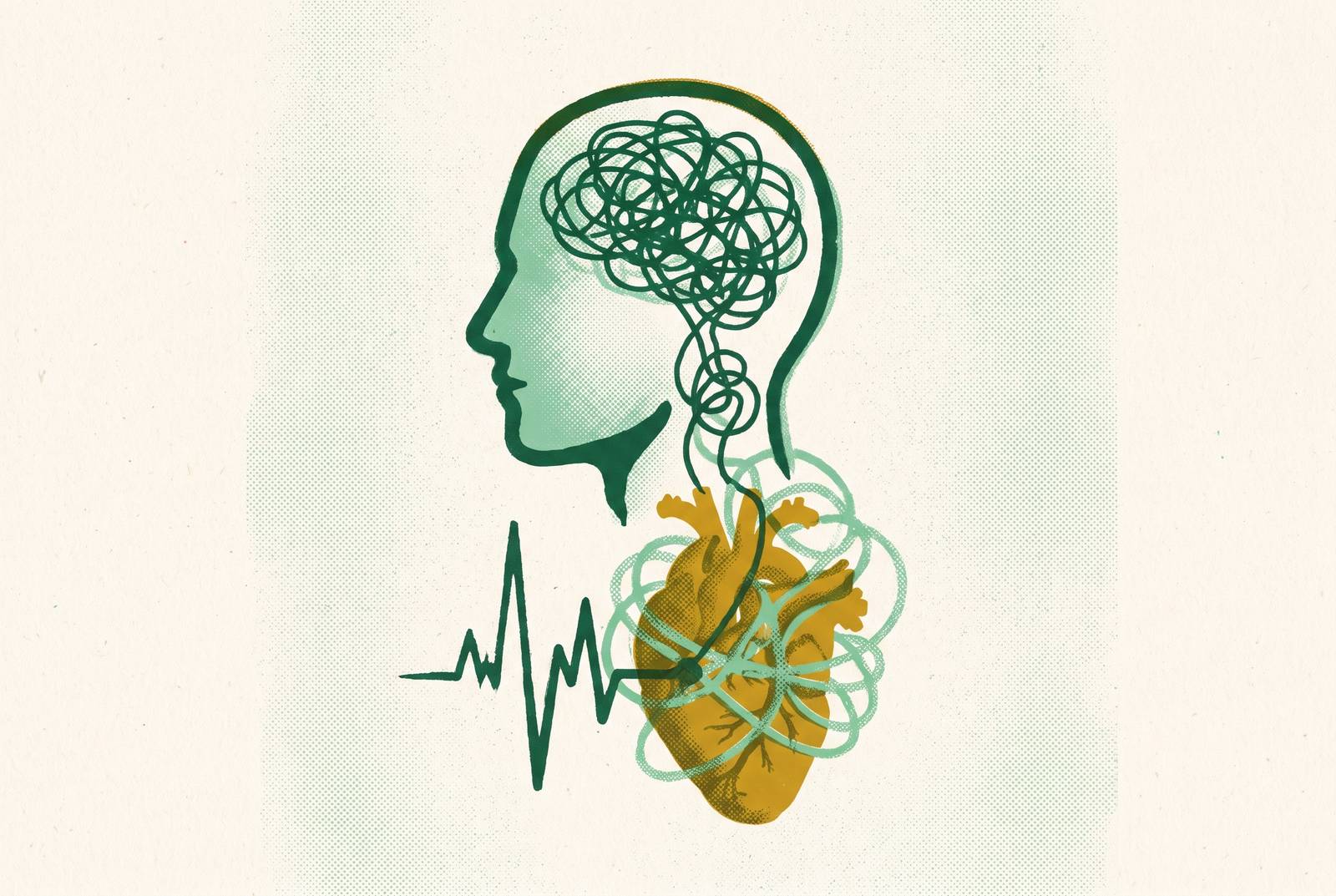
Anxiety is a risk factor for cardiovascular events. Evidence from clinical studies and brain imaging supports an independent, physiologically grounded role, although important causal questions remain open. Understanding that distinction shifts the focus to assessing and treating mental and cardiovascular health together.
Why anxiety belongs on the list of cardiovascular risk factors
Cardiovascular disease (CVD) is the leading cause of death worldwide, responsible for roughly a third of global deaths, with heart attack and stroke accounting for the vast majority. Smoking, obesity, hypertension, and diabetes are conventionally recognized risk factors, while psychiatric disorders have not occupied the same position. Anxiety has more often been treated as a symptom or comorbidity than as a possible contributor to cardiovascular disease. But is anxiety so common only because being ill causes distress?
The scale makes that question difficult to dismiss. Over a billion people live with some form of mental disorder, and anxiety disorders are the most prevalent psychiatric group worldwide, with lifetime prevalence approaching roughly three in ten people. The prevalence of anxiety makes the consequences of misclassification substantial. The 2025 ESC Clinical Consensus Statement, its first document dedicated to the mental health–CVD interface, formally advises integrating screening for depression, anxiety, and PTSD into cardiovascular risk assessment. That shift gives mental health a place in evaluating risk, rather than considering it only after cardiac disease has been diagnosed.
What the evidence actually shows about anxiety’s effect on cardiovascular outcomes
Meta-analytic evidence links pathological anxiety to higher risks of coronary heart disease, stroke, and heart failure, with some links holding even when depression is taken into account. The increase is not uniform across outcomes. Stroke shows a sharper rise than coronary heart disease, suggesting that the relationship extends beyond a single cardiac endpoint. That pattern is consistent with systemic vascular effects, although outcome differences cannot identify a mechanism by themselves.
Karlsen et al. identify a legitimate methodological weakness in the earlier evidence. Many meta-analyses did not control for depression, and some associations weaken when the analysis is restricted to studies that did. This is not a minor statistical qualification. If depression accounts for an observed association, the case for classifying anxiety as a separate risk factor becomes less secure. The objection therefore requires better-controlled evidence.
The independence finding is strongest in patients with stable coronary heart disease. In that population, generalized anxiety disorder (GAD) predicts a substantially higher rate of subsequent cardiovascular events, and the association is not significantly affected by major depressive disorder. Anxiety need not have an identical relationship with every cardiovascular outcome in every population to provide clinically useful information. Evidence in people with established disease is particularly relevant because the outcome at issue is a further cardiovascular event.
The December 2025 Mass General Brigham biobank study, published in Circulation: Cardiovascular Imaging, followed 85,551 participants and adds a different test of the relationship. People with both depression and anxiety had meaningfully higher cardiovascular risk than those with either condition alone. The elevation persisted after accounting for socioeconomic status, smoking, diabetes, and hypertension. The study’s authors make clear that its observational design cannot establish causation, but its size and controls make it harder to explain the findings through confounding alone.
The biological chain from chronic anxiety to cardiovascular damage
Chronic anxiety can affect cardiovascular health through several pathways at once, involving stress hormones, autonomic regulation, clotting, and blood pressure. These pathways overlap and reinforce one another. They are not competing explanations from which a single winner must emerge. Their importance lies in specifying how a psychological condition can produce sustained changes in the systems that govern vascular and cardiac function.
The neuroendocrine pathway begins with chronic activation of the hypothalamic–pituitary–adrenal (HPA) axis and sympathetic nervous system. Sustained elevations in cortisol and catecholamines can accelerate atherosclerosis, impair endothelial function, promote oxidative stress, and raise heart rate and blood pressure. Autonomic dysregulation affects the regulation of the heart itself. Reduced heart rate variability and overactive nervous system signaling are measurable features in anxious patients, while reduced vagal tone is associated with worse cardiac outcomes. Chronic sympathetic activation can also down-regulate adrenergic receptors over time, showing that keeping the system switched on changes how it responds.
Glucocorticoid release modulates clotting factor production, while adrenaline and noradrenaline enhance platelet aggregation by increasing adhesion molecule expression on platelet surfaces. These changes raise the risk of thrombotic events. Blood pressure is another pathway that partly overlaps with these, and approximately 38% of anxious patients have blood pressure that is abnormally high. Hypertension can be a downstream product of the neuroendocrine cascade and therefore partially mediate the cardiovascular association, rather than serving only as an unrelated condition that happens to coexist with anxiety.
The biobank study brings these pathways closer to their neural starting point. It found increased amygdala activity, reduced heart rate variability, and elevated CRP, an inflammation marker, in people with depression or anxiety. Advanced PET/CT imaging let researchers examine the neural mechanisms that link emotional stress to the development of cardiovascular disease. Study co-author Abohashem describes these changes as a “biological chain linking emotional stress to cardiovascular risk”. This mechanistically specific evidence supplies an observable connection among brain activity, autonomic function, and inflammation that the statistical association alone could not provide.
Who is most exposed to anxiety’s cardiovascular burden
The cardiovascular implications of anxiety are not evenly distributed. Roughly one in three people with CVD have clinically significant anxiety, yet it remains among the most systematically unaddressed comorbidities in cardiovascular settings. People who already have heart disease thus have substantial needs for psychological care and belong to a group in which anxiety predicts further events. Treating distress as an expected accompaniment to heart disease can obscure its potential relevance to what happens next.
Anxiety and depression stay high in many patients during the year after acute coronary syndrome. Psychological distress also affects a large proportion of patients after myocardial infarction, serious cardiac events, or cardiac surgery. The relationship can run in both directions. A cardiac event may cause anxiety, while anxiety that persists may add cardiovascular risk during recovery, so drawing a strict line between cause and consequence may do less to help guide care.
Sudden cardiac arrest raises a related but distinct question. Anxiety may predispose to arrest through metabolic and lifestyle pathways, but mental stress also appears to affect the cardiac ion channels that control the heart’s electrical properties. That effect could potentially precipitate ventricular fibrillation. The proposed electrical pathway should not be treated as a settled explanation for every event.
Socioeconomic deprivation compounds these exposures through psychological stress while limiting access to mental health and cardiovascular care. People with serious mental illness face a particularly acute form of this double burden, with cardiovascular care frequently characterized by stigma and undertreatment. Access is part of the risk landscape. Karlsen et al.’s emphasis on differences between populations is therefore constructive, because it supports calibrating clinical attention to groups where the association is strongest. An average for the whole population can hide patients who face both greater exposure and fewer ways to get treatment.
Why cardiology has been slow to act on what the evidence shows
The ESC statement identifies an implementation gap involving insufficient professional awareness, non-systematic screening, and the absence of integrated management protocols. These are structural obstacles. Recognizing anxiety in principle does not establish how it will be assessed or managed within cardiovascular care. Without an integrated framework, the finding can remain outside the routines through which cardiac risk is evaluated.
The clinical default treats psychiatric and cardiac conditions as belonging to separate services, even when the same patient needs both. For patients with primary severe mental disorders, stigma can further contribute to undertreatment of cardiovascular conditions. Healthcare disparities and risky behaviors complicate screening and management as well.
Scientific uncertainty has also contributed to hesitation. Earlier studies that did not consistently control for depression left reasonable grounds for questioning anxiety’s independent role, and methodological caution was warranted. Yet uncertainty about the precise causal contribution is different from an absence of evidence relevant to care. The ESC statement sets out a framework for care, while the imaging findings show a specific biological pathway. Together, they remove the main scientific reason to leave anxiety at the edges of cardiovascular assessment, though questions about treatment and causation remain.
What treating anxiety as a cardiovascular risk factor actually looks like in practice
Cognitive behavioral therapy (CBT) provides the strongest trial-level support in this evidence for an effect on cardiac endpoints. The ESC statement cites a trial of 362 people who had experienced a CVD event, randomized to usual care or usual care plus CBT. CBT decreased the risk of recurrent events, including myocardial infarction. The outcome went beyond a psychological score. Still, a trial in patients with previous cardiovascular events does not establish that treating anxiety will reduce cardiac mortality across all populations or settings.
Structured cardiac rehabilitation has a different evidentiary strength. Programs have reduced anxiety and depression and improved quality-of-life dimensions, including emotional well-being and energy. Those are documented benefits in their own right. Their effects on later cardiac events need more study, so better psychological health alone should not be taken as proof of cardiovascular protection. Pharmacological treatment requires similar restraint, with limited effectiveness reported in cardiac patients and no improvement in long-term prognosis established in the evidence described here.
The imaging findings create a more specific research question. Could treatment normalize the brain and immune markers associated with anxiety and then reduce cardiovascular event rates? The biobank team is studying stress-reduction therapies, anti-inflammatory medications, and lifestyle changes to see whether they could have those effects. Both parts require testing. A change in a biological marker would help explain treatment effects, but the broader question of whether systematically treating anxiety reduces cardiac events and mortality remains open.
For clinical practice, the ESC recommendation makes routine screening the entry point to an integrated model. Without screening, interventions cannot reliably reach the people who need them. For people with serious mental illness, community-based peer support can complement clinical intervention by addressing housing, medication adherence, and appointment access, which influence both psychological distress and cardiovascular care. That support is a practical response to fragmented access.
Sources
- Mental Disorders as Risk Factors for New Onset Cardiovascular Diseases - PMC
- Depression and anxiety linked to increased risk of heart attack or stroke — Harvard Gazette
- Anxiety as a risk factor for cardiovascular disease independent of depression: A narrative review of current status and conflicting findings
- Psychological risk factors and cardiovascular disease
- Anxiety as a Risk Factor for Cardiovascular Diseases
- 2025 ESC Clinical Consensus Statement on mental health and cardiovascular disease: developed under the auspices of the ESC Clinical Practice Guidelines Committee: Developed by the task force on mental health and cardiovascular disease of the European Society of Cardiology (ESC)Endorsed by the European Federation of Psychologists' Associations AISBL (EFPA), the European Psychiatric Association (EPA), and the International Society of Behavioral Medicine (ISBM)
- Depression and Anxiety Associate With Adverse Cardiovascular Events via Neural, Autonomic, and Inflammatory Pathways - PMC
- An Anxious Heart: The Relation Between Cardiovascular Disease and Prevalence of Anxiety Symptoms