Hypertension Prevention Through Lifestyle Modification
Dietary changes and exercise can prevent hypertension years before medication becomes necessary.
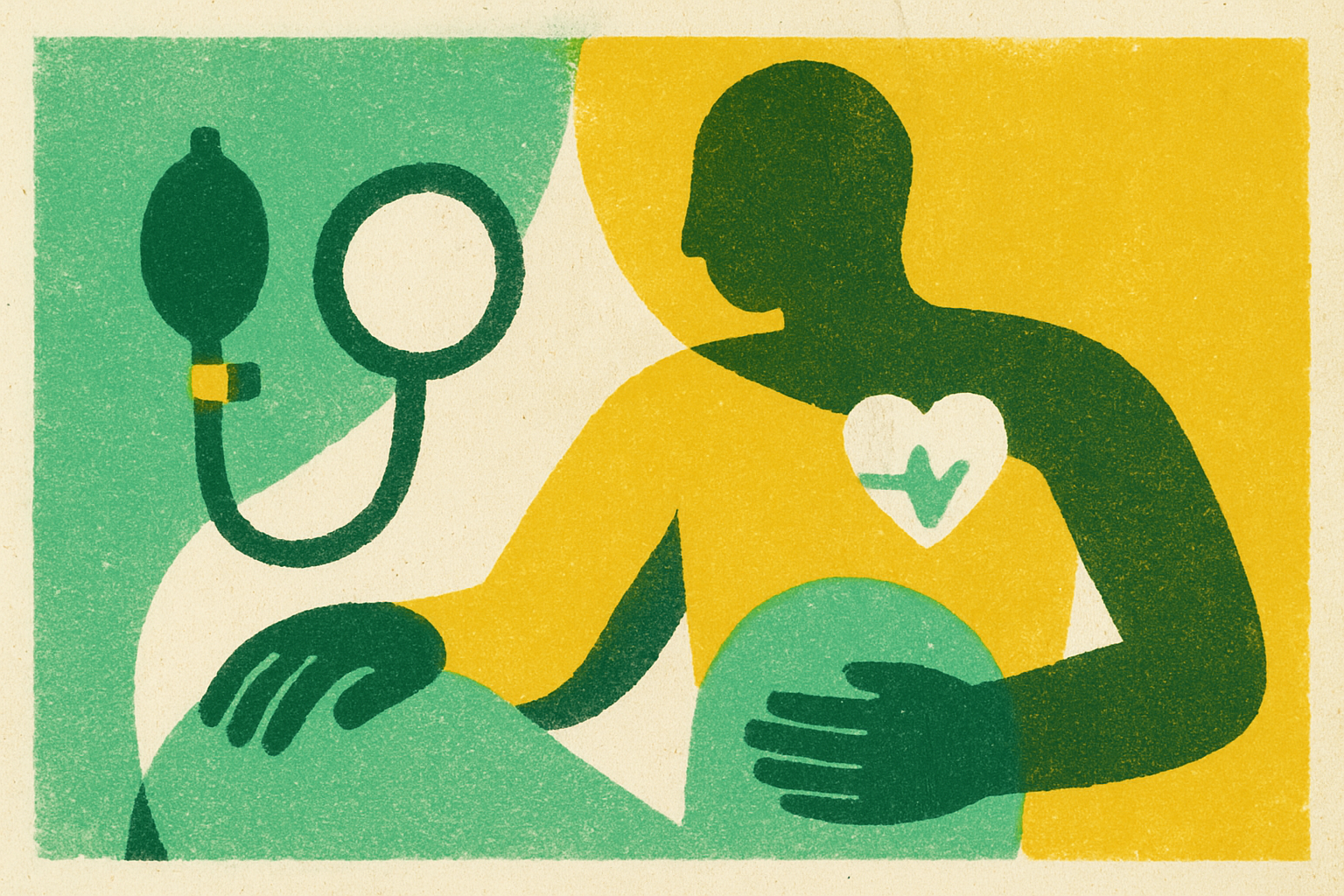
Hypertension, by the current ACC/AHA definition, is a systolic blood pressure at or above 130 mm Hg, a diastolic at or above 80 mm Hg, or current use of antihypertensive medication. The 2025 AHA/ACC guideline sets the treatment target below 130/80 mm Hg for most adults, with a more aggressive systolic target below 120 mm Hg for those at elevated cardiovascular risk.
The threshold is clinically useful and, simultaneously, conceptually treacherous. Blood pressure is a continuous variable. Cardiovascular risk tracks it across the entire distribution, not only above a single cutoff. A person at 128/78 is not categorically safe. That continuum carries a practical implication most clinical conversations skip over: the lifestyle habits that reduce blood pressure in someone already hypertensive also reduce risk in someone who hasn't crossed the line yet. The threshold organizes clinical classification. It does not describe where danger begins.
Nearly all hypertension cases are primary, meaning no single identifiable pathological cause underlies them. This is not a diagnostic failure. It reflects the condition's actual nature: a product of cumulative exposure to modifiable factors across years, sometimes decades. That is precisely why lifestyle intervention has traction here, and why a pill prescribed after the fact is often playing catch-up to a problem that accumulated long before the prescription was written.
Why the Cost of Uncontrolled Hypertension Is a Structural Problem, Not a Personal One
Global cardiovascular deaths rose from 13.1 million in 1990 to 19.2 million in 2023, according to the GBD Study published in JACC in 2025. In the United States, cardiovascular disease costs exceed $400 billion annually in direct and indirect expenditures. Globally, cardiovascular diseases are projected to cost low- and middle-income countries $3.7 trillion between 2011 and 2025, roughly 2% of those countries' GDP, per The Lancet in 2025.
The figure worth sitting with: 99 countries have national hypertension control rates below 20%. That number is not a story of individual noncompliance. Instead, it is a story of treatment infrastructure that is not reaching most of the people who need it, and probably cannot scale fast enough to close the gap anytime soon. If clinical systems cannot keep pace, the question becomes what can. Prevention through daily behavior, operating upstream of any clinical encounter, is among the most scalable interventions available. It does not require a functioning referral system. It requires only that the habits exist.
How Major Clinical Guidelines Now Position Lifestyle Modification Relative to Medication
For much of the 20th century, lifestyle advice occupied a secondary lane in hypertension management, the polite suggestion before the real treatment began. That framing has been formally revised.
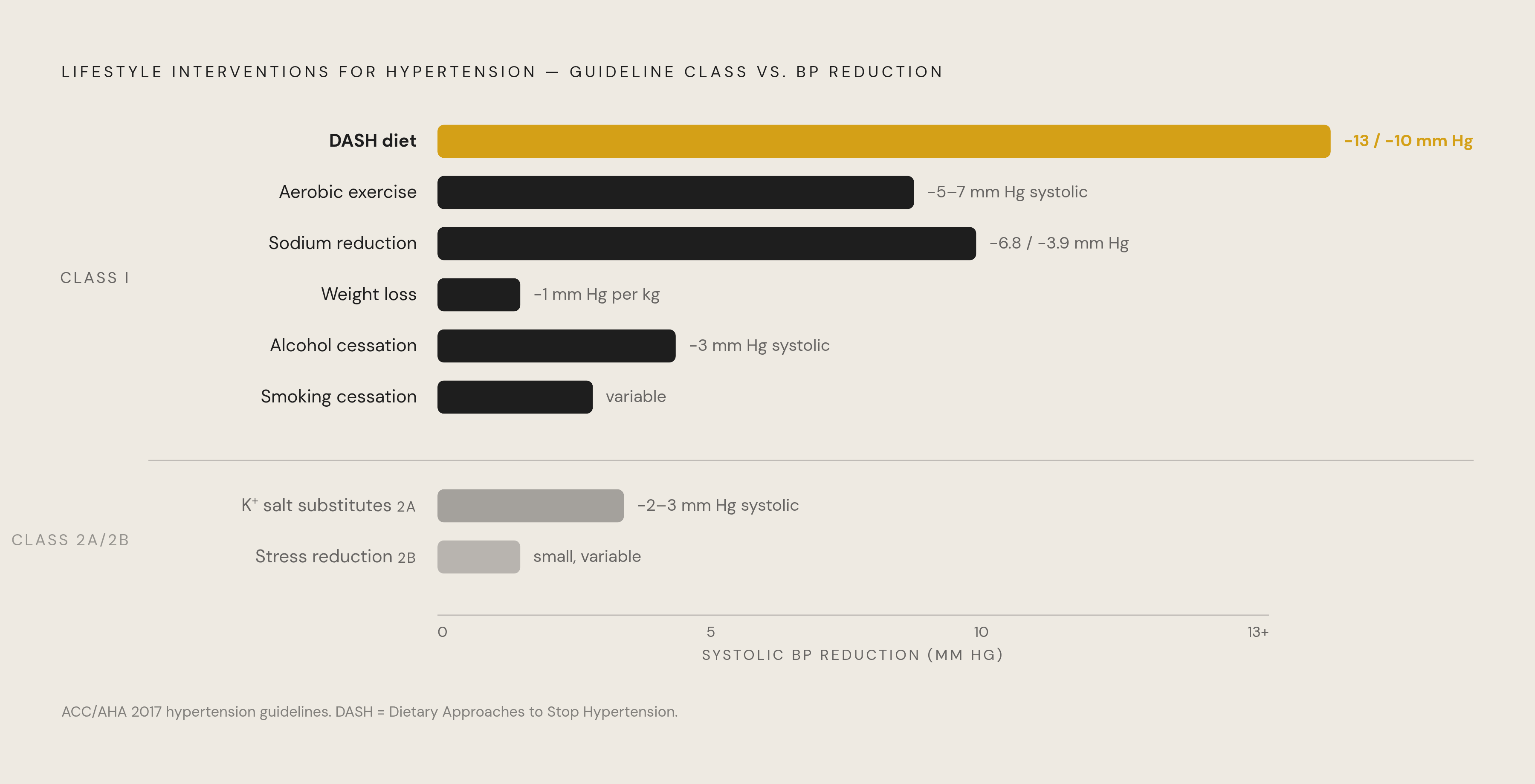
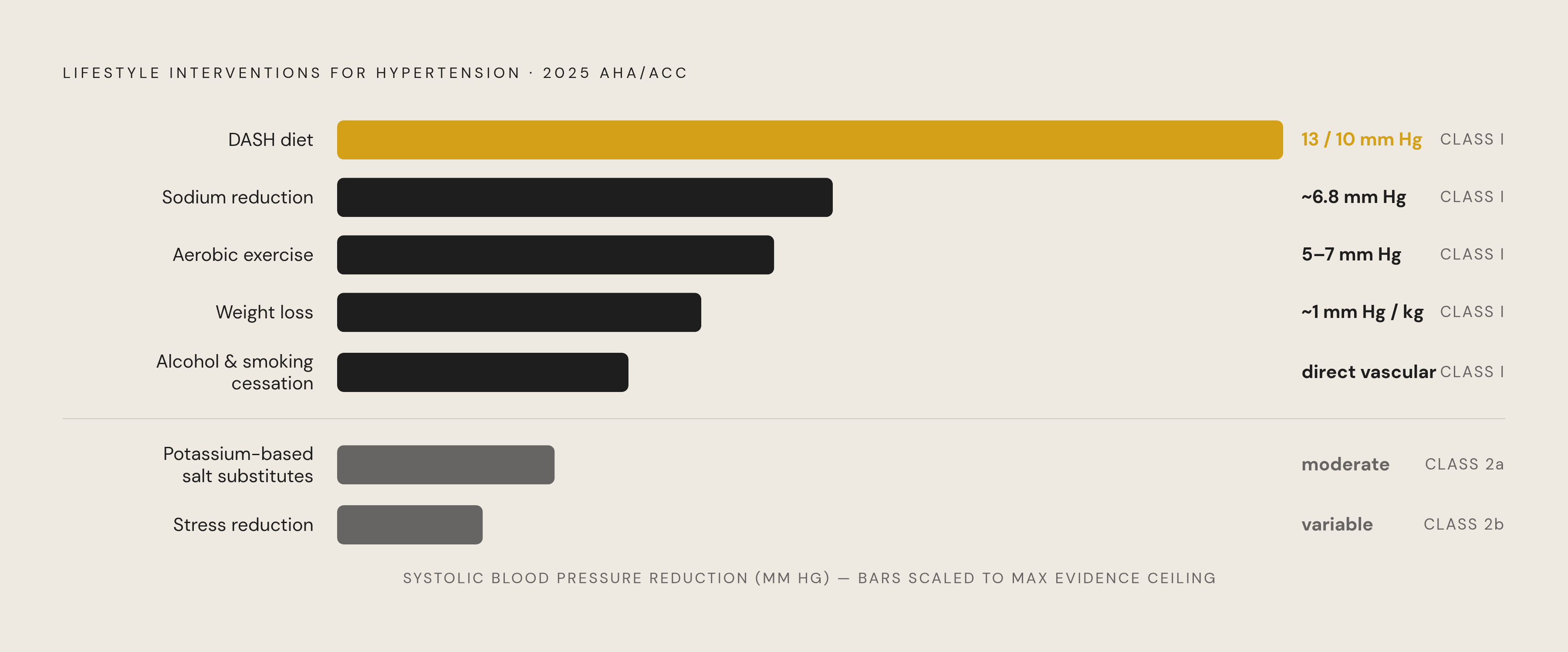
The 2025 AHA/ACC guideline assigns Class I recommendation status, its highest tier, to weight loss, the DASH diet, a high-potassium dietary pattern, sodium reduction, alcohol cessation, and regular exercise. Class I means evidence and expert consensus support the intervention as beneficial and appropriate in most cases. These are not supplementary suggestions appended to a pharmacologic plan.
The 2024 European Society of Cardiology guideline goes further, elevating lifestyle modification to Class I on equal footing with pharmacologic therapy, and noting explicitly that adherence to multiple lifestyle changes in combination can produce blood pressure reductions comparable to a single antihypertensive medication. The ESC anchors this with specific targets: sodium below 2 g per day, potassium at or above 3.5 g per day.
However, not every intervention carries that weight. Stress reduction holds a Class 2b recommendation in the 2025 AHA/ACC guideline; potassium-based salt substitutes carry Class 2a. These distinctions matter. Treating all lifestyle interventions as interchangeable misrepresents both the evidence and the prioritization the guidelines encode, and in practice, that conflation tends to flatten what should be a considered hierarchy.
Diet as the Highest-Leverage Single Domain
The DASH diet, Dietary Approaches to Stop Hypertension, was designed to test the blood pressure effects of a dietary pattern rather than isolated nutrients. Abundant fruits, vegetables, and legumes; lean protein; low-fat dairy; reduced red meat, sweets, and processed foods. The 2025 AHA/ACC guideline reports adherence associated with up to 13/10 mm Hg reduction in blood pressure, the largest single dietary effect in the evidence base.
Fewer than 1% of U.S. adults with high blood pressure fully meet DASH guidelines. That gap between the diet's efficacy and its actual uptake is not mysterious to anyone who has spent time thinking about how people actually eat. DASH requires more cooking, more food preparation time, and more consistent access to fresh produce than many American households can practically sustain. Acknowledging that is not an excuse; it is a prerequisite for giving advice that is useful rather than aspirationally correct.
Partial adherence still produces measurable benefit, and that is the more defensible framing for most patients. Movement toward the DASH pattern, not binary compliance with it, is the realistic and still evidence-supported goal. The Mediterranean diet and isolated caloric restriction both show blood pressure benefit in RCTs, but neither consistently matches the magnitude of effect that full DASH adherence produces.
The Effect of Sodium Reduction
The relationship between sodium intake and blood pressure is quantifiable across multiple levels of evidence. For every 100 mmol reduction in 24-hour urinary sodium excretion, systolic blood pressure falls by 6.81 mm Hg and diastolic by 3.85 mm Hg, per data published in AHA's Hypertension journal. A meta-analysis of 36 randomized controlled trials covering tens of thousands of participants found that sodium restriction programs reduced office systolic BP by a mean of roughly 2.6 mm Hg compared to standard care, as synthesized in the 2025 Japanese Society of Hypertension Guidelines. The convergence across methodologies and populations is what makes sodium one of the most defensible targets in lifestyle intervention.
The ESC target is below 2 g of sodium per day. Average intake in most Western populations sits well above that.
Potassium operates through opposing physiological mechanisms, promoting natriuresis and relaxing vascular smooth muscle, and attenuates the blood-pressure-raising effects of sodium. The Japanese Society of Hypertension recommends at least 350 g of vegetables and 200 g of fruit daily to achieve adequate potassium; the ESC sets 3.5 g per day as its target.
Most sodium reduction advice is aimed at the salt shaker. That is a problem. After all, the overwhelming majority of dietary sodium in modern food environments comes from processed and restaurant food, not home seasoning. The practical lever is food sourcing. Advice that targets the shaker addresses a fraction of actual exposure and leaves most of the problem untouched, which may explain why population-level sodium reduction programs have underperformed their theoretical potential.
How Much BP Reduction Exercise Produces and Which Types Count
Aerobic exercise produces reductions of roughly 5 to 7 mm Hg in people with hypertension, translating to a cardiovascular risk reduction estimated by the ACSM at 20 to 30%. A 2024 systematic review found exercise produced a weighted mean decrease in systolic BP of approximately 5.84 mm Hg among older adults with hypertension. A meta-analysis of randomized controlled trials across 18 low- and middle-income countries found physical activity reduced systolic BP by a weighted mean of roughly 7.7 mm Hg, establishing consistency of effect across resource-limited settings, not just well-funded trials.
Resistance training deserves more than a footnote. Emerging evidence suggests dynamic resistance exercise produces BP reductions comparable to aerobic exercise for many individuals, which matters considerably for people whose circumstances, physical limitations, or preferences make sustained aerobic activity impractical. The range of exercise modalities with credible evidence behind them is broader than most clinical conversations let on.
RCT evidence shows that structured exercise training over 8 to 12 weeks, at three sessions per week, produces meaningful reductions in 24-hour systolic and diastolic measurements, including in cases of resistant hypertension. Benefit appears dose-responsive, and consistency of practice matters more than intensity for BP management specifically.
A Direct Relationship With a Clear Arithmetic Implication
Overweight is associated with a twofold to sixfold increase in the risk of developing hypertension across cross-sectional and prospective studies, consistently, across age groups and sexes. The 2025 AHA/ACC guideline quantifies the intervention effect with notable precision: approximately 1 mm Hg systolic and 1 mm Hg diastolic BP reduction per kilogram of weight lost.
That arithmetic matters because it reframes what success looks like. The target is not transformation. A modest, sustained reduction produces a proportional and clinically meaningful BP signal, and that is what the evidence actually supports pursuing. Whether sustaining even modest weight loss is easy is a separate question, and anyone who has worked with patients on this knows the answer is no. However, difficulty of maintenance does not change what the arithmetic shows.
Weight and dietary change are mechanistically linked but distinct. Caloric restriction that does not follow the DASH pattern still produces BP benefit through weight loss. DASH adherence without weight loss still produces BP benefit through its nutrient composition. Both effects are real; they operate through different pathways. A person pursuing both simultaneously captures both.
Weight loss also carries the broadest co-benefit profile of any single lifestyle change here: reduced type 2 diabetes risk, attenuated sleep apnea severity, lower joint load. So for someone trying to decide where to direct behavioral change effort, that breadth is relevant information.
Guideline-Backed, Mechanistically Distinct, and Underweighted in Practice
Both alcohol cessation and smoking cessation carry Class I status in the 2025 AHA/ACC guideline, the same evidentiary tier as DASH, sodium reduction, and aerobic exercise. In clinical counseling and popular health conversation, they tend to receive substantially less attention than dietary and exercise interventions. The evidence does not support that disparity.
Heavy alcohol consumption is recognized alongside unhealthy diet, excess weight, and physical inactivity as one of the four primary modifiable risk factors for hypertension. The mechanism is direct: alcohol raises blood pressure both acutely and chronically, through sympathetic nervous system activation and effects on the renin-angiotensin system.
Smoking's contribution to hypertension is frequently miscategorized. Each cigarette raises blood pressure acutely. Chronic smoking damages vascular endothelium, reducing arterial compliance and compounding cardiovascular risk over time. Cessation addresses both components. Framing smoking cessation primarily as a lung health intervention systematically underestimates its cardiovascular relevance. That framing shapes clinical conversations in ways that likely affect how patients at cardiovascular risk prioritize the behavior, which is worth considering the next time a counseling session is structured around pulmonary function.
The Evidence Is Real, but the Strength of Recommendation Is Lower
The 2025 AHA/ACC guideline places stress reduction at Class 2b. That should be stated plainly.
The mechanism is not in dispute. Chronic stress activates the sympathetic nervous system and the hypothalamic-pituitary-adrenal axis, sustaining elevated cortisol and catecholamine levels that raise blood pressure over time. However, the debate is whether available interventions reliably interrupt that process in ways that produce durable BP reduction at scale.
Mind-body approaches, including yoga, slow-paced breathing, and mindfulness practices, have RCT support for modest BP reductions. Effect sizes are smaller and more variable than those seen with sodium reduction or aerobic exercise. That variability likely reflects heterogeneity in practice, fidelity, and participant stress burden across studies, rather than any single methodological flaw.
Stress management is not a substitute for dietary and exercise changes. However, for people in whom chronic stress is a primary driver of elevated BP, including shift workers, caregivers, and individuals in high-demand occupational roles, it may be the most practically accessible intervention available. Structured techniques, slow diaphragmatic breathing, progressive muscle relaxation, have more consistent evidence than the general instruction to reduce stress. The latter is technically accurate and largely unhelpful.
Combining These Interventions, and What the Aggregate Effect Actually Means
The interventions are additive. A person who reduces sodium intake toward the 2 g daily target, moves toward the DASH dietary pattern, exercises consistently, and achieves modest sustained weight loss can produce blood pressure reductions that, in combination, rival those of a single antihypertensive medication. The 2024 ESC guideline makes that point explicitly.
The hierarchy, by strength of evidence: dietary change through DASH and sodium reduction combined with regular aerobic exercise carries the strongest and most consistent signal. Weight loss amplifies both. Alcohol and smoking cessation are independently important at the same guideline tier. Stress management is a useful adjunct in specific populations, and should be understood in that context rather than either inflated or dismissed.
For someone constrained to one change, sodium reduction and DASH have the most immediate, measurable effect on blood pressure specifically. Exercise has the broadest cardiovascular benefit beyond blood pressure, including effects on lipid profiles, glycemic control, and cardiac function that dietary change does not fully replicate. Those are not contradictory findings; instead, they bear on how someone might sequence changes given limited bandwidth and competing demands.
One thing the public conversation about hypertension management consistently underemphasizes: these interventions are preventive, not only therapeutic. The research base includes people without hypertension at baseline, and BP-lowering effects in normotensive adults are well-documented. Nearly half of all adults with hypertension in the United States do not know they have it. Pharmacologic treatment cannot reach them. Clinical counseling cannot reach them. However, lifestyle habits, operating continuously in the background of ordinary daily life, can reach people that clinical systems cannot, because prevention does not require a diagnosis. That is perhaps the most underutilized argument for taking these interventions seriously long before a threshold is crossed.