988 Suicide and Crisis Lifeline Usage and Limitations
The lifeline saves lives when people use it, but equity gaps and follow-up failures limit its reach.
988 replaced the old 10-digit National Suicide Prevention Lifeline number in July 2022, and the shift was a structural upgrade to crisis response in the United States, not a cosmetic rebrand. The new three-digit number gives people in suicidal crisis or acute emotional distress a simpler way in, which matters more in a moment of panic than it might in calmer analysis. A network of more than 200 independent local crisis contact centers, overseen and funded by the Substance Abuse and Mental Health Services Administration, with a nonprofit network administrator coordinating operations across the system, sits behind that number. The Lifeline answers calls, texts, and chats around the clock. As of March 2026, calls are routed to local centers based on a caller's approximate location, and the GAO's July 2026 report notes that SAMHSA plans to extend that same location-based routing to texts by April 2027 for nationwide wireless providers, with non-nationwide providers given until October 2028 under an FCC rule. Demand has grown fast enough to strain a system built only four years ago: the FCC reported in May 2026 that contacts roughly doubled between 2022 and 2025, reaching nearly 8 million contacts in 2025 alone, with tens of millions of contacts logged since launch. That growth curve sets up the central question this piece examines: what has that volume actually bought, and where does the system still fall short of the need it was built to meet?
Where 988 has demonstrably helped, especially for young people
The data on 988's effect on suicide outcomes gives real reason for encouragement, particularly among adolescents and young adults. The effect was not uniform across the country. Reductions in suicide were significantly greater in states where 988 call uptake ran highest, a pattern that suggests a dose-response relationship: more use correlates with more lives preserved, rather than the benefit appearing independent of how much a population actually engaged with the line.
The people using the Lifeline report the same thing researchers are finding in mortality data. One might argue that any supportive conversation could produce that kind of self-reported relief, so what accounts for the suicide reductions that appear in actual mortality data? Safety planning functions as a concrete clinical mechanism, giving callers a specific, structured tool to carry forward rather than a conversation that ends when the call does. Answer rates for calls also rose substantially between launch and September 2025, the GAO found, so more of the people reaching out got through to someone on the other end.
Taken together, this is a system doing its narrow job well. The call itself, when it connects and when it includes safety planning, appears to measurably reduce the risk of suicide in the following hours and days, which makes the next question pressing: what happens to that caller after the counselor says goodbye?
What happens after the call
A crisis call is the opening move in an intervention, and the system's capacity to follow through on it, rather than the call itself, is where 988 shows its deepest structural weakness. Vibrant Emotional Health, which runs the 988 Lifeline, has identified a stark risk window following psychiatric hospitalization: a large share of suicides occur within one month of discharge, and many of those deaths happen before the patient's first follow-up appointment. That window is precisely where a crisis line's influence should extend furthest, and precisely where the system's infrastructure is thinnest.
More than 90% of 988 centers offer some form of follow-up care, which sounds like close to universal coverage until the staffing behind that coverage comes into view. Why would a caller in a fragile state trust a stranger checking in days later, when the person they spoke with during the crisis itself is already gone from the exchange?
Crisis contact centers largely lack outcome data: what kind of support a caller received after hanging up, whether they followed through on connecting to ongoing care, how their mental health actually fared in the weeks that followed. A system that cannot measure its own aftermath cannot learn from its own aftermath, and four years into 988's existence, that blind spot still sits at the center of the model. The call works. What comes after the call remains largely invisible, even to the people running the system.
The text and chat capacity problem hiding in plain sight
Text and chat are the fastest-growing ways people reach 988, and the least reliable. The GAO found that text volume increased dramatically from launch through September 2025, far outpacing growth in call volume over the same period. Answer rates for texts and chats fluctuated widely across that period and consistently lagged behind the answer rate for calls.
The state-by-state picture makes the shortfall concrete. A substantial share of the people who reached out by text or chat received no response. SAMHSA has set a goal for centers to answer the large majority of texts and chats by September 2026, and whether that target gets met will be one of the clearest near-term tests of whether the system's capacity can actually catch up to the shape of demand.
That test matters most for a specific group. Young people, the population showing the strongest outcome improvements in the JAMA data discussed earlier, are also the most likely to prefer text or chat over a voice call. The population where 988 is working best by the available mortality evidence is the same population most exposed to the system's weakest channel. That overlap turns a capacity problem into an equity problem embedded inside the system's own success story.
Who 988 is not reaching
Awareness of 988 and a stated willingness to use it both run lowest among the people who need the line most, and nothing in the system's current design has resolved that contradiction. Only 22% of those with serious distress said they were very likely to call, the inverse of what a crisis line designed for exactly that population would hope to see. Why does the group in greatest need express the least confidence in the tool built for them? Trust, stigma, and prior experience with crisis systems all plausibly play a role, but the pattern itself is what the data shows clearly, regardless of which explanation carries the most weight.
A systematic review of 988's rollout through an equity lens identified three problems that recur across the literature: low awareness of 988 within communities of color, insufficient cultural and linguistic competence in how the system has been implemented, and weak integration with the public services those communities already rely on. Spanish-language contacts made up a strikingly small share of all 988 contacts as of September 2025, far below the share of the U.S. population that speaks Spanish. The South showed the lowest contact rates of any region nationally, a pattern tied in part to insufficient funding and lower awareness in conservative regions.
Policy choices have also withdrawn targeted access that once existed. It was ended on July 17, 2025, and did not resume until September 30, 2026, a gap of more than 14 months during which a population already known to carry elevated suicide risk lost a service built specifically for it. That gap stands as a concrete illustration of how quickly equity progress in a system like this can be undone, and how long it can take to rebuild.
Why 988 cannot address social determinants
A crisis call can interrupt a dangerous moment, but cannot touch the conditions that produced that moment. A counselor on a 988 call can de-escalate the acute danger in front of them. That same counselor is not equipped to connect a caller to a food bank, a housing service, or a medication assistance program, because those connections require an ongoing relationship and a different kind of worker than a crisis line is built to employ.
SAMHSA's own Crisis Center Follow-Up Program acknowledges this limitation directly, calling for training on culturally responsive care and on the intersection of service access with the social determinants of health that shape crisis encounters. That federal acknowledgment matters: it means the gap between crisis intervention and social support is not an oversight critics have identified from outside the system, but a limitation the system's own architects recognize. Closing that distance is where peer support enters the picture, not as a replacement for the crisis line, but as the layer built to do what the crisis line cannot.
What peer support does that 988 crisis counselors cannot
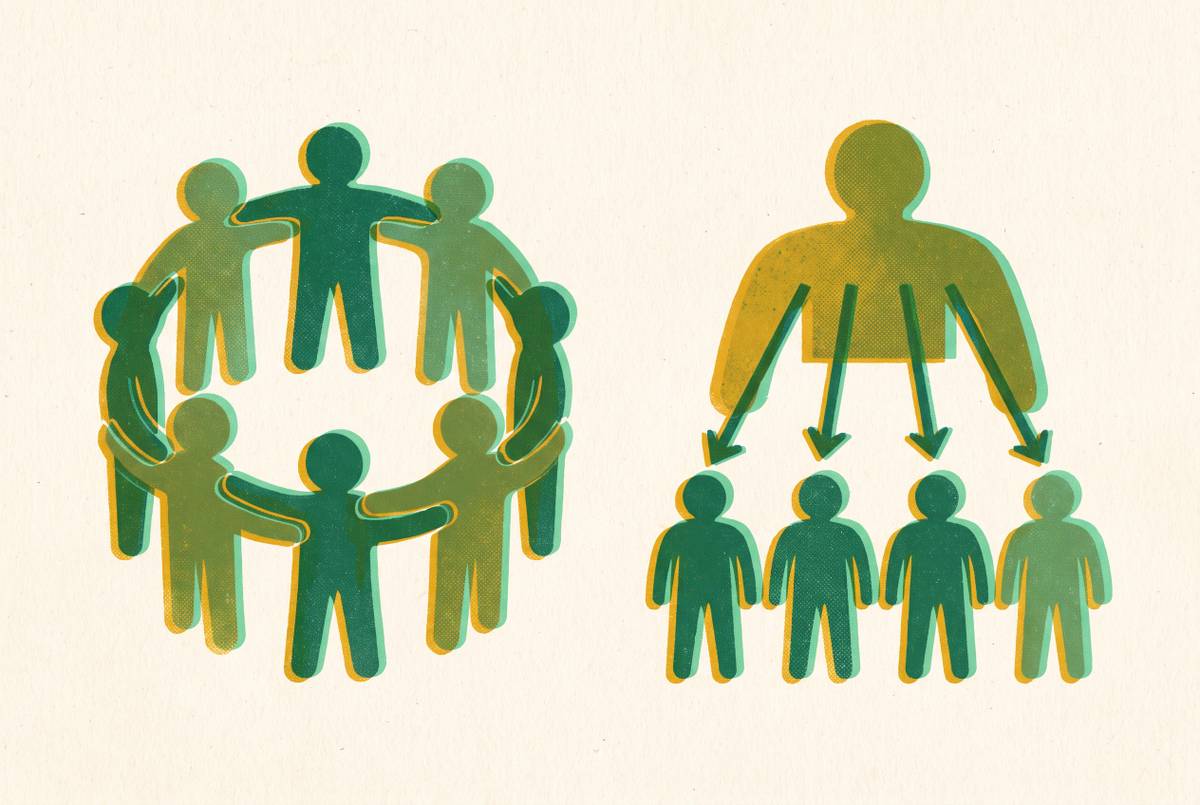
Peer support addresses the three gaps the previous sections have identified: the trust deficit that keeps high-need populations from calling in the first place, the void that opens after a crisis call ends, and the disconnect between a counselor's narrow clinical role and a caller's broader social needs. The mechanism is relational: shared lived experience builds a kind of trust that a clinical hierarchy struggles to replicate, which lowers stigma and makes it possible for someone to stay engaged through the slower, harder work of recovery rather than disappearing after a single acute moment passes.
In integrated programs, peer support specialists help with crisis de-escalation just as a 988 counselor would, but they also connect people to food banks, housing services, and medication support, the exact functions a 988 call center cannot provide. One multi-component peer intervention cited in the available evidence produced an 81.5% reduction in psychiatric inpatient days, drove arrests down to zero among participants, maintained stable housing for most of the people involved, and sustained strong medication adherence throughout. Those outcomes depend on sustained contact over time, something a single crisis line contact, however well executed, cannot produce on its own.
Research comparing peer staff to professional staff found that peers performed at least as well as nonpeer providers across most measures, and in some areas, particularly reducing inpatient use and improving recovery outcomes, outperformed professional staff. firsthand's model offers a concrete illustration of what that evidence looks like in practice: Guides and STRIVE Specialists, drawing on their own lived experience with serious mental illness, meet people where they are in the community and help them navigate housing, food, medication, and behavioral health resources. That work builds the sustained trust that makes recovery possible over months and years, rather than compressing support into the length of a single phone call.
Why the peer workforce isn't growing fast enough
Peer support is evidence-based and structurally suited to fill the exact gaps 988 leaves open, but the workforce needed to deliver it at the scale the country requires does not yet exist, and unstable financing makes the shortage worse. A behavioral health workforce report found that the peer workforce has grown substantially over the past decade. Hundreds of thousands more peer workers are still needed to meet the scale of demand that exists today.
Medicaid reimbursement rates for peer support vary enormously from state to state, creating deep funding inconsistency in where and whether peer services can be sustained. Two neighboring states illustrate the unevenness directly: reimbursement structures and program design differ enough between them that a peer support model stable in one state can struggle to take root in the other, even though both states fall under the same federal Medicaid framework. That inconsistency raises a harder question than funding alone can answer. If money were the only barrier, higher reimbursement should translate cleanly into more services delivered. It does not, which points to a second barrier sitting alongside the financial one.
That second barrier is role confusion. Peers are frequently placed into positions that look more like paraprofessional technician roles than the trust-building, community-based work the evidence describes as effective. None of these barriers look permanent. Workforce pipelines can expand, reimbursement structures can be standardized, and role definitions can be clarified through deliberate policy design. But none of them close on their own, and the gap between what peer support can do and what the current workforce can deliver remains wide four years into 988's existence.
What a complete crisis response system would look like
988 has built a real foundation. A foundation is not a finished structure, and the gaps traced through this piece, the call-to-care gap, the text and chat capacity shortfall, the equity gaps in awareness and language and specialized access, the ceiling imposed by social determinants the crisis line cannot touch, all point toward the same conclusion: closing them requires deliberate, sustained investment.
That investment has to include outcome accountability. Centers need the staffing and the data infrastructure to track what happens to a caller after the contact ends, because a system that cannot see its own aftermath cannot improve it. Equity cannot be added after the main system is already built. Culturally and linguistically competent infrastructure, stable funding for specialized services like the kind that once served LGBTQ+ youth through the Press 3 option, and real outreach in the communities where awareness and trust run lowest all need to be part of the system's design from the outset, not retrofitted once a gap becomes visible.
And peer support belongs at the center of that design, not at its edges. It is the mechanism by which a crisis contact turns into the start of a recovery journey rather than an isolated moment of relief: the relational trust that clinical hierarchies cannot replicate, the navigation of housing, food, and medication needs that a crisis counselor is not positioned to provide, and the sustained community presence that follows a person well past the window where 988's current model loses contact. Four years in, 988 has proven that a crisis line can save lives. What the data and the gaps both make clear is that saving a life in a single moment and sustaining that life afterward are two different undertakings, and the second one still needs building.
Sources
- The 988 Suicide and Crisis Lifeline in the US: status of evidence on implementation - PMC
- U.S. GAO - Suicide Prevention: Capacity and Federal Assessment of the 988 Lifeline
- Mental Health Awareness Month: 988 is Here to Help
- GAO-26-108114, SUICIDE PREVENTION: Capacity and Federal Assessment of the 988 Lifeline
- Analyzing the Rollout of the 988 Crisis Hotline Through an Equity Lens (2022--2024): A Systematic Review